I love all things Cruise and add that to my hobby Photography I’m in dreamland, I’m an exTravel agency owner with the inside contacts, so I will try to keep you updated in all things travel related with a side serving of images and other maritime stories.
Fincantieri has announced the signing of a memorandum of understanding with Enel Green Power Italia to explore and develop the use of green hydrogen for port operations and long-range maritime transport.
In particular, Fincantieri said the two companies will evaluate the possibility of collaborating both in the supply of green hydrogen to naval, submarine and surface vessels, and to industrial users within the port area, including the design and construction of the necessary infrastructure elements, including storage, where necessary; and in the design and development of a system for the management of energy flows, including the involvement of other companies from the respective groups.
Enel’s Eugenio Montale power plant in La Spezia (Liguria region) will be used as an initial test site for the activities covered by the agreement, thus launching a sustainable energy transition path for the site.
In the context of the energy transition, hydrogen can make a valuable contribution to the decarbonization of energy-intensive industries such as chemicals, aviation, maritime transport and non-electrified railways, provided it is produced in a sustainable manner, Fincantieri stated in a prepared announcement.
Enel Green Power is committed to the creation and development of projects for the production and use of ‘green’ or ‘renewable’ hydrogen, derived from the electrolysis of water-powered exclusively by renewable electricity. The Group has therefore started studying new business models that include the supply of green hydrogen for the decarbonization of industrial sectors, with partnerships and projects already being developed in Italy, Chile, the United States and Spain.
According to the two companies, this MoU may also lead to further agreements.
Miami-Dade County, in partnership with Florida Power and Light Company (FPL), Carnival Cruise Line, and Royal Caribbean Group, will be shore power ready at PortMiami by Fall 2023, according to a press release.
Cruise Terminal F, currently undergoing a significant expansion for Carnival and Cruise Terminal A, Royal Caribbean’s signature Miami terminal will be the first facility with shore power capability at the port.
In February 2021, Mayor Daniella Levine Cava launched an initiative to bring shore power to PortMiami in collaboration with Miami-Dade County’s major cruise line partners. The goal is to make Miami the first seaport in Florida and the southeastern U.S. shore power ready.
Since then, Carnival Cruise Line and Royal Caribbean Group have agreed to launch Phase 1 of this program for connections at Cruise Terminals A and F. Additionally, the U.S. Environmental Protection Agency’s Diesel Emissions Reduction Act announced a $2 million grant allocation for Phase 1 of the program.
Plans have already begun implementing the program in phases. Phase 1 at Cruise Terminals A and F will transform the power levels at the Port from the electrical grid to cable management systems for the heavy plugs and outlets on the vessels. This system requires each party to implement improvements on the electrical grid and supply lines, shore-side equipment on the pier, and shore-to-ship connection on the cruise ship. Additionally, PortMiami is working with other cruise line partners to ensure that their designated berths also have shore power connectivity as part of Phase 2.
“Our efforts to make PortMiami ‘shore power ready’ are moving full steam ahead thanks to the incredible work of the PortMiami team, FPL, and the commitment of Carnival Cruise Line and Royal Caribbean Group,” said Mayor Daniella Levine Cava. “Our goal is to continue ensuring PortMiami is a leader in sustainability and to shape a more resilient cruise industry that prioritizes the protection of our environment. We are proud of this big step and look forward to working with other cruise companies for the second phase of this project to make the Cruise Capital of the World more sustainable.”
“As a world leader in renewable energy and sustainability, FPL is pleased to be partnering with Miami-Dade County, PortMiami and our renowned cruise line partners to develop an innovative shore power solution that will both lower emissions by shifting to clean power from FPL and drive modernization,” said Eric Silagy, president and CEO of FPL. “Every day, we deliver America’s best energy value to our customers, energy that’s not just clean and reliable, but also affordable. Now, we are pleased to bring these core values to the cruise industry, as we stand ready to make shore power a reality for PortMiami.”
“In line with our top priorities of compliance, environmental protection and the health, safety, and well-being of our guests, employees, and the people in the communities we touch and serve, we are thrilled to have been one of the first cruise lines to partner with Mayor Daniella Levine Cava and Miami-Dade County in the shore power program at PortMiami,” said Christine Duffy, President, Carnival Cruise Line. “With PortMiami being our busiest homeport and our longstanding relationship with both Miami-Dade and PortMiami, it’s a natural fit to work together to bring this power source to the Cruise Capital of the World.”
“Shore power connectivity allows us to reduce our emissions to near zero while connected in port,” said Richard Fain, Chairman and CEO, Royal Caribbean Group. “In partnership with Mayor Daniella Levine Cava and Miami-Dade County, we’re happy to help bring this technology to our hometown, the Cruise Capital of the World, as part of our sustainability journey and our single-minded focus to be partners to the communities we visit and call home.”
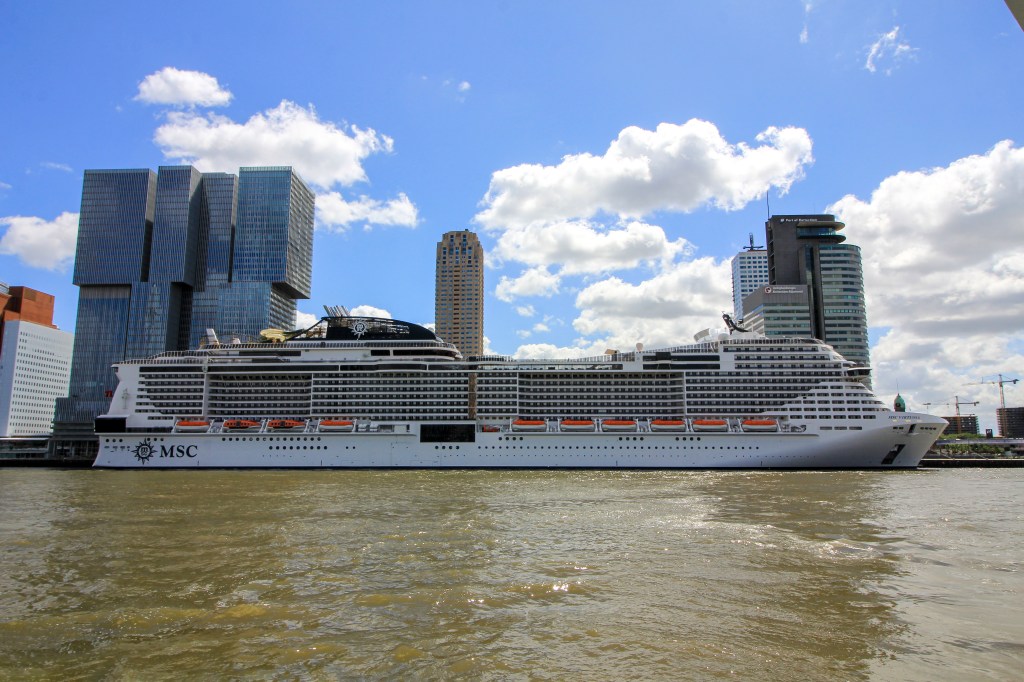
MSC Cruises has announced the introduction of a new shipboard property management system, which creates a link between its shoreside operations and the entire fleet of ships.
According to a press release, the new system will help improve internal efficiencies, tailor guest services and digitalize information for the crew.
The new customer-centric and digitalized system brings benefits through increased flexibility and automation with a cloud platform that enables a global configuration across the MSC Cruises fleet and throughout a range of different departments.
The cloud-based software developed by Hamburg-based Otalio was first used onboard MSC Virtuosa, the first deep-sea cruise ship in 15 months to sail in British waters for her maiden season in the UK that started in May.
The modern architecture of the property management system provides scalability and flexibility so that many administrative tasks can be performed by shoreside teams to bring new opportunities for fleet management.
Crew onboard can centralize all guest information in one place, such as purchase preferences, complaint tracking and Voyagers Club member status, MSC said. The crew will also benefit from real-time updates from ashore, as well as options to digitalize processes such as housekeeping rotas and menu pricing.
“This promises to be a win-win scenario whereby the Otalio technology will improve the overall guest experience and make life easier for our crew onboard. Getting Otalio ready to launch across our fleet was a huge undertaking and involved a team of 500 dedicated individuals both onboard and ashore, the biggest ever collaboration at MSC Cruises. The end result was worth the endeavour and is truly change-management at its very best,” said Chief Information Officer of MSC Cruises Daniele Buonaiuto.
The Managing Director of Otalio, Tony Heuer, said that having its latest product now in operation is a “dream come true.”
“(W)e couldn’t be more excited to see it going live. It’s a great achievement for the entire Otalio team to develop an onboard solution that covers all aspects related to guests and crew management, suitable to support larger contemporary cruise ships, as well as smaller luxury vessels. Thanks to the cutting-edge architecture of our system, structured around the unique complexity a cruise ship environment has, many administrative tasks can now be performed by shoreside teams, bringing new opportunities into fleet management altogether,” he said.
“We want to thank the MSC Cruises team for their trust and cooperation during these last two and half years of intense effort. All of this could have not been possible without the commitment and support of their entire organization, both ashore and onboard,” he added.