British tourists ‘among dead’ in Egypt balloon accident

British tourists ‘among dead’ in Egypt balloon accident

By Phil Davies

British tourists 'among dead' in Egypt balloon accidentBritish nationals are reported to be among the 18 foreign tourists killed in a hot air balloon crash in Egypt this morning.

Egyptian police said the victims include nine from Hong Kong, four from Japan, two from the United Kingdom, two from France and two from Egypt, according to the BBC.

A total of 21 tourists and a pilot were onboard the hot air balloon during a sunrise flight when it caught fire and exploded, plunging into fields west of the ancient Egyptian city of Luxor today, state-run Nile TV reported.

At least two people, including the balloon’s pilot, reportedly survived, apparently by jumping out of the balloon before it crashed, after it caught fire when it was at 1,000 ft (300m).

Sky News reported that two Britons onboard have been taken to hospital in a critical condition.

Dr Hany Sabry, from Luxor International Hospital, told Sky News that one of the injured passengers suffered multiple fractures and internal bleeding, while the second injured passenger remains under observation in the intensive care unit.

An employee at the company operating the balloon, Sky Cruise, said two people in the balloon survived by jumping from the basket before it hit the ground. The balloon’s pilot is also believed to have survived the crash.

Luxor is one of the most popular destinations for travellers to Egypt and a starting point for many Nile cruises.

Ahmed Aboud, a spokesman for companies that operate balloon flights in the area, told Reuters that one tourist and the balloon pilot had survived the accident, which happened after a gas explosion at 1,000 feet.

“There were 20 passengers aboard,” said Aboud. “An explosion happened and 19 passengers died. One tourist and the pilot survived.”

Aboud is the representative of eight companies that operate balloons in Luxor.

The Foreign and Commonwealth Office said: “We are aware of reports of a balloon crash in Luxor and are making urgent enquiries.”

DoSomethingDifferent.com confirmed it had taken Luxor balloon flights off-sale and was refunding all customers with future bookings. The tickets specialist said it did not believe any of its customers were involved in the accident.

MSC Cruises returns to the United Arab Emirates

MSC Cruises returns to the United Arab Emirates

Dubai and Abu Dhabi to host MSC Lirica in 2013/2014

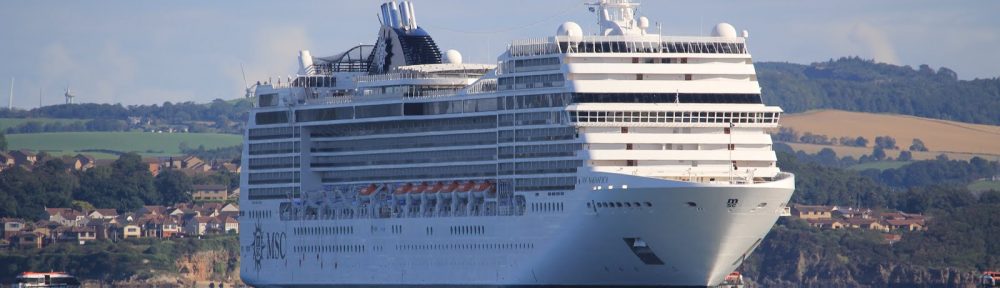
MSC Cruises is delighted to announce that MSC Lirica will return to the United Arab Emirates (UAE) for the 2013/2014 winter season, taking travellers on an unparalleled journey of discovery through the region’s rich traditions, vibrant modernity and dramatic landscapes.

On 5 November 2013, MSC Lirica will set off on a 19-day/18-night grand voyage from Genoa, Italy, arriving in Dubai, UAE, on 22 November 2013 after calls in Civitavecchia, Italy, La Valletta, Malta, Piraeus, Greece, Port Said, Egypt, Safaga, Egypt, Salalah and Muscat, Oman.

From 23 November 2013 until 29 March 2014, MSC Lirica will offer 18 eight-day/seven-night cruises from Dubai, calling in Abu Dhabi, UAE, Khor al Fakkan, UAE, and Muscat and Khasab, Oman, with an overnight stay in Dubai allowing travellers to enjoy the unique nightlife of this glittering oasis of the desert.

“MSC Cruises’ return to the Emirates reaffirms our strong belief in the region’s potential as an innovative and highly desirable destination for cruise travellers,” said MSC Cruises CEO Pierfrancesco Vago. “As part of a broad commitment to encouraging future growth, the UAE government’s recent decision to allow multiple entry visas for cruise ship passengers has dramatically simplified visa procedures, making the region even more attractive to cruise lines and ensuring that many more travellers can discover this truly unique destination with ease.”

During MSC’s Emirates adventures, travellers can enjoy a shore excursion programme designed to reveal the magic and mystery of this enigmatic world of spectacular contrasts.

Enjoy unspoiled beaches and rugged mountains views 

Khor al Fakkan is the perfect gateway from which to discover desert dunes, typical wadis and spectacular oases, as well as the rugged Masafi and Hajar Mountains and the stunning beaches and warm waters of the Indian Ocean. Visitors can also enjoy trips to the oldest mosque in the UAE, Fossil Rock, famed for fossils dating back some 80 million years and Camel Rock, a spectacular, eponymously shaped outcrop in the middle of the desert.

Explore mystical Muscat 

Travellers in Muscat have a whole host of mystical landmarks to behold, from the Al Alam Palace, flanked by the breath-taking Al Jalali and Al Mirani forts, to the captivating Sultan Qaboos Grand Mosque with its five impressive minarets. Popular sites include the old town’s bustling souk, the Bait Al Zubair archaeological museum and the exclusive Amouage perfumery with its timeless natural fragrances.

Cruise crystalline fjords in a traditional dhow 

A relaxing cruise on a traditional Arabian dhow is the perfect way to discover Khasab – also known as the “Norway of Arabia” thanks to its sinuous coastline – and its fjord-like waters, pretty fishing villages and limestone cliffs. Travellers can enjoy a refreshing dip by historical Telegraph Island and, if they’re lucky, a friendly dolphin may even stop by to say hello.

Discover the wonders of Dubai 

An ultramodern city steeped in tradition and flanking both the coast and the Arabian Desert, Dubai and its eclectic mix of natural and man-made wonders is impossible to define. For the glitz and glamour of modern Dubai, travellers can head to the sumptuous Burj Al Arab Hotel, the only 7-star hotel in the world; the magnificent Palm Jumeirah, the largest man-made archipelago of islands in the shape of a palm tree; or one of Dubai’s swanky neighbourhoods. The city’s incredible shopping, amazing skyscrapers, beautiful modern marina, perfect weather and unparalleled nightlife make it a true haven for hedonists.

Behold awe-inspiring architecture and magnificent mosques in Abu Dhabi

Abu Dhabi is home to some awe-inspiring architecture, futuristic skyscrapers and magnificent mosques, including the hauntingly beautiful Sheikh Zayed Mosque, a masterpiece of neo-Islamic architecture and one of the largest mosques in the world. Heritage Village, Emirates Palace, Al Ain archaeological site and Manarat Al Saadyat, a centre recounting the development of the richest city in the world, are all fascinating insights into this modern metropolis. Travellers can also experience the thrill of an unparalleled shopping experience, or of riding the world’s fastest roller coaster at the Ferrari World Theme Park.

Are you tempted by one of these cruises?

Click image for larger version. 

Name:	MSC_Lirica_Pool_Deck.jpg 
Views:	41 
Size:	63.1 KB 
ID:	6755

Nisha At Sea

As tensions rise, Mideast tourism sustains injuries

As tensions rise, Mideast tourism sustains injuries

By Michelle Baran
Tourism was among the victims last week as conflict and tensions across North Africa and the Middle East surged, capped by violent clashes between opposing factions in Syria and Egypt.

One look at the week’s headlines — violence in Syria, arrests in Egypt, Israel threatening to quash Iran’s nuclear program — and it was clear that retailers, suppliers and tourism boards dedicated to promoting and selling North Africa and the Middle East faced a daunting public relations crisis.

“There’s always a correlation between media coverage and bookings,” said Malia Asfour, director of the Jordan Tourism Board North America.

Jordan, where tourism accounts for 14% of gross domestic product, saw tourist arrivals from the U.S., its No. 1 source market, drop 12.9% in 2011 compared with 2010. (Click here to view of a map of the drop in U.S. arrivals in select Middle East countries.)

Jordan, which has experienced relative peace and calm of late and was hoping to emerge from its 2011 tourism slump this year, is exemplary of how damaging it can be to reside in the wrong neighborhood.

“I’m hopeful that 2012 is going to be better than 2011,” Asfour said. “I’m counting on 2013 [tourism numbers] being back to 2010.”

A camel in Petra, Jordan.Jordan borders Syria, for which the U.S. Department of State on Feb. 6 issued a travel warning advising U.S. citizens to leave Syria immediately due to escalating violence and a deteriorating security situation there. The same day, the State Department suspended all embassy operations after a particularly bloody weekend. News media reported more than 200 deaths due to violence in the city of Homs, a figure cited by opposition groups that have been rising up against the government of President Bashar al-Assad since March 2011.

While Syria is not a dominant tourism destination in the region, the clashes come just as the country had been starting to improve its tourism profile and increasingly attract visitors. Between 2005 and 2010, Syria saw a 14% year-over-year growth rate in tourism, according to the Ministry of Tourism.

Meanwhile, tensions in Egypt, one of the region’s most mainstream tourist destinations, have also been escalating. Last week, Egyptian authorities announced that 19 Americans working for nongovernmental organizations would be prosecuted, prompting the U.S. to threaten to withhold $1.5 billion in annual aid aimed at helping Egypt transition to democracy.

That threat followed news reports that two female U.S. tourists and their Egyptian guide had been kidnapped by armed men in Egypt’s Sinai Peninsula, then later released.

“Anyone who tells you that Egypt business is up is obviously being facetious,” said Ashish Sanghrajka, president of Big Five Tours & Expeditions. Sanghrajka said Big Five’s Egypt business was still off pre-revolution, 2010 levels by a “considerable amount.”

Egypt’s tourism industry suffered a major blow in 2011 following the at-times violent Jan. 25 revolution, which resulted in the ouster of former president Hosni Mubarak. The country welcomed about 54% fewer U.S. tourists in 2011 than in 2010, according to the Egyptian Tourist Authority.

And while prospects for 2012 appear brighter than 2011, “right now, with Egypt, it really is day to day,” Sanghrajka said. “There’s definitely a demand for Egypt. We’re getting calls from people who want to go, but they’re being very cautious. They’re just waiting for the elections. They’re waiting for all of [the political strife] to subside.”

Indeed, as with Jordan, those who sell Egypt last week were predicting a recovery toward the end of this year and into 2013.

“Egypt is hurting,” said Abercrombie & Kent CEO Geoffrey Kent. Nevertheless, he predicted, “Egypt will come back.”

Kent said he anticipates a turnaround by this time next year.

Bright spots amid turmoil

Despite the unrest and uprisings, not all destinations in the region have been hit equally hard. For example, agents and tour operators report positive bookings to Israel, Turkey and Morocco.

“I find that my people that go to Israel, they’re going anyway, regardless of what’s going on, and there are many people like that,” said Pamela Jacobs, a vacation planner at Los Angeles-based TravelStore who is bullish on the region.

“There are things in the Middle East that are nowhere else in the world, and there are people that are going to go see them,” Jacobs said.

Israel welcomed 3.4 million tourists in 2011, compared with 3.45 million in 2010, which Haim Gutin, the Israel Tourism Ministry’s tourism commissioner for North and South America, described as “pretty incredible in view of the Arab Spring on top of the global economic downturn. Tourism to Israel from the U.S. fell 6%, to 611,000, in 2011 compared to 650,000 U.S. travelers in 2010.”

Gutin added: “The concept of ‘Who is still going?’ is just so far from reality. The hotels are as full as they normally are in February, restaurants are bursting, flights are full and all is completely unchanged.”

Sanghrajka said that Morocco has actually benefited from the displacement of travelers to places like Egypt.

“Morocco is where we’ve been surprised,” Sanghrajka said. “There has been a tremendous increase in inquiries and bookings.”

Turkey, too, appears to have successfully removed itself from the negative press of its neighbors to the south.

“We do terrific business with Turkey,” said John Burgess, manager of the leisure travel division at Preferred Travel in Naples, Fla. “That hasn’t been affected in the least.”

And there are travelers who will continue to travel to Egypt and Jordan, regardless of tensions.

For example, A&K said it sees three categories of Americans that are still determined to head to these destinations no matter what: politically aware travelers who want to show support for the democracy movement; returning travelers who want to be among the first to see the newly restored Avenue of the Sphinxes in Luxor; and first-time travelers attracted by the exceptional values.

A bumpy road ahead

It’s impossible to predict just where all the hostility and political wrangling in the Middle East is headed. In the meantime, parts of the tourism industry that are invested in the region find themselves in wait-and-see mode.

“We’re not yet seeing a full recovery to the region, but we are seeing a few positive signs,” noted Mike Schields, managing director for groups and emerging markets at the Globus family of brands.

Globus is projecting that it will be flat overall for the Middle East in 2012, he said.

“It’s still relatively early in our booking year, so that could change,” he said. “Egypt is down fairly substantially from the pace it was on in 2010, but we’re seeing increases in business to Israel and Jordan, both religious and secular [travel], to offset that difference.”

Despite everything, Globus remains “bullish on the region,” according to a company statement, having even introduced a new six-day Wonders of Jordan product for 2012. “We have plans to expand our vacation offering even more in the coming year,” the company stated.

A key turning point, Sanghrajka said, will be the presidential elections in Egypt in June.

“What has to happen now is these elections, and they need to actually go through and finish the process,” he said. “We can all stand here on the side and cringe in terms of who comes into power, but we can’t control that. What tourists have to see is that the will of the people is being done.”

Sanghrajka said that once the elections have been held, there will be an acceleration in the return of tourists.

In the meantime, Burgess said, “Honestly, I wouldn’t go [to the region] now. It’s a comfort issue. The most important aspect of a client-agent relationship is trust. I’ve had a couple people ask if I would go now, and I’ve been perfectly honest: I wouldn’t.”