Falkland Islands tourism has made a remarkable comeback in the past few years with the number of cruise ship visitors rising from less than 30,000 in 2012-13 to potentially double that this year.
The boost comes thanks in no small way to the return of the Norwegian Cruise Line’s services to South America this season from October to March, including stops at Falklands’ capital Stanley.
Their Sun vessel, which has a maximum passenger capacity of 1,900 and spends the Northern Hemisphere summer around Alaska, is planning nine stops at Stanley as part of its cruise around Cape Horn this season.
Stanley-based vessel agent Sulivan Shipping estimates 60,000 arrivals by cruise ship this year, following last year’s official figure of 43,437 passengers, despite six trips cancelled by poor weather.
Should Mother Nature be kind and the estimate ring true, the Falklands could be nudging their heights of 2007-08 and 2008-09 when they welcomed more than 62,000 visitors before the global economic crisis hit and numbers slumped to 29,000 three years ago.
‘Of course we are very much at the mercy of the weather here in the Falkland Islands,’ Samantha Marsh, Tourism Coordinator for Sulivan Shipping, tells MailOnline.

The Norwegian Sun cruise ship, which holds 1,900 passengers, is planning nine stops at Stanley this year
‘Large ships need to tender their passengers into Stanley harbour so high winds which are a characteristic of summer in the Southern Hemisphere can cause issues.
‘On average we will have six cancellations a season due to unfavourable weather. So the anticipated estimate seems very high in comparison to last year’s actual landed figures, but when we take into account some cancellations due to bad weather, we are probably looking at a conservative estimate of 50,000 landed.’ Even so, it remains a substantial period of growth for the archipelago with a resident population of less than 3,000
And with a Falklands’ Tourism Board office opening in London this year, further building a bond with the UK after an overwhelming 98 per cent majority voted to remain under the Union Jack amid continued tensions with Argentina, that figure appears only set to rise. They are also pushing to attract more visitors from the US and other untapped markets.
Marsh adds that the growing capacity of expedition and research ships has also boosted numbers.

‘When I first started working here, many years ago, the average expedition vessel had an average 50-80 passenger capacity. These ships are now around 150 in average capacity,’ she says.
‘The increase in numbers can only be a positive for the local economy, but as a small Island, we do quite often find it difficult to meet the demand in the way of excursions.
‘With practically zero unemployment, many people will take the day off to drive a coach, or to take guests to visit the penguins in order to cater for a large ship visit.’
The first passenger boat this season will be the Russian research and tourist vessel Akademik Sergey Vavilov on October 17, one of eight smaller ships in the first month also including the Sea Adventurer and the Akademik Ioffe.
In November come the big cruise ships, starting with the 1400-berth Zaandam and followed by the return of Norwegian Cruise Lines’ to Stanley when the Norwegian Sun makes its first visit on December 10.
It returns for a bumper day on December 28 when it will arrive with Star Princess and MS Marina whose potential 5,600 passengers almost double the Falklands’ entire population.
So what do visitors see when they arrive? By far the greatest attractions of the Falklands is its abundance of unspoiled wildlife, the marine bird species in particular.

After arriving in Stanley, a town with a mostly English feel and British food the predominate offering, visitors usually seek out the five species of penguin, four species of seal and many other creatures who call the islands home.
Albatross, petrels, the Falkland Flightless Steamer duck geese, and birds of prey including hawks, falcons and the Striated Caracara (Johnny Rook), which is found only on the Falklands and on small islands off Cape Horn at the bottom of South America. Porpoises and dolphins can also be seen in playing in the waves.
Another draw for the more than 3,000 UK visitors expected this year are the memorials marking the 1982 Falklands War with Argentina as interest in military history is boosted by the 100th anniversary of the First World War.
Tours of the battlefields of Goose Green and Mount Tumbledown are available while a recently-opened museum at Port Stanley has a section focussed on the conflict in the South Atlantic, also recalling the islands’ long maritime history.
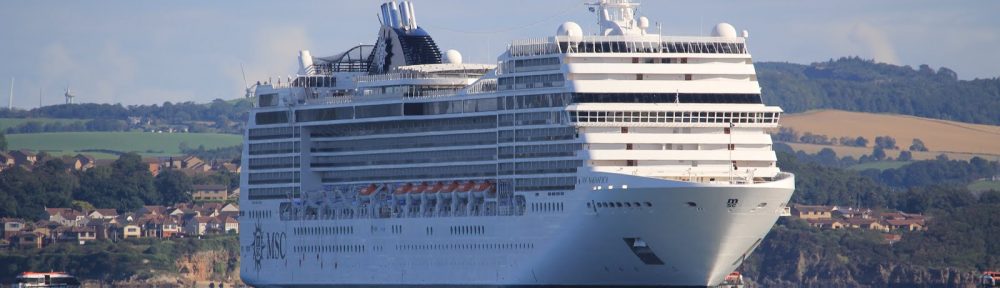
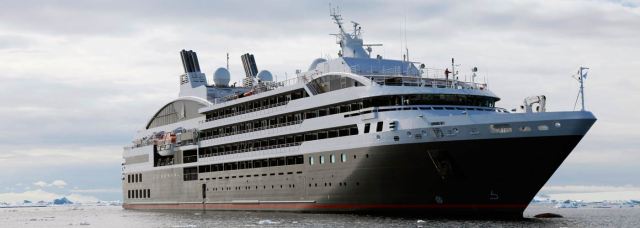


 Thirty years ago they triggered a war between Great Britain and Argentina. Today the Falkland Islands are again causing friction, and this time cruise ships are getting caught in the middle.
 Wetravel2u's Weblog