Viking Planning World’s First Liquid Hydrogen-Powered Cruise Ship

first hydrogen powered cruise ship
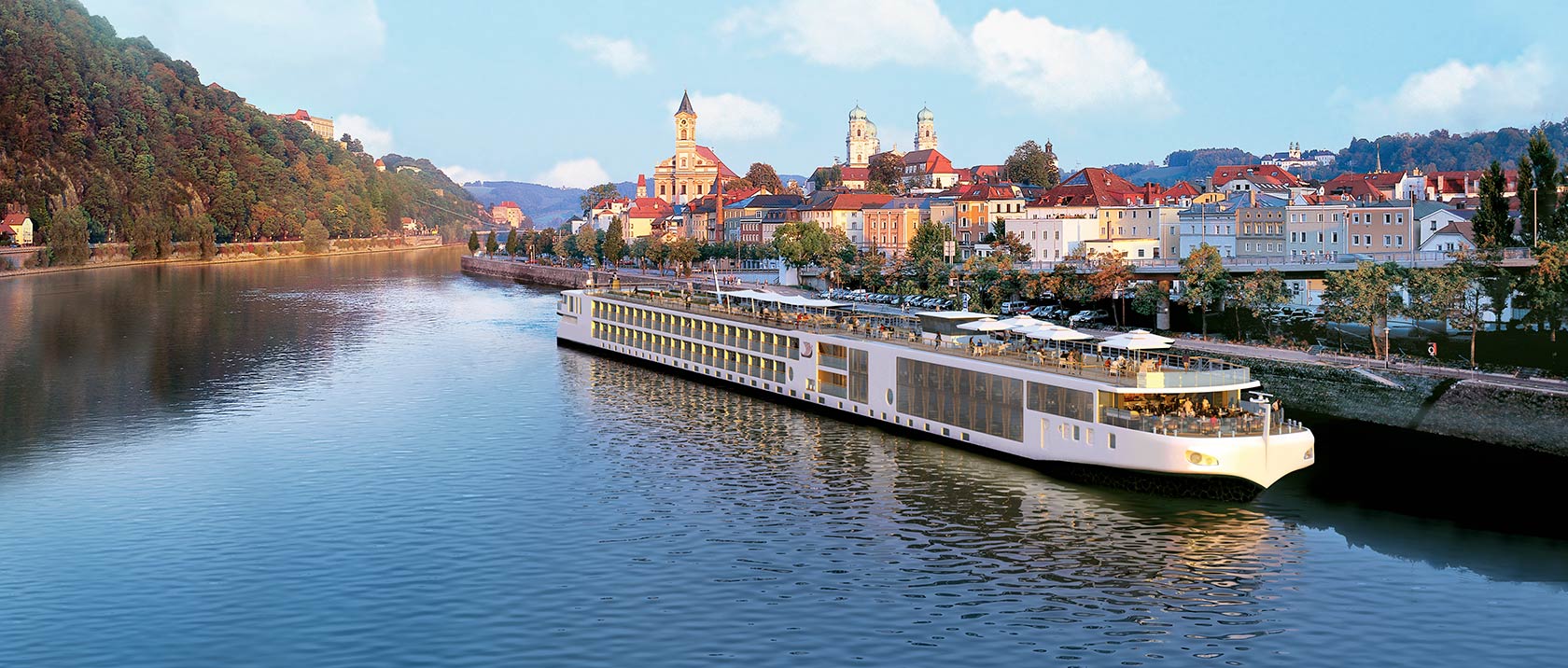
Illustration courtesy Viking Cruises

Viking Cruises has revealed that it is developing what could become the world’s first cruise powered by liquid hydrogen.

The company announced the plan Friday at the Safety at Sea Conference held in Haugesund, Norway.

The proposed hydrogen-powered cruise ship will be built based on existing cruise ship designs, such as the Viking Sun. It will be around 230 meters long and will accommodate more than 900 passengers and a crew of 500, according to Viking.

“This is a world sensation. Very exciting. If they pull this off, a distribution network may be established, which will enable others as well to use hydrogen as fuel, and could contribute to a zero-emission shipping industry,” says Director General of Shipping and Navigation, Olav Akselsen.

Viking says it has been working with the Norwegian International Ship Register on this and several other new projects in recent years. If developed, the new vessel will be registered in Norway.

“The ship will fly the Norwegian flag, which means that we have to vouch for the safety being just as good as on conventional ships. We believe that it is possible to solve those issues. We probably have a way to go before all the technical solutions are in place, but this is a very concrete project which has a high priority at Viking Cruises,” says Akselsen.

So far liquid hydrogen has never been used as a marine fuel, according to Viking Cruises. One of the technical challenges will be keeping the fuel at minus 253 degrees to keep it from evaporating. A fuel cell will convert the hydrogen to electricity for propulsion and electric power on board. Hydrogen is also a very explosive gas, and protection against gas leaks is an important part of the safety requirements for the fuel, Viking said.

“At Viking, we have always endeavoured to look forward and to be at the forefront with regard to green shipping. As a Norwegian and with Norwegian ships, we want to lead the way to zero-emission ships through fuel cell technology. The road to that point is still long, but here at Viking we want to be ahead of the game,” says Chairman of Viking Cruises, Torstein Hagen.

Currently, liquid hydrogen is not produced on a large scale in Europe, but Serge Fossati, a project manager for Viking, explained that Viking Cruises is in dialogue with Statoil in order to find a solution based on a Norwegian refinery. It also emerged that Viking wants to use Norwegian suppliers for the project as much as possible, and several tender ships to carry the fuel to the cruise ship are also part of the project, according to Viking.

Viking Cruises Kicks Off 20th Anniversary Celebration

Viking Cruises Kicks Off 20th Anniversary Celebration

PHOTO: Viking Cruises founder and chairman Torstein Hagen in front of a Viking Longship under construction. (photo courtesy of Viking Cruises)
 

Viking Cruises is celebrating its 20th anniversary of operation this year, and a new video showcases its founder and chairman Torstein Hagen reminiscing about the company’s humble beginnings and great success since.

“Twenty years ago, river cruising was unknown to most North American travelers, and today we are proud that Viking is a household name. We have spent more than $1 billion marketing the concept of destination-focused cruising,” said Hagen, in a press release.

“We lead the river cruise industry, and with our ocean cruises, we have transported the intimacy of a river cruise onto the open seas. With the arrival of our sixth ocean ship in 2019, we will be the largest small ship ocean cruise line, and we look forward to introducing even more guests to the Viking way of travel.”

Altogether, Viking Cruises now consists of two brands: Viking River Cruises and Viking Ocean Cruises. The journey began with the former and just four riverboats in Russia but that has now accumulated into a fleet of acclaimed Viking Longships, another two of which were just launched this March.

The company’s first three ocean ships have been equally applauded since coming online in 2015. Now, another five 930-guest sister-ships are scheduled, with options for an additional two.

By 2019, Viking will become the largest small ship ocean cruise line.

Among the many recent awards won by Viking, Town & Country called Viking Ocean Cruises “Best for Design” and “Best Overall, Contemporary Luxury,” as well as Viking River Cruises “Best for Suites” and “Best for Design” in its Cruise Awards. Plus, Viking has received top honors in Condé Nast Traveler’s “Gold List” and “Readers’ Choice Awards” and in Travel + Leisure’s “World’s Best Awards.”


Above Video. Celebrating 20 Years of Exploration ~ 20th Anniversary ~ Viking Cruises

Viking differentiators include more intimate vessels on the world’s rivers and oceans, along with more overall time spent and overnight calls in destinations. Cultural enrichment also focuses on Local Life, Working World and Privileged Access experiences.

Viking’s unique river and ocean value proposition features a free shore excursion in every port, onboard meals and all port charges and government taxes. Also included in the cruise fare are beer and wine at lunch and dinner; always available coffee, tea and bottled water; and unlimited Wi-Fi internet access.

Ocean ship guests additionally get complimentary alternative restaurant dining, self-service laundry, LivNordic Spa thermal suite access and 24-hour room service.

Making a run at the cost-conscious consumer

At a time when other river cruise lines are scaling back on growth, French river cruise company CroisiEurope this week announced it will launch seven new river cruise vessels this year and next.

Granted not all seven are full-size European river cruise ships — two are 22-passenger canal barges, and one is launching on the Mekong — but still, seven ships is worth noting, especially for a company many of us here in the U.S. didn’t know much, if anything, about as recently as a couple years ago.

By the time these seven vessels are launched, CroisiEurope will have 46 company-owned vessels in its fleet. In 2014, the company carried some 200,000 cruise passengers (compared to the approximately 250,000 passengers carried by Viking River Cruises), although only about 8,000 to 9,000 of those hailed from the U.S. But CroisiEurope is growing its U.S customer base, and quickly.

So, what’s the deal with Croisi? Well, the company saw an opening at the lower end of the river cruise market and it is clearly going after it. For a long time, river cruising has grappled with a reputation of being a bit pricey. Travel agents would lament that while they wanted to sell more river cruises, especially since the very inclusive vacation style generally offers lofty commissions, not all of their clients could afford it.

Therein lies the opportunity for CroisiEurope, which after 40 years of building river cruise ships in Europe, is banking on its home-turf shipbuilding ties and a more pared down version of river cruising to bring lower prices to market. And while CroisiEurope’s older vessels do not compete with the sleek newbuilds being churned out by U.S.-facing river cruise lines such as Viking, AmaWaterways, Avalon, Uniworld and all the rest, the company has upped its ship design game and its newest batch of river cruise ships is focused on chicer interiors and enhanced amenities.

Another line going after this segment with arguably even chicer ships is Emerald Waterways, the lower-priced sister brand to Scenic. And it is having a good deal of success too. Having only launched in 2014, Emerald is on pace to have seven river cruise ships in Europe by 2017 (its fifth vessel, the 182-passenger Emerald Belle, was slated to launch this spring, but has been set back by a fire in the shipyard).

As river cruising piques more travelers’ interests, and the travel style opens up to a wider audience, there is clearly going to be more demand for and thus greater opportunity to provide a more accessible river cruising experience.