Familiar themes emerge at CruiseWorld China

From left: Alan Buckelew of Carnival Corp., Adam Goldstein of Royal Caribbean Cruises Ltd., Frank Del Rio of Norwegian Cruise Line Holdings and Gianni Onorato of MSC Cruises.

BEIJING — To U.S. travel agents, the themes that emerged from this week’s CruiseWorld China might have seemed reminiscent of issues that surfaced over the past three decades of cruise industry development in the U.S.

“We need to bring across the idea that the cruise is the destination, instead of just a mode of transportation,” said Zheng Weihang, executive vice president and secretary general of the China Cruise & Yacht Industry Association.

Adam Goldstein, chairman of CLIA and president and COO of Royal Caribbean Cruises Ltd., added: “A vast number of people have no idea what a cruise vacation is about, what happens onboard and how it offers great value.”

And Anthony Kaufman, executive vice president of International Operations for Princess Cruises, counseled that a travel agent’s responsibility includes “understanding the uniqueness of each cruise product and imparting that knowledge to the consumers.”

Although much of the conversation sounded like Cruise Sales 101, not all of the issues facing a quickly-growing, rapidly evolving industry have a North American parallel. The vast majority of cruises in China are charters, with cabins sold by a handful of mega-agencies, some of them larger than the cruise lines themselves. They, in turn, rely on a network of sub-agencies to help them fill ships.

The sustainability of the charter model was called into question by most of the cruise executives present, though none called for abandoning it outright. The general consensus was that it has helped the market get to where it is today, but more diversity in sales options will be healthier for long-term growth.

Calling charters a “force-feeding” model, Zinan Liu, Royal Caribbean International’s president of China and North Asia Pacific region and chairman of CLIA North Asia, said the charter model was successful in the past six years when consumer awareness was low and the sales force of cruise lines small. He predicted it will likely continue to coexist with other distribution models.

Kaufman noted that it continues to be the foundation for China’s cruise market and at present enables travel agencies to maintain better control of the customer experience and pricing. But, he said, whether it continues to dominate might depend on individual company strategies.

That each of the four largest cruise lines was represented by a top corporate executive suggests that China’s potential is still very much front of mind:

• Carnival Corp. COO Alan Buckelew provided an overview of the company’s 10 brands and revealed that the most luxurious Princess ship yet built will sail Chinese waters.

• Goldstein wore two hats. As chairman of CLIA, he provided an overview of industry growth, with a focus on China, and as president and COO of RCCL, he promoted Royal Caribbean International ships.

• Norwegian Cruise Line Holding Ltd. CEO Frank Del Rio provided updated details about the Norwegian Joy, a ship being built specially for the Chinese market, whose inaugural cruise is slated for June 23.

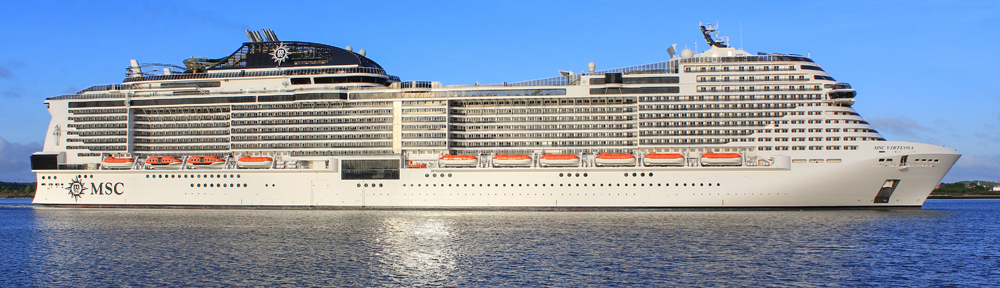
• MSC Cruises CEO Gianni Onorato provided more details after having announced the day before that a second ship, the Splendida, would be heading to China to join the Lirica.

In addition to the international development and regional line executives quoted above, onstage were Buhdy Bok, president of Costa Group Asia; David Herrera, president of Norwegian Cruise Line Holdings China; Roger Chen, chairman of Carnival Corp. China; Harry Sommer, executive vice president for international development at Norwegian Cruise Line Holdings; Helen Huang, president of Greater China, MSC Cruises; and Fan Min, chairman and CEO of SkySea Cruise Line.

Carnival building two Vista-class ships in China

Buhdy Bok (left), president of Costa Group Asia, and Carnival Corp. CEO Arnold Donald at the China Cruise and Yacht Industry Association conference, after Donald announced an agreement to build ships in China. Photo Credit: Arnie Weissmann
 

Carnival Corp. has signed a memorandum of understanding to build two Vista-class cruise ships in China intended for use by a Chinese cruise brand.

The ships have been discussed in general terms as part of an earlier disclosure of a shipbuilding joint venture between Carnival, China State Shipbuilding Corp. and Italian firm Fincantieri.

The agreement was announced at the 11th annual China Cruise Shipping and International Cruise Expo in Tianjin, China.

The memorandum specifies that the first of the two ships would be delivered in 2022. There is also an option to build two more Vista-class ships. The first Vista-class ship, the Carnival Vista, entered service last May.

Carnival said that the agreement is “non-binding.” If the ships are built, it would be a groundbreaking development, marking the first time that sophisticated cruise ships are built in China for the Chinese domestic market.

A Carnival joint venture in China would operate the new ships as part of plans to launch the first multi-ship domestic cruise brand in China.

If the joint venture is finalized, in all likelihood older ships from Carnival Corp. brands would sail for the new brand in advance of the 2022 newbuild, said Roger Frizzell, chief communications officer for Carnival Corp.

Other partners in the operating joint venture include China State Shipbuilding Corp. and the China Investment Capital Corp.

“Being able to offer cruises on China-built cruise ships represents a new opportunity for us to generate excitement and demand for cruising amongst a broader segment of the Chinese vacation market,” said Alan Buckelew, Carnival Corp.’s global chief operations officer.

Separately, Carnival and its Chinese partners announced that the Chinese central government has granted approval for the cruise joint venture to incorporate in Hong Kong.

World’s Biggest Ship Lift Opens in China

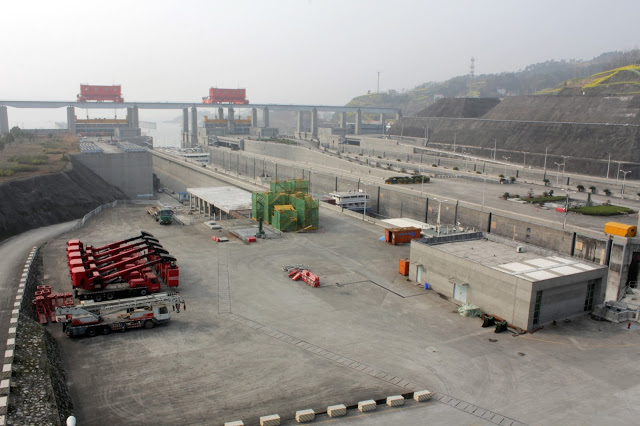
The ship lift at the Three Gorges Dam in China is the world's largest.

The ship lift at the Three Gorges Dam in China is the world’s largest.
Thanks to GCaptain.com

Officials in China have began testing the world’s largest ship lift at the massive Three Gorges Dam in Central China.

The shiplift can lift vessels up to 3,000 tons across a vertical distance of 113 meters from the reservoir to the river below. The ship chamber itself has a pool of water 120-meters long by 18-meters wide and 3.5-meters deep. The lift was built to accommodate mostly small and medium-sized vessels, as larger ships use the dam’s adjacent five-tiered lock system to navigate the waterway. In addition to boosting capacity, the new lift is also expected to reduce transit time for most vessels from several hours to under one hour.

Trials of the lift began last Sunday after more than a decade of planning and construction. Check out this video below:

Three Gorges Dam Ship Lift

Photo credit to; Dave Jones

Spanning the Yangtze River, the Three Gorges Dam is the world’s largest hydro power project. Although the dam has been in commission since 2003, the power station opened in 2012 and in 2014 it set a new world record by producing 98.8 TWh of power.

Of course the world’s largest hydro-power dam is not without its share of controversy. While it is marveled by some for its amazing feat of engineering, the dam is notoriously debated both in China and overseas over issues related to its location and development, the displacement of people, and the ecological and environmental impacts that it has had on the area.