From left: Alan Buckelew of Carnival Corp., Adam Goldstein of Royal Caribbean Cruises Ltd., Frank Del Rio of Norwegian Cruise Line Holdings and Gianni Onorato of MSC Cruises.
BEIJING — To U.S. travel agents, the themes that emerged from this week’s CruiseWorld China might have seemed reminiscent of issues that surfaced over the past three decades of cruise industry development in the U.S.
“We need to bring across the idea that the cruise is the destination, instead of just a mode of transportation,” said Zheng Weihang, executive vice president and secretary general of the China Cruise & Yacht Industry Association.
Adam Goldstein, chairman of CLIA and president and COO of Royal Caribbean Cruises Ltd., added: “A vast number of people have no idea what a cruise vacation is about, what happens onboard and how it offers great value.”
And Anthony Kaufman, executive vice president of International Operations for Princess Cruises, counseled that a travel agent’s responsibility includes “understanding the uniqueness of each cruise product and imparting that knowledge to the consumers.”
Although much of the conversation sounded like Cruise Sales 101, not all of the issues facing a quickly-growing, rapidly evolving industry have a North American parallel. The vast majority of cruises in China are charters, with cabins sold by a handful of mega-agencies, some of them larger than the cruise lines themselves. They, in turn, rely on a network of sub-agencies to help them fill ships.
The sustainability of the charter model was called into question by most of the cruise executives present, though none called for abandoning it outright. The general consensus was that it has helped the market get to where it is today, but more diversity in sales options will be healthier for long-term growth.
Calling charters a “force-feeding” model, Zinan Liu, Royal Caribbean International’s president of China and North Asia Pacific region and chairman of CLIA North Asia, said the charter model was successful in the past six years when consumer awareness was low and the sales force of cruise lines small. He predicted it will likely continue to coexist with other distribution models.
Kaufman noted that it continues to be the foundation for China’s cruise market and at present enables travel agencies to maintain better control of the customer experience and pricing. But, he said, whether it continues to dominate might depend on individual company strategies.
That each of the four largest cruise lines was represented by a top corporate executive suggests that China’s potential is still very much front of mind:
• Carnival Corp. COO Alan Buckelew provided an overview of the company’s 10 brands and revealed that the most luxurious Princess ship yet built will sail Chinese waters.
• Goldstein wore two hats. As chairman of CLIA, he provided an overview of industry growth, with a focus on China, and as president and COO of RCCL, he promoted Royal Caribbean International ships.
• Norwegian Cruise Line Holding Ltd. CEO Frank Del Rio provided updated details about the Norwegian Joy, a ship being built specially for the Chinese market, whose inaugural cruise is slated for June 23.
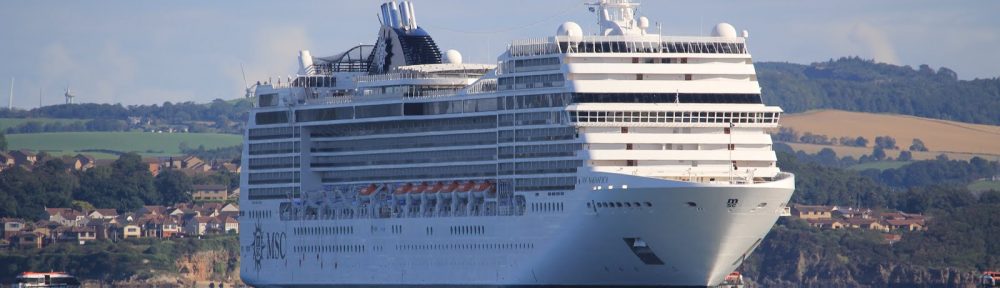
• MSC Cruises CEO Gianni Onorato provided more details after having announced the day before that a second ship, the Splendida, would be heading to China to join the Lirica.
In addition to the international development and regional line executives quoted above, onstage were Buhdy Bok, president of Costa Group Asia; David Herrera, president of Norwegian Cruise Line Holdings China; Roger Chen, chairman of Carnival Corp. China; Harry Sommer, executive vice president for international development at Norwegian Cruise Line Holdings; Helen Huang, president of Greater China, MSC Cruises; and Fan Min, chairman and CEO of SkySea Cruise Line.


 Wetravel2u's Weblog