Watch a cruise ship get cut in half

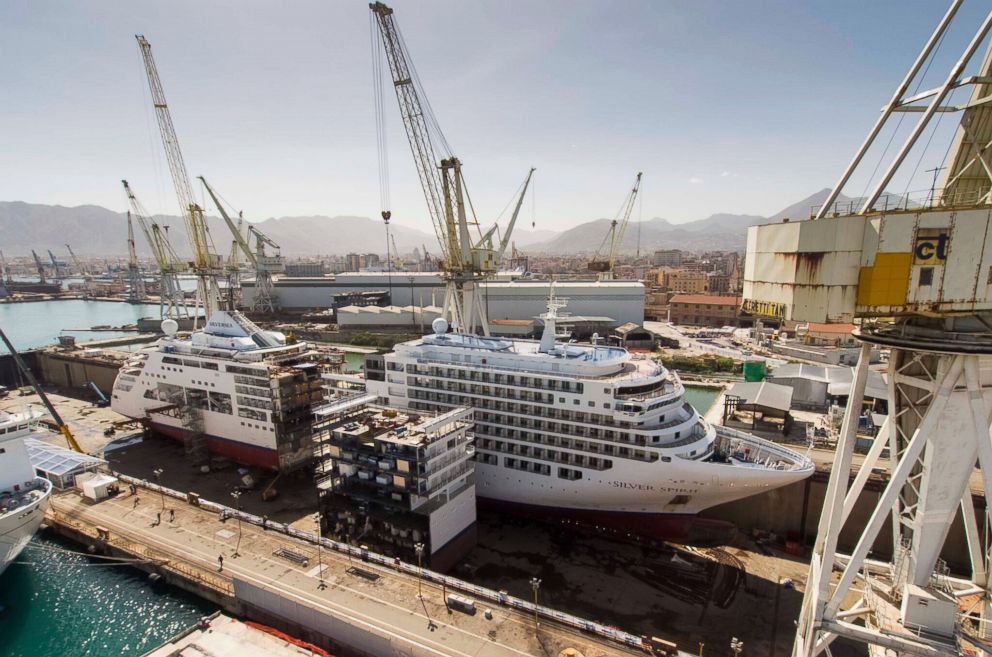
Image result for silver spirit being cut in half
Click the above photo to watch a Timelapse video of the Silver Spirit being cut in half.

Why would anyone take a perfectly good cruise ship and cut it in half?

To make it even better, that’s why.

PHOTO: The Silver Spirit, part of Silversea Cruises, was lengthened by cutting it in half and adding another section.Courtesy Silversea Cruises
The Silver Spirit, part of Silversea Cruises, was lengthened by cutting it in half and adding another section.

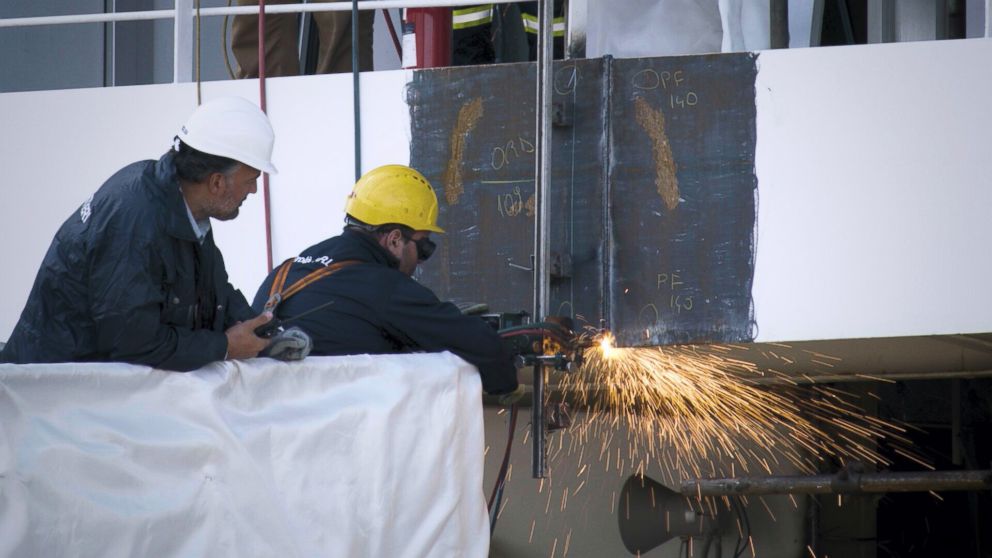
Silversea Cruises shared with “Good Morning America” video of the dry-docked Silver Spirit being taken apart at the midsection to add a prebuilt 49-foot segment to the ship. When work is completed in early May, the ship will be 691.3 feet long.

PHOTO: The Silver Spirit ship being cut in half.Courtesy Silversea Cruises
The Silver Spirit ship being cut in half.

The company called the lengthening of cruise ships a “trend” in small ship luxury cruising. The multi-million dollar project to refresh the Silver Spirit is less expensive than building an entirely new ship.

On May 6, the refurbished Silver Spirit will recommence service with a 7-day cruise between Civitavecchia, Italy, and Barcelona.

MSC Cruises takes delivery of new flagship MSC Seaside

Image result for MSC seaside

MSC Cruises has taken delivery of its new flagship MSC Seaside at the Fincantieri shipyard.

It is the second new MSC ship to come into service in 2017 and will homeport in Miami for Caribbean itineraries. It is the first in MSC’s Seaside Class.

MSC Seaside weighs 169,380 tonnes and can take 5,179 passengers.

At the ceremony, in Italy, MSC Cruises and Fincantieri also signed firm orders for the €1.8 billion construction of two Seaside EVO ships.

MSC Cruises executive chairman Pierfrancesco Vago said: “MSC Seaside coming into service marks another key milestone in the history and future of our company, but she also embodies a pivotal moment for the industry. In fact, she is the first ship of the fifth new prototype that we bring into service and introduces a wholly-innovative product that sets a new standard for the industry to follow.

“The Seaside Class of ships is designed to bring guests closer to the sea and to operate in sunny waters while continuing to push the boundaries of maritime and guest-centric technology.”

Italian president Sergio Mattarella and Graziano Delrio, Italy’s minister of infrastructures and transports were among the dignitaries at the ceremony.

MSC Seaside’s sister ship MSC Seaview will come into service in June 2018, starting her summer season in the Mediterranean. At the delivery ceremony, Vago also announced that MSC Seaview will be christened in Civitavecchia, Italy, on June 2, 2018.

He added: “As we are nearing the end of 2017, we can look back on a year when we enjoyed unprecedented capacity growth. With two of the more innovative new ships in the industry have come into service in the past six months and now with the addition of two Seaside EVO ships to our investment plan, we are now even better positioned to further extend our global footprint. We are expecting the delivery of at least one new ship each year through 2026, with six to have come into service between 2017 and 2020.”

Giuseppe Bono, chief executive of Fincantieri, added: “We are proud to have accomplished such an important project: a ship, for a new customer, the largest one ever built in Italy. This demonstrates not only our ability to satisfy the needs of the shipowners but also the extraordinary operational level which Fincantieri has achieved.

“We believe we have built a highly innovative ship with MSC. She marks a further technological quality leap. Such a milestone has allowed us to gain the customer’s loyalty with another order for two new ships, which will [again] represent a real evolution.”

In total, 12 new MSC ships are to be built by 2026, for an overall investment of €10.5 billion.
Cruise lines lower Med capacity based on terrorism fallout

Santorini cruise basin.

Fewer and smaller cruise ships being deployed in the Mediterranean this year by major cruise lines will hurt ports throughout the region, according to a recent projection of 2017 cruise passenger totals.

Fears of terrorism in parts of the Mediterranean basin have sent the region’s share of global capacity to a 10-year low, according to the report by Risposte Turismo, a cruise research firm based in Venice.

Only 15.5% of cruise ship capacity will sail in the Med this year, down from 18.3% last year and 16.4% in 2007.

Francesco di Cesare, president of Risposte Turismo, said the decline is the result of a mix of factors, among them the “no-go zones for cruise ships,” which currently include destinations such as Turkey, Tunisia and Egypt.

“In 2017 we shouldn’t register any growth in major Med ports,” di Cesare said. “But some marquee ports such as Barcelona will remain stable in comparison to 2016.”

A spokeswoman for the Port of Barcelona confirmed that it is expecting more than 800 cruise ship calls this year, up from 758 in 2016, which can be attributed in part to Barcelona’s strength as a turnaround port.

About 58% of the 2.6 million visitors to Barcelona last year were boarding or disembarking a cruise, said the spokeswoman, who asked not to be quoted by name.

By contrast, the major ports in Italy are expecting declines. According to Risposte Turismo, the number of passengers handled by Italian ports will drop 7.1% this year, to 10.3 million, while the number of ship calls will be down 9.6%, to about 4,500.

Risposte Turismo expects Civitavecchia, the port for Rome and the second-largest cruise port in the Med after Barcelona, to see 5.9% fewer passengers this year, and Venice, the fourth-largest Med port, to see an 11.4% drop.

Naples, the sixth-largest port, is expected to see a 23.4% drop in passenger numbers, while among the top Italian ports only La Spezia, the gateway to the Cinque Terre region, will eke out a 0.2% increase, the study found.

Di Cesare expects Marseille, France, the fifth-largest Med port, to experience a 6% drop in passengers this year.

Venice is a major turnaround port for cruise ships on eastern Mediterranean itineraries, which have been affected by cruise lines dropping Turkish ports due to an ongoing threat of terrorism.

Venice is also impacted by limits on the size of cruise ships that can reach the city through the Giudecca Canal.

Greek tourism minister Elena Kountoura said the number of cruise calls to Greek ports is expected to be down this year, but the number of passengers is expected to rise because of larger ships being deployed. Often, lines that have canceled calls to Turkey have substituted stops at Greek ports.

Di Cesare said Tunisian ports were dropped after two 2015 terror attacks and although the ports began getting calls again in late 2016, lingering uneasiness continues to affect itinerary planning.

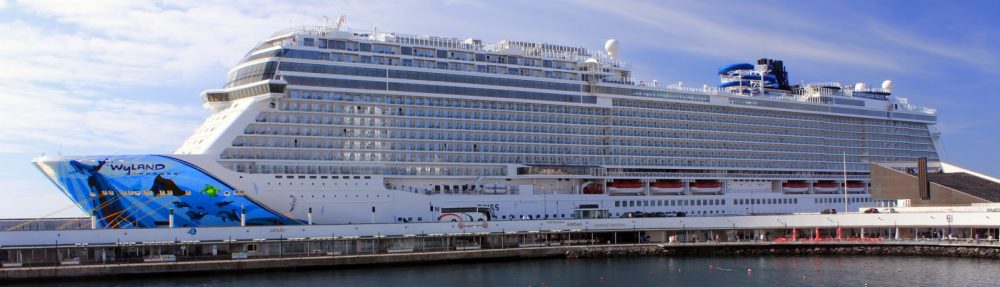
Weak results in the Med influenced Celebrity Cruises to bringthe Celebrity Equinox back to the Caribbean this summer, while Norwegian Cruise Line, diversifying its capacity out of the Caribbean, moved the Norwegian Getaway this summer to Baltic itineraries rather than Mediterranean ones.

Di Cesare said that regions other than the Med are perceived by cruise lines this year to have a higher return on investment and more demand from passengers. That said, the Med will continue to be the world’s second most popular cruising region, behind the 35.6% of capacity devoted to the Caribbean but ahead of the 11.5% of ships doing itineraries in Europe outside the Med.

The drop in Med traffic comes after several strong years.

Italian ports had 11.1 million passenger movements in both 2015 and 2016, close to the record of 11.5 million set in 2011, Risposte Turismo figures showed.

The spokeswoman from the Port of Barcelona said growth there had been “spectacular” for about a decade but has leveled off in the past few years to a more sustainable percentage, though it is still an increase.

Next year, the Med’s share of passengers stands to increase if there are no more terrorism incidents to reduce demand. For example, Royal Caribbean International said it will have eight ships in Europe for 2018, up from seven this year, including its 5,400-passenger Symphony of the Seas, which will do seven-day trips from Barcelona that include stops in Palma de Mallorca, Marseilles, La Spezia (Florence/Pisa), Civitavecchia and Naples.