Carnival recovery to focus on ports in drive markets

The Carnival Horizon in Miami. Carnival Cruise Line is putting renewed focus on U.S. homeports.
The Carnival Horizon in Miami. Carnival Cruise Line is putting a renewed focus on U.S. homeports. Photo Credit: Andy Newman/Carnival Cruise Line

Carnival Cruise Line will fall back on a tried-and-true strategy when the line eventually resumes service: It will bolster deployment throughout its network of homeports in mainland U.S. drive markets.

The line has always been the leader in U.S. homeport deployment, but it doubled down after 9/11 when many Americans were scared to fly.

When cruise ships sail again out of U.S. ports, all but three of its 23 ships (24, after the Mardi Gras comes on line in February) will be sailing from U.S. mainland ports. One vessel will be based in Europe seasonally and two in Australia.

And even the ships Down Under will rely on the Aussie drive market.

Fred Stein, vice president of deployment for the line, said that two ports outside the mainland U.S. will lose a Carnival ship in the reshuffle: San Juan and Barbados, where passengers had been able to join seven-day San Juan cruises. Stein said the redeployment is directly tied to the effort to “focus more on our drive market business in North America.”

By getting rid of its older and smaller Fantasy-class ships — the Fantasy and the Inspiration are being dismantled, and the Fascination and Imagination are moving into long-term layup — and adding both the 5,282-passenger Mardi Gras and a sister ship to the fleet later, by 2022 Carnival will have fewer ships but more capacity deployed in its North American homeports.

While an increased emphasis on homeport deployment is part of Carnival’s return-to-service strategy, it has long been a major focus for the line. It was the first, for example, to base ships in Tampa, Fla.; New Orleans; Mobile, Ala.; and San Diego. It expanded into Charleston, S.C., and Baltimore as it added new ships to the fleet.

“Historically we have deployed from 18 North American homeports, and that has been very successful for us,” Stein said. “It delivers a lot of drive-market guests. We’re very popular with families — for families of four to buy an airline ticket on top of a cruise is very expensive.”

Coming out of the pandemic, the strategy is even more important, Stein said.

“It makes more sense now,” Stein said. “Not having to get on an aeroplane gives an advantage during the initial startup phase once all the protocols are put in place.”

Among the winners in Carnival’s U.S. homeport strategy will be California, which will get newer and larger ships and departures from more ports. San Francisco will get more options, with Carnival offering its first Alaska cruises from that port. In another first for San Francisco, four-day “long weekend” trips to Ensenada, Mexico, will be scheduled.

In Long Beach, Calif., it will replace two Fantasy-class ships with the Carnival Radiance. The departing Fantasy-class ships were built in the early 1990s, whereas the Radiance will have recently completed a $200 million upgrade.

“On an overall basis, California is growing,” Stein said. “It has a much higher breadth of choices, and we’ve upgraded the hardware significantly.”

On the other side of the country, Fort Lauderdale will lose some capacity in favour of Miami, which Stein notes is only 25 miles down the road, a distance that’s not a significant factor to cruisers.

Carnival’s one ship that sails seasonally in Europe is its only one that will depend on a fly-in market in 2021. Most of those passengers are sourced from North America, Stein said.

“That’s where our strength is and where our largest pool of past guests are from,” Stein said. “And as they graduate through cruising, Europe is a bucket list item. It skews higher to the past guest market.”

Anthony Hamawy, President of Cruise.com, said that the strategy works well for Carnival because of its focus on families and the value-driven market, as well as its long experience and success with homeport cruising.

“We will see a bigger demand for homeport cruise than we will for cruising that requires that extra flight to get to the cruise,” he said. “We’ve seen that in the past. There is some direct correlation now to what happened around 9/11 when people felt more comfortable a little closer to home, being able to park their car and get on a ship.”

And the early, short cruises from U.S. homeports, Hamawy said, are about more than revenue.

“In the near term, everything will be about stepping stones, going back to basics and taking it slow and easy,” he said. “They are not just looking at [these initial cruises] from a revenue point of view. They are looking to show people it’s safe to cruise again. They are looking to change minds and they need to sail out safely and show consumers you’re not going to have outbreaks.”

He did note, however, that Cruise.com has seen a surge in Europe bookings for 2021.

“There are companies like Royal, Princess, Holland America, Celebrity — they are all doing well with Europe,” he said. “People want to travel again. I think things will reopen and this will turn around a lot quicker than people know. Next year looks very strong for international travel.”
Coral Princess docks in Fort Lauderdale

Coral and Island Princess Balconies

Another cruise ship with coronavirus victims onboard, including two fatalities, docked in Florida on Saturday.

Princess Cruises spokeswoman Negin Kamali said in an email that the Coral Princess was docking in Miami. The ship with 1,020 passengers and 878 crew members had been in limbo for days awaiting permission to dock.

As of Thursday, Kamali said seven passengers and five crew members had tested positive for the coronavirus.

Anyone in need of hospitalization would disembark first, the cruise line said, although it wasn’t immediately clear when that would happen. Those fit to fly were to begin leaving on Sunday, while others with symptoms of respiratory illness would remain on board until cleared by ship doctors.

A day earlier, the cruise ships Zaandam and Rotterdam were permitted to dock at Port Everglades in Fort Lauderdale, with 14 critically ill people taken immediately to hospitals. The remaining passengers were slowly being allowed to board flights for home.

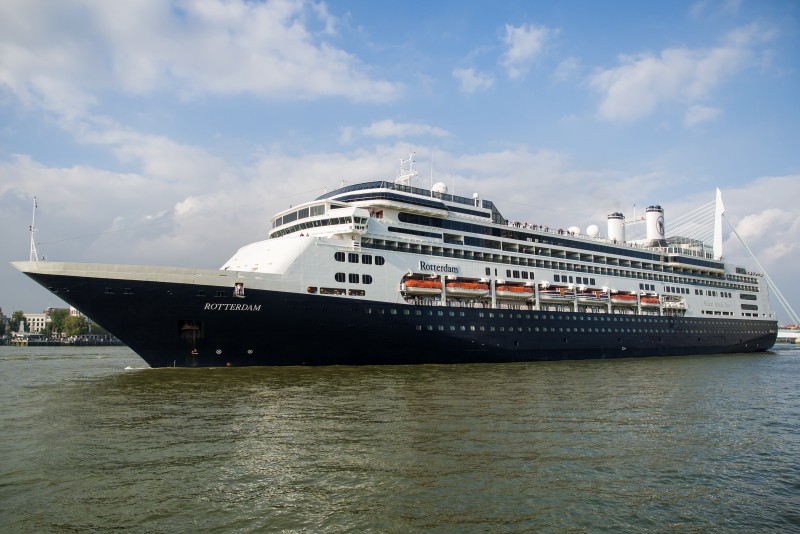
Schuttevaer – 100ste aankomst van ms Rotterdam

The Coral Princess had been on a South American cruise that was due to end March 19 in Buenos Aires. Since then, the ship has encountered obstacles to docking because of various port closures and cancellation of airline flights, the cruise line said.

Passengers have self-isolated in their staterooms and meals have been delivered by room service. Crew members also have remained in their quarters when they are not working.

The Coast Guard said in a news release Saturday it has been involved with processing about 120 vessels carrying some 250,000 passengers over the past three weeks because of the coronavirus pandemic.

The Coast Guard statement said as of Saturday there are 114 cruise ships carrying 93,000 crew members either in or near U.S. ports and waters. That includes 73 cruise ships with 52,000 crew members moored or anchored in U.S. ports and anchorages.

The cruise line industry announced a voluntary suspension of most ship operations from U.S. ports on March 13. The next day, the Centers for Disease Control and Prevention announced a “no sail” order to all cruise ships that had not suspended operations.

“We commend the decision by the cruise industry to cease operations. However, pausing a global tourist industry does not happen instantaneously or easily,” said Vice Admiral Dan Abel, Coast Guard deputy commandant for operations. “The federal, state, local and industry cooperation to achieve this feat truly represents the whole-of-nation approach directed by the president and is essential to fighting the spread of this virus and working to minimize the loss of life.”

Princess Cruises is a brand of Miami-based Carnival Corp., the world’s largest cruise company.

Two Holland America Cruise Ships Dock in Florida

Cruise ships Zaandam (R) and Rotterdam of the Holland America Line, carrying patients affected by coronavirus disease (COVID-19), arrive at Port Everglades in Fort Lauderdale, Florida, U.S. April 2, 2020. REUTER/Joe Skipper

MIAMI, April 2 (Reuters) – An ocean liner forced by a deadly onboard coronavirus outbreak to languish at sea since mid-March pulled into a South Florida port on Thursday, after authorities settled plans for the vessel and its sister ship to dock and most passengers to come ashore.

The Holland America Line cruise ship MS Zaandam and its twin, the MS Rotterdam, docked late in the afternoon at Port Everglades in Fort Lauderdale, Florida, where medical personnel immediately began off-loading 13 severely ill passengers and one crew member for transport to area hospitals.

The arrival of the ships capped a nearly three-week ordeal during which about 100 passengers and dozens of crew aboard the Zaandam reported influenza-like illness and four passengers died as numerous Latin-American ports along its route refused the vessel’s entry.

Nearly two-thirds of the Zaandam’s original passengers – those who cleared a medical screening – were transferred to the Rotterdam before the ships were granted passage through the Panama Canal on Sunday.

U.S. President Donald Trump intervened on Tuesday to urge Florida officials to accept the stricken cruise ship after Governor Ron DeSantis, a fellow Republican, had declared the Zaandam unwelcome, saying he did not want its sick passengers “dumped” in his state.

The governor relented once a “unified command” consisting of federal, state and local authorities reached agreement days later on a plan for repatriating the Zaandam, which departed Buenos Aires, Argentina, on March 7 for what was to have been a 20-day voyage to Chile. A second leg of the cruise had been due to end in Fort Lauderdale on April 7.

The Broward County Commission gave final approval to the plan, which is to be paid for by the cruise line, early Thursday.

‘CONTROLLED EXIT’

“These two ships have U.S. citizens on board. I think the Zaandam has 40, 50 Floridians, so I think we have an interest in making sure these folks come safely,” DeSantis told a news conference on Thursday before the vessels arrived.

He said the arrival plan provides for a “controlled exit.”

At least 26 passengers known to still be symptomatic but not requiring hospitalization will remain aboard the ships in port until they are well and declared fit for travel under federal health guidelines, according to details of the agreement.

Holland America said its medical staff would care for them.

Most of the remaining 1,200 some passengers, assuming they pass a medical screening, were expected to begin disembarking on Friday and be transferred straight to chartered flights home.

“Out of an abundance of caution, these guests will be transported in coaches that will be sanitized, with limited person-to-person contact and while wearing masks,” the cruise line said.

Until Thursday, none of the Zaandam’s passengers had been off the ship since March 14, with all confined to their cabins for the past 10 days, according to the company.

Holland America said 311 passengers are U.S. citizens, 52 of the residents of Florida. Those living near the port will drive home, the cruise line said.

None of the 1,180-plus crew members from the two ships will be allowed off in Fort Lauderdale, though it was not clear when the vessels will leave and how their personnel will be repatriated.

Initial objections to the Zaandam’s arrival had drawn a rebuke from Dr Anthony Fauci, one of Trump’s chief advisers on the pandemic, who urged Florida welcome the ships to port.

“You have to take care of the people who are ill. You just have an obligation to do that. And as quickly as possible. You’ve got to get the people who are not sick, who are not infected, off the ship,” Fauci, who heads the National Institute of Allergy and Infectious Diseases, told CBS “This Morning” just before the deal was reported.

Keith Kobler, a passenger along with his wife, Doris, told NBC they were aware the country had undergone a major shift over the past month as the coronavirus spread nationwide.

“It’s probably going to be strange for us,” he said. (Reporting by Susan Heavey and Doina Chiacu in Washington and Maria Caspani in New York; Writing and additional reporting by Steve Gorman in Los Angeles; Editing by Bernadette Baum, Jonathan Oatis, Nick Macfie and Simon Cameron-Moore)