Royal Caribbean Announces Proposed Offering Of $3.3 Billion Senior Secured Notes

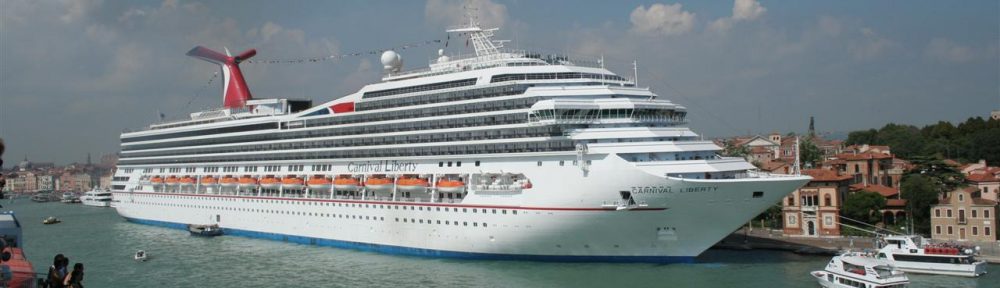
Independence of the Seas

Royal Caribbean Cruises today announced that it has commenced a private offering of senior secured notes to be issued by the company in separate series of notes due 2023 and 2025, for an aggregate principal amount of $3.3 billion.

The Notes and the related guarantees will be secured by 28 of the company’s vessels and material intellectual property of the company. The obligations under the Notes and the related guarantees will be secured by the collateral in an amount not to exceed permitted capacity under the company’s existing indebtedness.

The company expects to use the net proceeds from the offering of the Notes to repay its $2.35 billion 364-day senior secured term loan agreement with Morgan Stanley Senior Funding, Inc., as the administrative agent and collateral agent and the other lenders’ party thereto entered into on March 23, 2020. The company expects to use the remaining net proceeds for general corporate purposes, which may include repayment of additional indebtedness.

It’s not a great time to woo first-time cruisers

Cruise ships in Costa Maya, Mexico.
Cruise ships in Costa Maya, Mexico. Photo Credit: Byvalet/Shutterstock

In January, Jessica Fricchione and 10 of her family members booked what would have been her first cruise, a Bermuda sailing out of Baltimore leaving on May 31.

Due to the coronavirus crisis, the group’s sailing was cancelled — and they have no interest in taking a future cruise credit.

“No one in the family wants to book a cruise again,” she said, adding that they were looking into a stay at an all-inclusive resort instead. “I don’t ever, ever want to be stuck on a cruise ship.”

Justified or not, the cruise industry’s reputation took a hit from the high-profile Covid-19 outbreaks on a handful of ships in March and April.

Industry stakeholders acknowledge that media coverage of those ships being turned away from ports and, in some cases, of passengers being quarantined in their cabins for weeks on end is most likely to have an impact on the potential-cruiser set.

In a media call last month, Carnival Corp. CEO Arnold Donald said there was “no question” that the media attention would have an impact on that market segment.

“There have been people who may have been considering [a cruise] who would be having second thoughts at this point in time,” he said.

The first-time cruiser has always been considered critical to the growth of cruising. Despite CLIA lines’ global passenger growth of about 60% since 2009, to 30 million in 2019, cruising is still vastly underpenetrated compared with other vacations: 11.9 million Americans cruised in 2019, only about 3% of the population.

Travel advisors expect that the crisis will cause a decline in the new-to-cruise market.

“When you’re dealing with first-time cruisers, you typically have to overcome some fear of the unknown with cruising, such as seasickness, boredom, claustrophobia,” said Anthony Hamawy, President of Cruise.com. “The current negative press around cruising will add to those fears.”

Signature Travel Network CEO Alex Sharpe said that those who’ve never been on a cruise can’t draw upon personal experience to put into perspective what they are seeing and hearing from the media.

“If you’ve been watching the news and you’re not a cruiser and you can’t put what [ships with Covid-19 outbreaks] have been through in any context with your own family’s great times on a ship, it’s hard to reconcile that and say, ‘That’s my next vacation,’” Sharpe said. “I think new-to-cruise will take a hit in the short term. That will take some time.”

Some cruise lines have found that booked passengers who were new to cruise have been more likely to cancel cruises they had booked during the current operations pause.

Mark Conroy, Silversea Cruises’ managing director of the Americas, said that new cruisers have been more likely than past passengers to cancel and take a refund versus a future cruise credit because they are “more nervous.”

Loyalty program members “will come back first,” he said. “They’re the people that know us and love us and travel with us every year or every other year. They’re the ones that are eager to go.”

Repeat cruisers will lead the way

Many think that those who were once potential cruisers and are now on the fence can be swayed back once cruise lines are up and running.

Charles Sylvia, CLIA’s vice president of membership and trade relations, said that there will be “more challenges ahead with regard to the first-time cruisers” but that people returning from cruises with positive stories will put them at ease.

“Once they see the resumption of operations and once they see friends and family members and co-workers going on cruises and coming home with that same level of enthusiasm and satisfaction, then they will be back — the first-time cruisers will come to us,” Sylvia said.

Donald also said that returning cruise passengers, as well as travel advisors, will be the most important messengers in overcoming the additional concerns non-cruisers have. He added that this is something the industry is accustomed to dealing with.

“We were busy knocking down myths before, and we’ll have to return to that,” he said, adding that the two “most powerful ways” to do that is through travel advisors, “with their knowledge and experience and personal relations with their clients,” and the passengers, who will “provide the kind of testimonials and credibility with their friends and colleagues and relatives.”

And as has always been true for travel coming out of every crisis, for some people, the right price is a big persuader.

“I think, with time, this will be overcome because the vacation value will ultimately win out,” Hamawy said.
Royal Caribbean Updates Measures Taken to Weather COVID-19 Pandemic

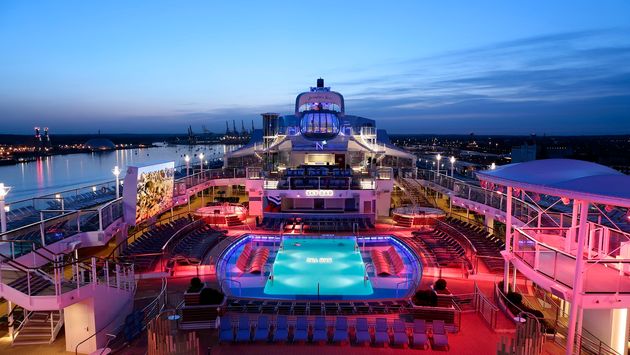
Anthem of the Seas
PHOTO: Anthem of the Seas’ pool deck at sunset. (photo courtesy of Royal Caribbean International)
Royal Caribbean Cruises Ltd. (RCCL) on May 8 provided a business update on how it is shoring up liquidity, reducing expenses, and upgrading cleaning and disinfection protocols amid the Covid-19 pandemic.

“These are unprecedented times for all of us. Travel restrictions and stay-at-home orders are important to slowing the spread of the virus, but they have severely impacted our operations,” said Chairman and CEO Richard D. Fain. “We are taking decisive actions to prioritize the safety of our guests and crew while protecting our fleet and bolstering liquidity.”

RCCL brands – including Royal Caribbean International, Celebrity Cruises, Azamara and Silversea Cruises – have suspended operations through at least June 11. The corporation said continued disruptions to travel and port operations may result in further suspensions.

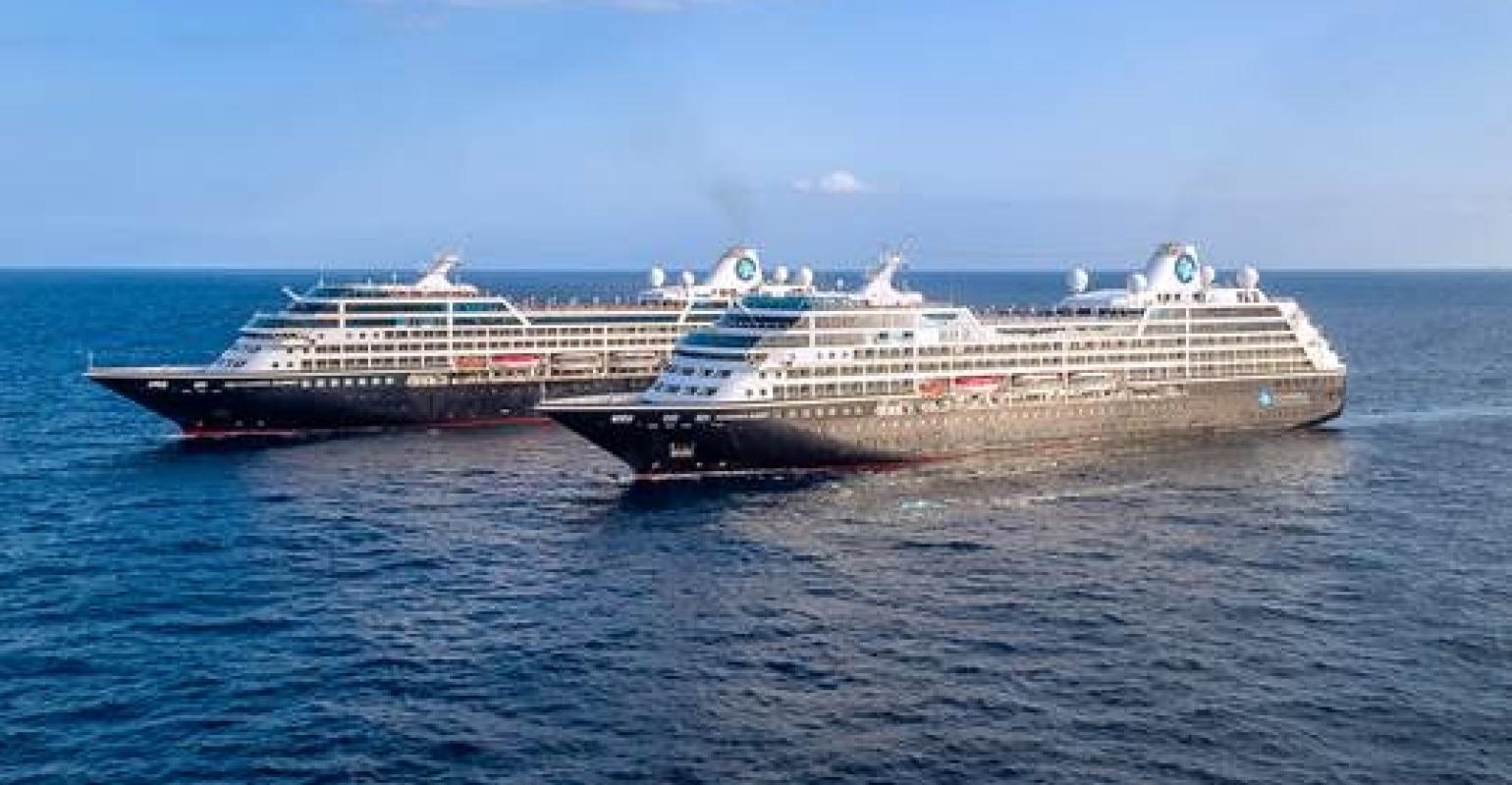
As Azamara #SistersMeet, social fans can earn on-board credit ...

“Our top priority is to ensure the safety of our guests and crew during the suspension period and when we resume operations,” Fain said. “The company’s fleet is now either in port or at anchor and we have developed strict protocols to protect our crew that is still on board our ships.”

RCCL also has arranging to shore up its liquidity and, as of April 30, had liquidity of approximately $2.3 billion in cash and cash equivalents. On May 4, the company increased the 364-day senior secured credit facility and drew $150 million, further enhancing the company’s liquidity profile.

“Since late January, we have undertaken several proactive measures to mitigate the financial and operational impacts of COVID-19,” said Jason T. Liberty, executive vice president and CFO. “Our focus is on bolstering liquidity through significant cost-cutting, capital spends reductions, and other cash conservation measures. In addition, the company is considering additional financing sources. We continue to evaluate all options available to us to further enhance liquidity.”

Royal Caribbean Ships by Size [2020] with Comparison Chart

To reduce expenses, RCCL has significantly reduced ship operating expenses, including crew payroll, food, fuel, insurance and port charges.

The company reduced its workforce by about 26 per cent, eliminated or significantly reduced marketing and selling expenses for the remainder of 2020, and suspended travel and instituted a hiring freeze.

“The company estimates that its average ongoing ship operating expenses and administrative expenses is approximately $150 million to $170 million per month during the suspension of operations,” the business update said. “The company may seek to further reduce this average monthly requirement under a prolonged non-revenue scenario.”

The company also has identified approximately $3 billion and $1.4 billion of capital expenditure reductions or deferrals in 2020 and 2021, respectively. Shipyard operations have been impacted, so there will be delays of new ships previously planned for delivery in 2020 and 2021.

The company estimates its cash burn to be, on average, in the range of approximately $250 million to $275 million per month during a suspension of operations.

At the beginning of 2020, RCCL was looking at a strong booking pattern at higher prices than the previous year.

“Given the impact of Covid-19, booking volumes for the remainder of 2020 are meaningfully lower than the same time last year at prices that are down low-single digits,” the RCCL statement said. “Due to the suspension in sailings, booking trends reflect elevated cancellations for 2020 and more typical levels for 2021 and beyond. Although still early in the booking cycle, the booked position for 2021 is within historical ranges when compared to the same time last year with 2021 prices up mid-single digits compared to 2020.”

Royal Caribbean Ship Classes Explained - Cruise International

As of March 31, the company had $2.4 billion in customer deposits. This includes approximately $800 million of future cruise credits related to voyage cancellations through June 11. The company also continues to take future bookings for 2020, 2021 and 2022, and receive new customer deposits and final payments on these bookings.

The company previously withdrew its first-quarter and full-year 2020 guidance. “The magnitude, duration and speed of Covid-19 remain uncertain. As a consequence, we cannot estimate the impact of Covid-19 on our business, financial condition or near- or longer-term financial or operational results with reasonable certainty, but we expect to incur a net loss” for the first quarter and the 2020 fiscal year, “the extent of which will depend on the timing and extent of our return to service.”

Meanwhile, the company has been developing a plan to address the health challenges posed by Covid-19. It includes enhanced screening, upgraded cleaning and disinfection protocols, and plans for social distancing.

RCCL continues to work with the Centers for Disease Control and Prevention, global public health authorities, and national and local governments to enhance measures to protect the health, safety and security of guests, crew and the communities visited when operations resume.