Royal Caribbean Reports Q3 2022 Earnings; Net Income of $33 Million

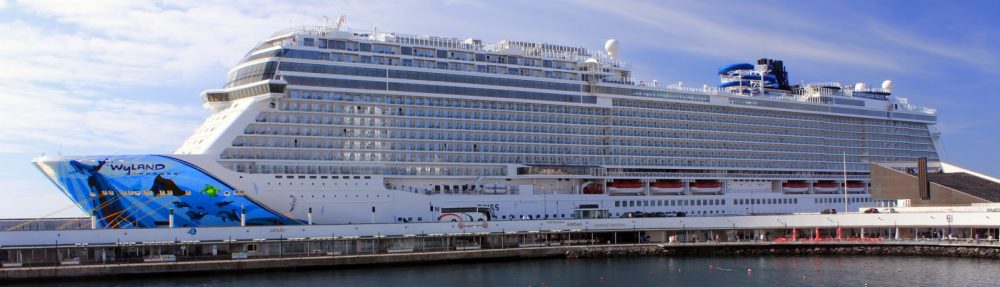
Anthem of the Seas in Liverpool, UK Photo Credit Spacejunkie2 (Flickr)

Royal Caribbean Group today reported third quarter 2022 Earnings per Share of $0.13 and Adjusted Earnings per Share of  $0.26.

Third quarter results were better than expected and above guidance for the quarter mainly due to higher load factors from strong close-in demand, further improvement in onboard revenue and better cost performance. The Group also introduced the Trifecta Program, a new three-year initiative designed to drive superior performance, according to a press release.

“Last quarter’s better-than-expected performance was a result of the continued robust demand environment and strong execution by our teams,” said Jason Liberty, president and chief executive officer of Royal Caribbean Group.

“The combination of our leading global brands, the best and most innovative fleet in the industry, our nimble global sourcing platform and the very best people have delivered a successful return of our business to full operations and positions us well to deliver record yields and adjusted EBITDA in 2023,” added Liberty. “The Trifecta Program provides us with the financial coordinates we are looking to achieve over the next three years. As we have demonstrated in the past, we expect the formula of moderate yield growth, strong cost discipline, and moderate growth of our fleet will deliver a strong financial profile.”

Business Highlights

  • Load factors in the third quarter were 96% overall, with Caribbean sailings reaching almost 105%.
  • Total Revenue in the third quarter was $3.0 billion, Net Income was $33.0 million and Adjusted EBITDA was $742.3 million.
  • Booking volumes in the third quarter accelerated versus the second quarter of 2022 and remained significantly higher than booking volumes received in the third quarter of 2019 for all future sailings.
  • For 2023, all quarters are currently booked well within historical ranges at record pricing.
  • During the third quarter, the company addressed $5.6 billion of its 2022 and 2023 debt maturities, resulting in $0.1 billion and $2.1 billion of maturities remaining in 2022 and 2023, respectively.
  • Based on continued strength in consumer demand and typical load factor seasonality, the company expects fourth-quarter load factors to be similar to the third quarter overall, and to reach triple digits by year-end.
  • For the fourth quarter of 2022, based on current currency exchange rates, fuel rates and interest rates, the company expects to generate Total Revenue of approximately $2.6 billion, Adjusted EBITDA of $350 – $400 million and Adjusted Loss per Share of ($1.30) – ($1.50).
  • The Trifecta Program is designed to achieve three important financial goals by the end of 2025: increasing Adjusted EBITDA per APCD to triple digits, increasing Adjusted EPS to double digits, and achieving ROIC in the teens, while in parallel returning to an investment grade profile and reducing carbon intensity by double digits as compared to 2019.

Third Quarter 2022

The company reported Net Income for the third quarter of $33.0 million or $0.13 per share compared to a Net Loss of $(1.4) billion or $(5.59) per share for the same period in the prior year. The company also reported an Adjusted Net Income of $65.8 million or $0.26 per share for the third quarter compared to an Adjusted Net Loss of $(1.2) billion or $(4.91) per share for the same period in the prior year.

Third quarter load factors were 96% overall and almost 105% for Caribbean Sailings. As expected, total revenues per passenger cruise day were flat as reported and up 1%  in constant currency versus the third quarter of 2019 despite the negative impact from the redemption of future cruise certificates (FCCs) and lower-than-average load factors on high-priced Europe itineraries.  

Gross Cruise Costs per APCD increased by 1% as reported and in constant currency, compared to the second quarter of 2022. Net Cruise Costs (NCC), excluding fuel, per APCD improved by 11% as reported and 10% in constant currency, compared to the second quarter of 2022. Gross Cruise Costs per APCD and NCC, excluding fuel, per APCD for the third quarter included $3.37 per APCD related to health protocols and one-time lagging costs related to the fleet ramp-up.

NCC, excluding fuel, per APCD for the fourth quarter is expected to be higher by low to mid-single digits compared to the fourth quarter of 2019, all on a constant currency basis. The company still expects to have transitory costs in the fourth quarter, but is expected to normalize as the company is nearing full occupancies, full crew staffing levels, and adapting protocols. The improvement is partially offset by inflationary and supply chain challenges, mainly related to fuel and food costs, which are expected to continue to weigh on costs through the rest of this year and through the first half of 2023.

Update on Bookings

Booking volumes in the third quarter were significantly higher than in the corresponding period in 2019, the company said.

This improvement in bookings was helped by the easing of testing and vaccination protocols which now align more closely with the broader travel industry, allowing everyone to enjoy a cruise vacation.

Guests continue to make their cruise reservations closer to sailing than in the past, resulting in about 50% more bookings in the third quarter for current year sailings when compared to the third quarter of 2019. 

While 2022 bookings remain strong and on pace to achieve occupancy targets, the most notable change has been a substantial acceleration in demand for 2023 sailings.

Booking volumes for 2023 doubled during the third quarter when compared to the second quarter and were considerably higher than bookings for 2020 sailings during the comparable period in 2019, the highest in company history.

As of September 30, 2022, the Group’s customer deposit balance was $3.8 billion, reflecting typical seasonality as peak summer sailing deposits have been recognized in revenue. In the third quarter, approximately 95% of total bookings were new versus FCC redemptions.

Trifecta Program

The Trifecta Program is a three-year financial performance initiative designed to chart out the pathway back to superior performance with three main goals to be achieved by the end of 2025, the company said, including:

  • Triple Digit Adjusted EBITDA per APCD, to exceed prior record Adjusted EBITDA per APCD of $87 in 2019.
  • Double Digit Adjusted Earnings per Share to exceed the prior record Adjusted Earnings per Share of $9.54 in 2019.
  • Return on Invested Capital (“ROIC”) in the teens to exceed the prior record ROIC of 10.5% in 2019 through optimizing capital allocation and enhancing operating income; all while returning to an investment grade profile and reducing carbon intensity by double digits compared to 2019.

To achieve these goals, the company expects to execute its proven formula of moderate capacity growth, moderate yield growth, and strong cost controls, all while ensuring disciplined capital allocation, investing in the future and improving the balance sheet.

“Our brands, vacation offerings and fleet have never been stronger and we are well positioned for a continued step change in financial performance,” said Liberty. “Our proven formula for success is unchanged as we grow capacity and, enhance profitability while seeking to deliver superior shareholder return.”

Liquidity and Financing Arrangements

As of September 30, 2022, the Group’s liquidity position was $3.1 billion, which includes cash and cash equivalents, undrawn revolving credit facility capacity, and a $700 million commitment for a 364-day term loan facility.

During the third quarter, the company took proactive actions to address $5.6 billion of 2022 and 2023 maturities, in addition to securing financing for the Silversea Endeavour acquisition:

  • In August, the company issued $1.15 billion of 6.00% convertible notes due 2025 and used the proceeds to repurchase $800 million of its 4.25% convertible notes maturing June 2023 and $350 million of its 2.875% convertible notes maturing November 2023;
  • In August, the company issued $1.25 billion of 11.625% unsecured notes due 2027 to refinance 2022 and 2023 debt maturities;
  • In August, the company extended its existing commitment from Morgan Stanley for a $700 million delay draw term loan facility to August 2023;
  • In September, the company amended its $554 million Term Loan (due October 2023) such that the aggregate outstanding principal balance is $502 million, with $30.0 million maturing in October 2023 and $472 million maturing in October 2024.
  • In September, the company priced $1.0 billion of 8.25% secured notes and $1.0 billion of 9.25% guaranteed notes, both due 2029 and callable in 2025 to refinance $1.0 billion of secured notes and $1.0 billion of guaranteed notes, both due June 2023. The transaction closed in October.

“During the third quarter, we took a series of proactive actions to methodically address a significant amount of our 2022 and 2023 debt maturities,” said Naftali Holtz, chief financial officer, Royal Caribbean Group. “Our strong near-term liquidity enables us to focus on continuing to improve the balance sheet as we seek to return to an investment grade profile.”

Carnival Corporation Provides Business Update, Q1 Earnings

Carnival Corporation has provided its first-quarter 2022 business update.

Highlights: 

  • U.S. GAAP net loss of $1.9 billion and an adjusted net loss of $1.9 billion for the first quarter of 2022.
  • First-quarter 2022 ended with $7.2 billion of liquidity, including cash, short-term investments and borrowings available under the company’s revolving credit facility.
  • For the cruise segments, revenue per passenger cruise day (“PCD”) for the first quarter of 2022 increased approximately 7.5% compared to a strong 2019. This increase was driven by exceptionally strong onboard and other revenue.
  • As of March 22, 2022, 75% of the company’s capacity had resumed guest cruise operations.
  • The company expects to have each brand’s full fleet back in guest cruise operations for its respective summer season where it historically generates the largest share of its operating income.
  • The company believes monthly adjusted EBITDA will turn positive at the beginning of its summer season.
  • Since the middle of January, the company has seen an improving trend in weekly booking volumes for future sailings. Recent weekly booking volumes have been higher than at any point since the restart of guest cruise operations.
  • The company announced that three additional ships are expected to leave the fleet in 2022 in connection with its ongoing fleet optimization strategy. In total, this represents the planned removal of 22 smaller-less efficient ships since the beginning of the pause in guest cruise operations.
  • Building on the company’s strong governance framework and its continued commitment to sustainability, the Board of Directors appointed the company’s President and Chief Executive Officer Arnold Donald to the role of Chief Climate Officer.

First Quarter 2022 Results and Statistical Information

  • For the cruise segments, revenue per PCD for the first quarter of 2022 increased approximately 7.5% compared to a strong 2019. This increase was driven by exceptionally strong onboard and other revenue.
  • During the first quarter of 2022, as a result of the Omicron variant, the company experienced an impact on bookings for its near-term sailings, including higher cancellations resulting from an increase in pre-travel positive test results, challenges in the availability of timely pre-travel tests and the disruption Omicron caused on society overall during this time. Therefore, occupancy in the first quarter of 2022 was 54%, a 20% increase in guests carried over the prior quarter.
  • Available lower berth days (“ALBD”) for the first quarter of 2022 were 13 million, which represents 60% of total fleet capacity, increasing from 47% in the fourth quarter of 2021.

Carnival Corporation & plc President, Chief Executive Officer and Chief Climate Officer Arnold Donald noted: “Despite the impact of Omicron, guests carried grew by nearly 20 per cent in the first quarter compared to the prior quarter, while simultaneously increasing revenue per passenger cruise day and driving an improvement in adjusted EBITDA. We expect monthly adjusted EBITDA to turn positive by the beginning of our summer season as we build occupancy and return more ships to service.”

Donald added: “We believe we have positioned the company well to withstand volatility on our path to profitability and have been working hard to resume operations as a stronger and more sustainable operating company, to maximize cash generation and to deliver double-digit returns on invested capital over time.”

Despite the impact resulting from the Omicron variant during the first quarter, the company’s adjusted EBITDA (see non-GAAP Financial Measures) improved due to its ongoing resumption of guest cruise operations. The company believes that adjusted EBITDA will continue to improve with the ongoing resumption of guest cruise operations and continues to expect improvement in occupancy throughout 2022 until it returns to historical levels in 2023. The company believes monthly adjusted EBITDA will turn positive at the beginning of its summer season.

The company ended the first quarter of 2022 with $7.2 billion of liquidity, including cash, short-term investments and borrowings available under the revolving credit facility. The company invested $400 million in capital expenditures (net of export credit facilities) during the first quarter of 2022, which included the delivery of three of the four larger-more efficient ships expected to be delivered in 2022. In addition, the Company repaid $500 million of debt principal and incurred $400 million of interest expense, net during the quarter.

Carnival Corporation & plc Chief Financial Officer David Bernstein noted, “We ended the first quarter of 2022 with $7.2 billion of liquidity. Looking forward, we believe we remain well-positioned given our liquidity and the continued improvement expected in adjusted EBITDA, along with the expected build in customer deposits, as we progress toward resuming full fleet operations.”

Resumption of Guest Cruise Operations

Donald said: “Since resuming guest cruise operations, we delivered more than 2.2 million exceptional vacations while achieving historically high guest satisfaction scores. With 75 per cent of our capacity having resumed guest cruise operations, we are well on our way back to full cruise operations and we are planning to return the balance of the fleet by our summer seasons. Achieving these operational milestones while facing headwinds including Delta and Omicron variants and changing regulations and protocols —particularly at our scale— makes the efforts of our team, ship and shore, all the more impressive.”

Donald continued, “In addition, we furthered our fleet optimization efforts by taking delivery of three larger-more efficient ships during the quarter, Costa Toscana and AIDAcosma, the company’s fifth and sixth ships powered by LNG and Discovery Princess. We also announced the removal of another three smaller-less efficient ships, bringing the total to 22 ships, significantly reducing our rate of capacity growth. Upon returning to full operations, nearly 25 per cent of our capacity will consist of newly delivered ships, which we believe will expedite our return to profitability and improve our return on invested capital.”

As of March 22, 2022, 75% of the company’s capacity had resumed guest cruise operations as part of its ongoing return to service. The company’s enhanced COVID-19 protocols have helped it become among the safest forms of socializing and travel, with far lower incidence rates than on land. The company expects to have each brand’s full fleet back in guest cruise operations for its respective summer season where it historically generates the largest share of its operating income.

Upon returning to full cruise operations, the company’s ongoing fleet optimization strategy combined with its LNG efforts and other innovative initiatives to drive energy efficiency is forecasted to deliver a 10% reduction in fuel consumption per ALBD and a 9% reduction in carbon emissions per ALBD on an annualized basis compared to 2019.

While the company will benefit from the removal of smaller-less efficient ships and the delivery of larger-more efficient ships, the company expects adjusted cruise costs excluding fuel per ALBD (see Non-GAAP Financial Measures) for the full year 2022, to be significantly higher than 2019. This is driven by a portion of its fleet being in pause status for part of the year, restart related expenses, an increase in the number of dry-dock days, the cost of maintaining enhanced health and safety protocols and inflation. The company anticipates that many of these costs and expenses will end in 2022 and will not reoccur in 2023. Additionally, the company expects to see a significant improvement in adjusted cruise costs excluding fuel per ALBD from the first half of 2022 to the second half of 2022 with a low double-digit increase for the full year 2022 compared to 2019.

The ongoing resumption of the company’s guest cruise operations and the increased uncertainty given the current invasion of Ukraine, including its effect on the price of fuel, are collectively having a material impact on its business, including the company’s liquidity, financial position and results of operations. The company continues to expect a net loss for the second quarter of 2022 on both a U.S. GAAP and adjusted basis. However, the company expects a profit for the third quarter of 2022. For the full year of 2022, the company expects a net loss.

Update on Bookings

Donald added: “Given the recent strengthening in booking volumes coupled with the closer-in booking patterns, we expect an extended wave season. In fact, we gained occupancy even in the month of March with fleetwide occupancy nearing 70 per cent and several sailings already exceeding 100 per cent.”

Since the middle of January, the company has seen an improving trend in weekly booking volumes for future sailings. Recent weekly booking volumes have been higher than at any point since the restart of guest cruise operations. 

During the first quarter, the company increased its booked occupancy position for the second half of 2022, albeit not at the same pace as a typical wave season due to the Omicron variant. As a result, cumulative advance bookings for the second half of 2022 are at the lower end of the historical range. However, the company believes it is well situated with its current second half 2022 booked position given the recent improvements in booking volumes and its continued expectation that occupancy will build throughout 2022 and return to historical levels in 2023. Normalized for bundled packages, prices on bookings for the second half of 2022 continue to be higher, with or without future cruise credits (“FCCs”), as compared to 2019 sailings. 

Cumulative advanced bookings for the first half of 2023 continues to be both at the higher end of the historical range and at higher prices, with or without FCCs, normalized for bundled packages, as compared to 2019 sailings. (Due to the ongoing resumption of guest cruise operations, the company’s current booking trends will be compared to booking trends for 2019 sailings.)

Total customer deposits increased to $3.7 billion as of February 28, 2022, from $3.5 billion as of November 30, 2021.

Carnival Has $7.9 Billion of Cash On Hand; 12 Months of Liquidity

Carnival Corporation Sending Carnival and AIDA Ships to China in 2017

Carnival Corporation said in a regulatory filing on Friday that as of July 31, 2020, the company had $7.9 billion in cash and cash equivalent balance available.

The nine-brand operation said earlier in July that during its pause in guest operations, the monthly average cash burn rate for the second half of 2020 is estimated to be approximately $650 million per month, which could give Carnival approximately 12 months of cash with ships out of operation.