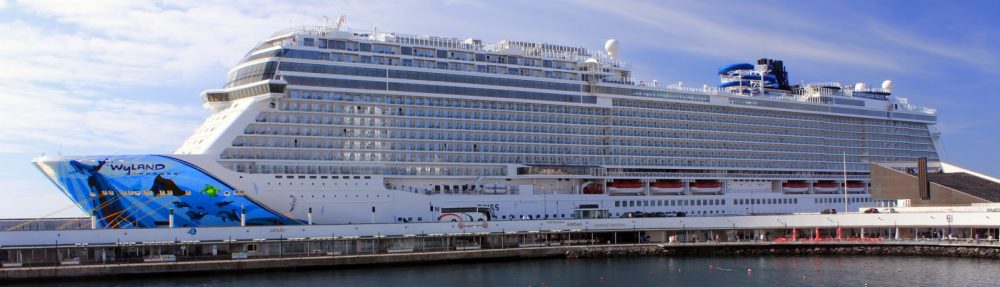
Navigator of the Seas undergoes US$115M refit

<i>Navigator of the Seas</i> undergoes US$115M refit
Royal Caribbean’s Navigator of the Seas’ refurbishment includes installing the world’s longest waterslide at sea

Royal Caribbean International has revealed plans to install the world’s longest waterslide at sea on its ship Navigator of the Seas.

The ship will relaunch on 24 February after a US$115M refit.

The waterslide – called The Blaster – will propel a two-person raft through more than 244 m of hills, drops and straightaways including a section that extends over the side of the ship.

“Each Royal Caribbean ship brings a new adventure uniquely designed to deliver on our guests’ preferences from A to Z,” said Royal Caribbean International president and chief executive Michael Bayley. Every detail matters and we’ve mapped out an unmatched combination of innovative features and experiences for this top-to-bottom transformation of Navigator of the Seas.”

Navigator of the Seas‘ multi-million dollar makeover also includes:

  • To Dry For, the first standalone blow-dry bar at sea.
  • Planet Z glow in the dark laser tag.
  • The Observatorium, Royal Caribbean’s escape room.
  • The Lime and Coconut two-level signature cocktail bar.
  • New restaurants, bars and coffee shop.

Navigator of the Seas will be the first in the Royal Caribbean fleet to visit Perfect Day at CocoCay, the debut destination in the cruise line’s recently announced private island collection, opening in May 2019.

Royal Caribbean: New Experiences at Sea and on Land

The Symphony of the Seas

Introducing the Symphony of the Seas in the North American market in November, Royal Caribbean International President Michael Bayley said that the features on the new ship will be introduced on the 2009-built Oasis, the first ship in the class, when she goes into a two-month drydock in Europe this year, and then on the sister ship, the 2010-built Allure, next year. “Through our Royal Amplified program the Oasis and the Allure will re-enter service with literally all the services and features we have on the Symphony,” Bayley said in a press conference aboard the Symphony.

With the continued growth of the industry, Bayley said it is important to attract more first-time cruise passengers. However, as they often start by taking a short cruise they are not experiencing the best that the industry has to offer.

“We have been using our old ships to convince people to start cruising,” he explained. “We are now changing that strategy by upgrading our short-cruise ships. As a result, we have seen a strong increase in demand.”

In May, Royal Caribbean expects to introduce its Perfect Day concept on CoCoCay. Redoing its private out-island in the Bahamas, passengers will find a state-of-the-art water park in addition to beaches and a variety of water sports offerings.

“Perfect Day has been designed after feedback from our guests,” Bayley said. “We asked them what would be their perfect day. The sweet spot is multi-generational travel – there will be something to do for all ages, whether they want ‘thrill or chill.’”

The United States generates about 55 per cent of Royal Caribbean’s total business, according to Bayley, who added that Europe, Latin America and Asia-Pacific are also huge markets for the brand.

As for ship deployment, he said that is based on the business viability of each market.

But despite the Symphony being the world’s largest ship at 228,081 tons and literally a destination by herself, while also receiving a top net promoter score, Bayley said that one of the biggest drivers selling cruises are destinations. “People want to go somewhere and explore,” he added.

“But as we plan our future with bigger ships and new onboard features and services, destinations must also plan their future, and sometimes they can do better. We are open to partnering with destinations to help them in their development. Today, we are looking at some 50 port projects around the world.”

The Symphony’s arrival in the Port of Miami coincided with the introduction of Royal Caribbean’s new Terminal A. Resembling the shape of a ship, the sleek terminal will homeport the Symphony and the Allure.

Up to now, Miami has handled about 750,000 passengers a year for Royal Caribbean. With the new terminal, the cruise line hopes to boost that number to 2 million passengers a year.

This year Royal Caribbean will also be introducing the new Spectrum of the Seas in China, while the Ovation redeploys to Alaska.

At press time, Royal Caribbean had five more ships on order, including the Spectrum of the Seas, slated to enter service this spring; another Quantum-class ship in 2020; another Oasis-class vessel for 2021 delivery; and the first of the new Icon class of LNG-fueled vessels in 2022, with a sister ship following in 2024.
Venice to charge tourist entry fee for short stays

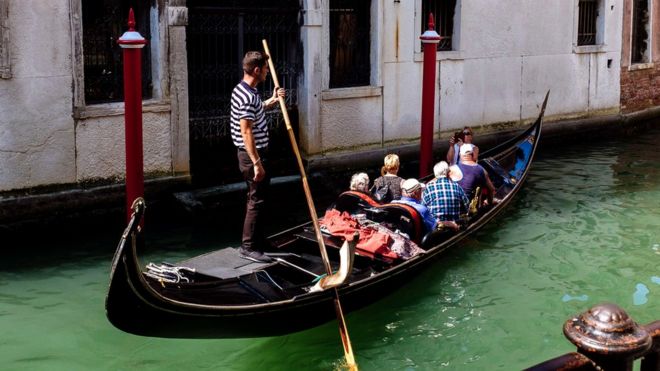
Gondola in Venice, 27 Aug 17
For most of the year, Venice’s canals are crowded with boats

Venice has won approval to introduce an entry fee of up to €10 (£9; $11.50) for short-stay tourists.

Italy’s budget for 2019 has a clause enabling Venice to impose the fee, which will especially target day-trippers arriving on cruise ships.

Tourists already pay a similar “landing tax” when they visit Italy’s tiny Aeolian Islands.

Venetians have long complained that mass tourism is swamping the city, adored for its picturesque canals.

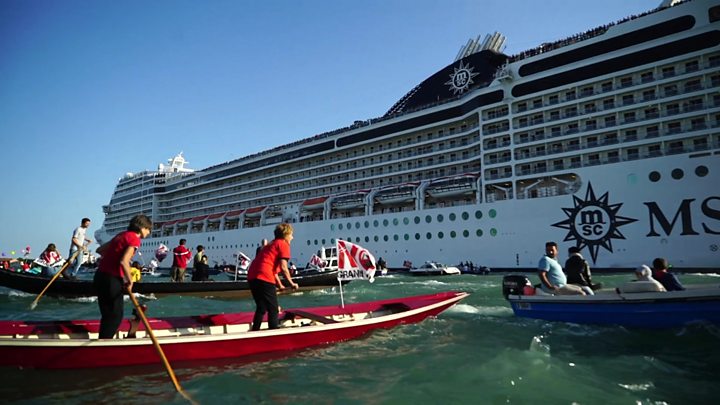
Hundreds of cruise ships moor in Venice every year, allowing over a million passengers to see the city’s sights.

Venice Mayor Luigi Brugnaro said the “landing tax” would generate much-needed income to keep the city clean.

It is expected to be set at €2.50 to €5 per person, but at peak times in the summer it could rise to €10. Venice plans to have the tax in place for the 2019 high season.

It will apply only to tourists, but it is not clear whether it will replace a city tax already levied on hotel occupants. That tax brings in about €30m annually, but the “landing tax” could generate more – an estimated €50m.

https://www.bbc.co.uk/news/av/embed/p06npwsb/46721456

Media captionVenetians are trying to find solutions to stop the exodus from their city

Cruise passengers are easily identified, Italian officials say, but it may prove harder to tax day-trippers arriving by air, road or rail.

Local residents, workers and students will be exempt. For years there have been protests by Venetians who say mass tourism is spoiling the city’s character.

Claudio Scarpa, head of the Venice hotel managers’ association Ava, said: “the principle is that whoever visits from morning to evening, contributing just a tiny amount to the revenue from tourism, but imposing costs on our services, must understand that it’s not all there for free”.