Cruise curators

Image result for quantum of the seas bear

By Tom Stieghorst

Increasingly, cruise ships are becoming galleries at sea.

In 2005, Denver artist Lawrence Argent crafted a 40-foot-tall blue bear out of fiberglass and posed it peering through the towering glass windows of the Colorado Convention Center.

“I saw it and I loved it,” said Joan Blackman, an art consultant for Royal Caribbean Cruises Ltd. “And I said to myself, one day we’re going to have the opportunity to have this onboard.” 

Nine years later, the company’s Quantum of the Seas emerged from a shipyard in Germany with a 32-foot-tall bear, this one pink and made of stainless steel, affixed to the top deck.

“It became an identifier,” Blackman said. “And it says a lot about Royal, because they’ve given you not only something to talk about but it’s really kind of intrigued you and made you smile.”

Art has always been a background element on a cruise, but increasingly it is stepping into the spotlight. Some lines are spending millions of dollars on art with each new ship.

Blackman, a co-founder and partner at International Corporate Art (ICArt) in Coral Gables, Fla., said the emphasis on art helps drive home the quality of the cruise experience and give cruise lines an extra surprise, a different experience and a conversation item to offer guests.

“They’re trying to differentiate themselves, their brands, their ships and create something that is their [unique] characteristic,” she said.

Strategies are as varied as the brands. At some lines, art reinforces a national identity that it cultivates or emphasizes heritage and tradition. Other lines want to appear contemporary. 

And some are offering a curated art collection worthy of connoisseurs.

In general, art on cruise ships is becoming more three-dimensional, more interactive and more driven by technological possibilities than in the past, according to Blackman.

Familiar themes emerge at CruiseWorld China

From left: Alan Buckelew of Carnival Corp., Adam Goldstein of Royal Caribbean Cruises Ltd., Frank Del Rio of Norwegian Cruise Line Holdings and Gianni Onorato of MSC Cruises.

BEIJING — To U.S. travel agents, the themes that emerged from this week’s CruiseWorld China might have seemed reminiscent of issues that surfaced over the past three decades of cruise industry development in the U.S.

“We need to bring across the idea that the cruise is the destination, instead of just a mode of transportation,” said Zheng Weihang, executive vice president and secretary general of the China Cruise & Yacht Industry Association.

Adam Goldstein, chairman of CLIA and president and COO of Royal Caribbean Cruises Ltd., added: “A vast number of people have no idea what a cruise vacation is about, what happens onboard and how it offers great value.”

And Anthony Kaufman, executive vice president of International Operations for Princess Cruises, counseled that a travel agent’s responsibility includes “understanding the uniqueness of each cruise product and imparting that knowledge to the consumers.”

Although much of the conversation sounded like Cruise Sales 101, not all of the issues facing a quickly-growing, rapidly evolving industry have a North American parallel. The vast majority of cruises in China are charters, with cabins sold by a handful of mega-agencies, some of them larger than the cruise lines themselves. They, in turn, rely on a network of sub-agencies to help them fill ships.

The sustainability of the charter model was called into question by most of the cruise executives present, though none called for abandoning it outright. The general consensus was that it has helped the market get to where it is today, but more diversity in sales options will be healthier for long-term growth.

Calling charters a “force-feeding” model, Zinan Liu, Royal Caribbean International’s president of China and North Asia Pacific region and chairman of CLIA North Asia, said the charter model was successful in the past six years when consumer awareness was low and the sales force of cruise lines small. He predicted it will likely continue to coexist with other distribution models.

Kaufman noted that it continues to be the foundation for China’s cruise market and at present enables travel agencies to maintain better control of the customer experience and pricing. But, he said, whether it continues to dominate might depend on individual company strategies.

That each of the four largest cruise lines was represented by a top corporate executive suggests that China’s potential is still very much front of mind:

• Carnival Corp. COO Alan Buckelew provided an overview of the company’s 10 brands and revealed that the most luxurious Princess ship yet built will sail Chinese waters.

• Goldstein wore two hats. As chairman of CLIA, he provided an overview of industry growth, with a focus on China, and as president and COO of RCCL, he promoted Royal Caribbean International ships.

• Norwegian Cruise Line Holding Ltd. CEO Frank Del Rio provided updated details about the Norwegian Joy, a ship being built specially for the Chinese market, whose inaugural cruise is slated for June 23.

• MSC Cruises CEO Gianni Onorato provided more details after having announced the day before that a second ship, the Splendida, would be heading to China to join the Lirica.

In addition to the international development and regional line executives quoted above, onstage were Buhdy Bok, president of Costa Group Asia; David Herrera, president of Norwegian Cruise Line Holdings China; Roger Chen, chairman of Carnival Corp. China; Harry Sommer, executive vice president for international development at Norwegian Cruise Line Holdings; Helen Huang, president of Greater China, MSC Cruises; and Fan Min, chairman and CEO of SkySea Cruise Line.
Royal Caribbean reverts to traditional seating in main dining rooms

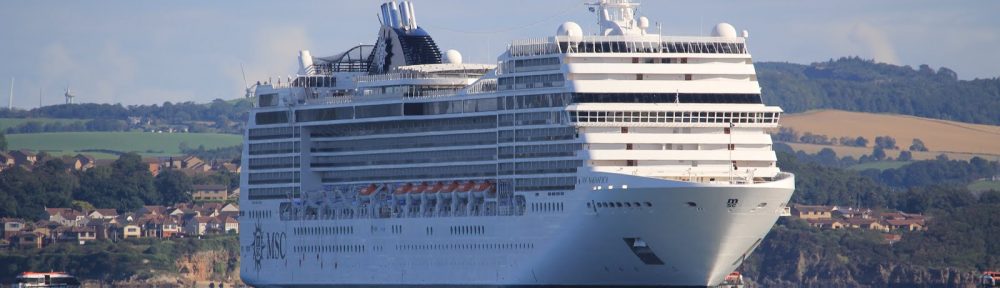
Dining room on the Independence of the Seas; photo credit Dave Jones

Royal Caribbean International has decided to end its main dining room format called Dynamic Dining, which was launched with Quantum of the Seas two years ago.

Starting with the Nov. 27 sailing of Anthem of the Seas, the main dining room will operate under the My Time Dining system. Ovation of the Seas will make the change on Nov. 23.

Dynamic Dining was conceived as a way of breaking up the main dining room into smaller venues. The Quantum-class ships were built with a quartet of 480-seat rooms that had different menus and themes. Diners could make reservations, and rotate among them.

When more tradition-bound guests complained, an option was added for a fixed early or late seating called Dynamic Dining Classic.

After Nov. 27, the same menu will be available in all four restaurants: Chic, American Icon, Grande and Silk. As on other ships that have My Time Dining, guests can choose their own dining times and table mates. Alternatively, they can choose the traditional early or late seating at a fixed table.

Royal Caribbean said guests booked on Anthem and Ovation who have already selected the Dynamic Dining Classic option for their upcoming cruise will be assigned to either early or late seating to match their original choice of time. Guests who have selected the Dynamic Dining Choice option will be assigned to the My Time Dining flexible option.

Royal Caribbean said guests on the flexible option will dine in the American Icon and Silk dining rooms while guests on early and late seating’s will eat at either Chic or Grande.

In a statement, Royal Caribbean said it decided to end Dynamic Dining after sifting through guest feedback. “Our guests have told us that they prefer the ease of a cruise vacation where they have flexibility without having to plan extensively,” the statement said.