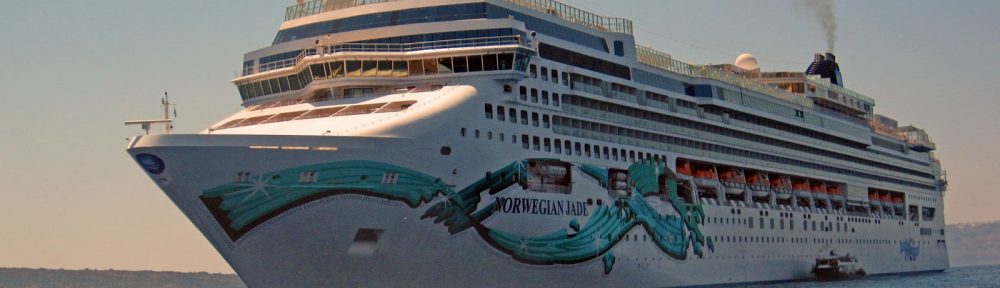
PortMiami Will Be Shore Power Ready by Fall 2023

Miami-Dade County, in partnership with Florida Power and Light Company (FPL), Carnival Cruise Line, and Royal Caribbean Group, will be shore power ready at PortMiami by Fall 2023, according to a press release.

Cruise Terminal F, currently undergoing a significant expansion for Carnival and Cruise Terminal A, Royal Caribbean’s signature Miami terminal will be the first facility with shore power capability at the port.

In February 2021, Mayor Daniella Levine Cava launched an initiative to bring shore power to PortMiami in collaboration with Miami-Dade County’s major cruise line partners. The goal is to make Miami the first seaport in Florida and the southeastern U.S. shore power ready.

Since then, Carnival Cruise Line and Royal Caribbean Group have agreed to launch Phase 1 of this program for connections at Cruise Terminals A and F. Additionally, the U.S. Environmental Protection Agency’s Diesel Emissions Reduction Act announced a $2 million grant allocation for Phase 1 of the program.

Plans have already begun implementing the program in phases. Phase 1 at Cruise Terminals A and F will transform the power levels at the Port from the electrical grid to cable management systems for the heavy plugs and outlets on the vessels. This system requires each party to implement improvements on the electrical grid and supply lines, shore-side equipment on the pier, and shore-to-ship connection on the cruise ship. Additionally, PortMiami is working with other cruise line partners to ensure that their designated berths also have shore power connectivity as part of Phase 2.

“Our efforts to make PortMiami ‘shore power ready’ are moving full steam ahead thanks to the incredible work of the PortMiami team, FPL, and the commitment of Carnival Cruise Line and Royal Caribbean Group,” said Mayor Daniella Levine Cava. “Our goal is to continue ensuring PortMiami is a leader in sustainability and to shape a more resilient cruise industry that prioritizes the protection of our environment. We are proud of this big step and look forward to working with other cruise companies for the second phase of this project to make the Cruise Capital of the World more sustainable.”

“As a world leader in renewable energy and sustainability, FPL is pleased to be partnering with Miami-Dade County, PortMiami and our renowned cruise line partners to develop an innovative shore power solution that will both lower emissions by shifting to clean power from FPL and drive modernization,” said Eric Silagy, president and CEO of FPL. “Every day, we deliver America’s best energy value to our customers, energy that’s not just clean and reliable, but also affordable. Now, we are pleased to bring these core values to the cruise industry, as we stand ready to make shore power a reality for PortMiami.”

“In line with our top priorities of compliance, environmental protection and the health, safety, and well-being of our guests, employees, and the people in the communities we touch and serve, we are thrilled to have been one of the first cruise lines to partner with Mayor Daniella Levine Cava and Miami-Dade County in the shore power program at PortMiami,” said Christine Duffy, President, Carnival Cruise Line. “With PortMiami being our busiest homeport and our longstanding relationship with both Miami-Dade and PortMiami, it’s a natural fit to work together to bring this power source to the Cruise Capital of the World.”

“Shore power connectivity allows us to reduce our emissions to near zero while connected in port,” said Richard Fain, Chairman and CEO, Royal Caribbean Group. “In partnership with Mayor Daniella Levine Cava and Miami-Dade County, we’re happy to help bring this technology to our hometown, the Cruise Capital of the World, as part of our sustainability journey and our single-minded focus to be partners to the communities we visit and call home.”
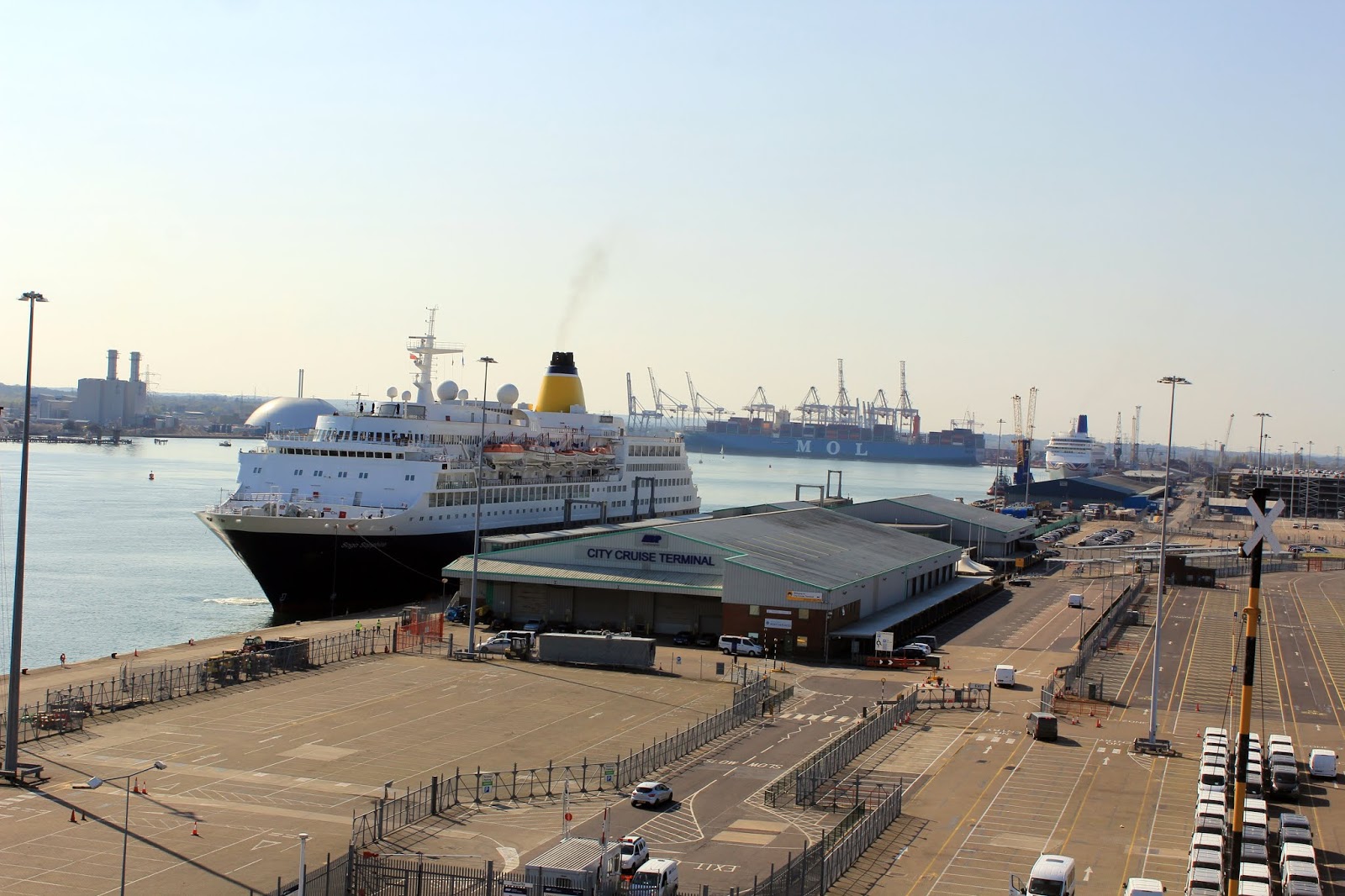
Southampton Port ‘on course’ for shore power

Port of Southampton Photo credit Dave Jones

Southampton remains “on course” to be the first port in the UK to introduce shore power for cruise ships.

Shore power, which is also called cold ironing, reduces the time ships are required to run their engines in port, reducing pollution.

Associated British Ports (ABP) said it would meet its previous pledge to install the technology in Southampton in 2020.

Shipping is forecast to emit between 2% and 6% of nitrogen dioxide emissions in Southampton, ABP’s Port Air Quality Strategy said in 2018.

A report to Southampton councillors in January 2019 said shore power could deliver “public health benefits” and the council applied for a £7 million government grant for the project, that was later rejected due to concerns over insufficient benefits and the speed of delivery

However, prime minister Boris Johnson said he was “very interested” in the proposals in the lead up to the recent General Election.

ABP said its shore power pledge remained “on course” although issues remained over funding and a large amount of power needed for large cruise ships.

Port director Alastair Welch said: “What we don’t want to do is to plug a ship in and brownout the city.”

Cold ironing is already available for cruise ships in the United States, Canada and some European ports.

Shorepower An Ongoing Debate

Connecting to Shorepower in Hamburg

Norway’s Kristiansand was the second European port to offer shorepower to cruise ships when its 16 MW installation came online in September. The only other European port offering shorepower is Hamburg, at its Altona Terminal, while Livorno expects to be operational by the end of the year.

A spokesperson for the Port of Hamburg said that preparations were underway for a feasibility study to install shorepower at all of its the cruise terminals.

In addition, Warnemunde-Rostock and Kiel have announced plans for shorepower installations for cruise ships.

Meanwhile, AIDA Cruises also has a hybrid solution, with the AIDAperla and AIDAprima running on LNG supplied by a truck while in port in Hamburg, Rotterdam, Le Havre, Southampton and Zeebrugge, as well as in Barcelona for the AIDAprima, and in Madeira during the winter. According to AIDA, Marseille, Civitavecchia and Kiel are also preparing to supply LNG for the dual fuel ships, while the line is in the discussion stage with Palma de Mallorca.

The only other shorepower installations for cruise ships are in the United States and Canada – on the West Coast in Juneau, Long Beach, Los Angeles, San Diego, San Francisco, Seattle and Vancouver and on the East Coast in Montreal, Halifax and New York’s Brooklyn terminal.

Additional shorepower facilities in North America and Europe are dedicated to ferries, container ships, tugboats, fishing vessels and offshore vessels and rigs.

Cruise ports in Europe have so far been reluctant to install shorepower due to the high investment cost combined with relatively low usage in addition to many ships not having the equipment to connect.

Enova, a Norwegian government agency providing public funding for cold-ironing installations, claims that funding shorepower for cruise ships is too costly, considering the power requirement and the limited seasonal use. It has instead thrown the challenge back to the cruise industry, with Enova’s CEO stating that it is the cruise lines’ responsibility to clean up their own business.

The investment for supplying 1 to 2 MW of power is relatively low compared to a system for a cruise ship. The 16 MW Kristiansand installation was made possible by a 4 million euro EU grant.

Meanwhile, some cruise ports are facing negative public reaction on heavy traffic days due to the visible exhaust that can literally “cover” a port, a town or a fjord.

Kjetil Paulsen, a senior adviser on shipping at the Bellona Foundation, an environmental organization based in Norway, and working with Carnival Corporation,  added that it is in the interest of the industry and the ports to reduce emissions. What tourist would pay to visit destinations covered by clouds of exhaust, he asked.