Cruise lines must move quickly and creatively to redeploy ships

Cruise lines must move quickly and creatively to redeploy ships

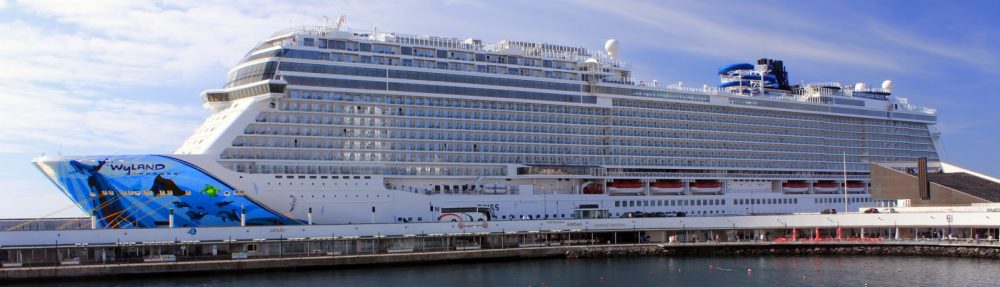
The Celebrity Millennium is being repositioned from Asia and will be in Los Angeles in March.

At last count, at least 27 cruise ships in Asia have had to cancel or modify not only single itineraries but in some cases entire seasons in response to the Covid-19 coronavirus outbreak in China.

Fixing that kind of disruption on short notice is no small feat, especially for lines whose ships are being turned away from ports or are dealing with outbreaks onboard.

For example, it took weeks for Celebrity Cruises to rework itineraries for the Celebrity Millennium, which was in the midst of its Asia cruise season when the outbreak occurred in China.

After talks with the deployment team, travel advisors and port and health authorities, the cruise line cancelled its remaining Asia cruises, starting with its Feb. 15 sailing.

It will instead arrive in Los Angeles on March 20, said Celebrity Cruises CEO Lisa Lutoff-Perlo. There it will conduct free sailings for first responders, active military and veterans. It will also sell a series of revenue cruises and donate the net proceeds to charities and foundations that help first responders and the military.

“At the end of the day, you really have to make the right decision for your guests,” she said. “Unfortunately, with coronavirus, there’s been growing concern for travelling to that region. Safety is paramount to us. It was clearly not our desire or intention to leave that region, but we felt it was the prudent thing to do in the short term. You just didn’t know each day what was going to happen.”

Celebrity’s sister cruise line Royal Caribbean International made a similar decision: Its China-based Spectrum of the Seas is going to Australia, where it will give free cruises to first responders who helped fight the recent devastating wildfires.

The Millennium, which was renovated last year, will make a three-day stop in Hawaii en route to Los Angeles to equip the ship to be able to hook up to shore power once there.

“Redeploying the ship is one thing,” Lutoff-Perlo said. “We had to work with the deployment team to put the itineraries together. We had to work with the global marine organization on how to get shore power on Millennium in just five weeks.”

She said that anybody who understands the complexity of this knows “it’s heroic to be able to do this.”

Details of the new sailings are still being worked out, but Celebrity offered a rough sketch.

Once in California, the Millennium will operate three four-day cruises and one five-day cruise for revenue. As of now, it will also host four two-day cruises for first responders, active military, veterans and their families.

The Millennium will resume its regular Alaska season on May 22. The ship’s Japan cruises are still scheduled for later this year.

Lutoff-Perlo said her team has had to answer several questions, such as whether or not they will be able to sell the new itineraries on such short notice. In response, she said that the staff has had to deal with many crises before, such as the 9/11 attacks, and that they are prepared to make adjustments.

They are still finalizing all the ports, but she said once the relevant officials found out that the cruises would be used to benefit first responders and military, they were willing to be more accommodating.

“As you can imagine, we went back and forth a lot as we fine-tuned these itineraries and figured out what we wanted to do, and every time we went back to every port we talked to, they couldn’t have been more gracious, and they couldn’t have been more wonderful,” she said.

Other lines are still figuring out what to do with their ships, citing the complexity of making such big changes on such short notice to frustrated customers.

Holland America Line said in an online blog post last week that it was figuring out a solution for its Asia-based Westerdam, on which it cancelled sailings through March 14.

In a statement, the line said it was “still working through the extremely complex factors and decisions of itinerary planning. We understand that our guests are eager to learn more about their departures, and we are assessing future cruise itineraries as quickly as possible.”

For travel advisors, the slew of itinerary changes and cancellations has had them working overtime to keep up with changes happening while their clients were at sea as well as awaiting the fate of ships with upcoming departures.

Michelle Fee, CEO of Cruise Planners, said the last time this many cruises had to redeploy from a region this quickly was after 9/11, when nearly all ships repositioned to the U.S.

And despite the logistical difficulty of having so many ships change itineraries on such short notice, Fee said this response points to one of the industry’s best qualities in a time like this: “Unlike land destinations, the upside is that cruise lines can move their hardware. At this point, China and parts of Asia have completely shut down, whereas the ships are just relocating.”

Fee was among several advisors who said the biggest challenge is not knowing “what decisions the cruise lines will make and what types of refunds or accommodations will be offered.”

Linda Terrill, a cruise specialist with the Luxury Travel Group, an independent affiliate of Brownell Travel, agreed. She had clients on a Seabourn Ovation sailing in Asia that was eventually cancelled.

“The most challenging part was spending so much time just checking, checking and rechecking,” she said. “Searching and contacting the sales managers and saying, ‘Tell me what to do.’”

Terrill said the challenges are “all-encompassing.”

“But these are long-time clients, and they were so worried, and I kept putting myself in their shoes and saying, ‘What would I do?’” Terrill said.

In the end, she said, “All’s well that ended well,” and she added that she understands what the cruise companies are facing.

“The lines are completely overwhelmed,” she said. She said one sales manager told her, “We’re just trying to get people home right now.”

Fee said last week that the communication from cruise lines had improved.

“In the beginning of the coronavirus crisis, some cruise lines made decisions and communicated them immediately, while others took a bit longer,” she said. “In the last weeks, we have seen a robust amount of communication from the cruise lines, which is helpful.”

And although the industry has borne the brunt of negative travel headlines due to the challenges on Princess Cruises’ Diamond Princess, Fee is among those who hope that once everyone disembarks the ship, “the story will die down.”

“If history repeats itself,” Fee said, “a few weeks afterwards, we should get back to normal booking trends.”

Seattle: Alaska Drives Demand

Seattle

Quantum of the Seas in Seattle.

 While moving ahead with plans to build a third terminal, the Port of Seattle set another record last year with 1,210,000 passengers on 211 calls and is forecasting a further increase this year to 1,380,000 passengers on 225 calls.

“We are also extending our season starting as early as April 1 with the Grand Princess and closing on Oct. 19 with the Ruby Princess,” said Michael McLaughlin, director of cruise and maritime operations. “Norwegian Cruise Line will also bring a third ship, the Norwegian Sun, joining the Bliss and the Encore at Pier 66. The Sun will sail 11-day Alaska cruises.

“Next year, the new Norwegian Encore will replace the Joy,” he continued. “It is a good example of how Norwegian is keeping their newest and best products in the market.

“Also in 2021, Carnival will replace the Spirit with the larger Freedom.”

Last year marked Seattle’s 20th year as a cruise port, during which it has seen nearly 14 million passengers.

“What stands out over those two decades,” said McLaughlin, “is that even during the recession we continued to grow our market share year-over-year. There was some flattening out in Alaska when that head tax was put into place, but it had less effect on Seattle in that we had entered into berthing agreements with the brands where they needed to meet their annual guarantees. So when they decided to pull ships out of the market as a result of the taxation in Alaska, it had less effect on Seattle.

“Over the long run, the growth trend has been really positive.”

Having released a Request for Proposals (RFP) for a new terminal last summer, the port has announced three groups that were shortlisted. They were the so-called Cruise Industry Leaders Group, with Royal Caribbean, MSC Cruises, Carnival Corporation and SSA Marine, a Seattle-based stevedoring company; Global Ports Holding and Miami-based Civil & Building North America; and Ports America, teaming up with Jacobs Engineering Group, headquartered in Dallas.

With the goal of having the new terminal ready for the 2023 season, it means Seattle will have three cruise terminals and four berths: Terminal 46 with one berth; the Bell Street Terminal at Pier 66 with one berth, and the Smith Cove Terminal at Pier 91 with two berths.

Pacific Northwest sights and flavours in Seattle

The Norwegian Bliss docked at Seattle’s Bell Street Terminal. In the distance are two ships at the Smith Cove terminal.

The Norwegian Bliss docked at Seattle’s Bell Street Terminal. In the distance are two ships at the Smith Cove terminal. Photo Credit: TW photo by Tom Stieghorst

The Port of Seattle used to take a back seat to Vancouver as a turnaround port for Alaska cruises, but no more.

With the 2017 upgrade of the downtown Bell Street Terminal at Pier 66, the continued use of the Smith Cove terminal and plans for a third terminal to be carved out of the cargo port on the south end of Elliott Bay, more and more cruisers will be visiting.

The port expects 1.2 million passengers in 2019.

And for anyone planning a pre- or post-cruise stay in Seattle, the biggest problem is choosing from among the cornucopia of things to see and do.

You might as well start, as I did on a recent visit, with Pike Place Market, where fish get thrown, flowers get sold and plenty of fresh food, mostly local, is laid out in a market-style atmosphere.

Pike Place Market, with its views of Elliott Bay, is Seattle’s top tourist attraction, with an estimated 13,000 visitors daily.

Pike Place Market, with its views of Elliott Bay, is Seattle’s top tourist attraction, with an estimated 13,000 visitors daily. Photo Credit: TW photo by Tom Stieghorst

The market is Seattle’s No. 1 tourist attraction, with an average of 13,000 visitors a day. One way to beat the crowd is to take a pre-opening tour with Savor Seattle Food Tours.

On my two-hour tour, we made seven stops at vendors who were either just opening for the day or opened early for us. Guide John Lefor pointed out that the market serves as a small-business incubator, and he enjoyed telling stories of how vendors succeeded with their chosen speciality.

Lefor seemed to know everyone at the market, and they greeted him warmly, giving us an inside view of the place. We went to a little-known garden, got tips on some of the best stalls to visit and ate everything from cheesy biscuits to smoked salmon.

Next, I spent some time along the waterfront, where I marvelled at the change since my last visit in 2014. Because Seattle tore down the elevated freeway that divided the docks from the city, the area is now open and far more attractive.

Also new is the Seattle Wheel, a Ferris wheel that offers a nice view of the bay. Cruisers who will be leaving from the Smith Cove terminal can look down the waterfront and see their ships in the distance, with Norwegian Cruise Line ships at Pier 66 in the foreground.

The wheel is nice, but the recently opened Wings Over Washington next door should not be missed. It features a jaw-dropping, 20-minute simulated flight over a couple dozen land- and seascapes around the state. It costs $17, and I nearly plunked down a second $17 to do it twice.

One pier down from the wheel is the Seattle Aquarium, where I spent an hour or so in the company of sea otters, fur seals and other marine creatures found in Pacific Northwest waters.

For lunch, I visited the Crab Pot for a warm bowl of clam chowder. Plenty of diners had ordered the house speciality, a pot full of steamed clams, mussels, shrimp, corn on the cob and hot red potatoes in their jackets poured out on butcher paper over a big table. It is meant for two or more diners and starts at $25.95 per person.

A nighttime view of the Space Needle, with a glass sculpture from the Chihuly Garden in the foreground.

A nighttime view of the Space Needle, with a glass sculpture from the Chihuly Garden in the foreground. Photo Credit: TW photo by Tom Stieghorst

One of the unique dining experiences in Seattle used to be the revolving restaurant in the Space Needle, but the dining area was yanked in a recent renovation in favour of the Loupe, an observation deck with a revolving glass floor. It’s a great platform to see Seattle and a fun place to learn about the 1962 World’s Fair.

Visitors from downtown hotels were whisked to the fair on a Disney-style monorail that still operates, a fun, retro trip. The three-minute blast from the past is $5 roundtrip.

An ideal time to visit the Space Needle is at dusk, which also puts you in position to see the Chihuly Garden at night. I’ve seen Chihuly glasswork before, even in a garden setting, but this collection by Washington state native Dale Chihuly is truly stunning and one of the must-see attractions when visiting Seattle.

Another unique venue is the Center for Wooden Boats, which shows the craftsmanship involved in boat building. I happened to be in town when the centre’s annual festival was on, so a mini-flotilla of the wooden craft was on display. 

The centre at the foot of Lake Union is adjacent to Seattle’s Museum of History and Industry, another nice stop that is located in an old Navy armoury. Exhibits run from the pioneer days through Seattle’s ascendency as a hub for tech giants such as Microsoft and Amazon.

Heirloom tomato bruschetta served at the Pink Door restaurant.

Heirloom tomato bruschetta served at the Pink Door restaurant. Photo Credit: TW photo by Tom Stieghorst

Lodging is plentiful in downtown Seattle, if expensive. The State Hotel, where I was hosted for two nights, is a 1904 medical building that has recently been converted to a 91-room, contemporary hotel.

The location is hard to beat for convenient access to Pike Place Market, the Bell Street terminal and the waterfront. Amenities include an excellent cocktail bar and open-kitchen restaurant off the lobby and a rooftop deck with a clear view of Elliott Bay.

The room interiors are a nice mix of quality materials and industrial-chic design. Prices in December are generally $144 a night, with a few dates higher. 

Seattle is full of restaurants with good Pacific Northwest cuisine. A favourite of mine is the Pink Door, located in an alley with simply the pink door as an identifier. Diners step down into a multiroom dining area, one of which has views of the bay. Its heirloom tomato bruschetta is particularly delicious.