Victoria, Century Cruises assure their Yangtze vessels are safe

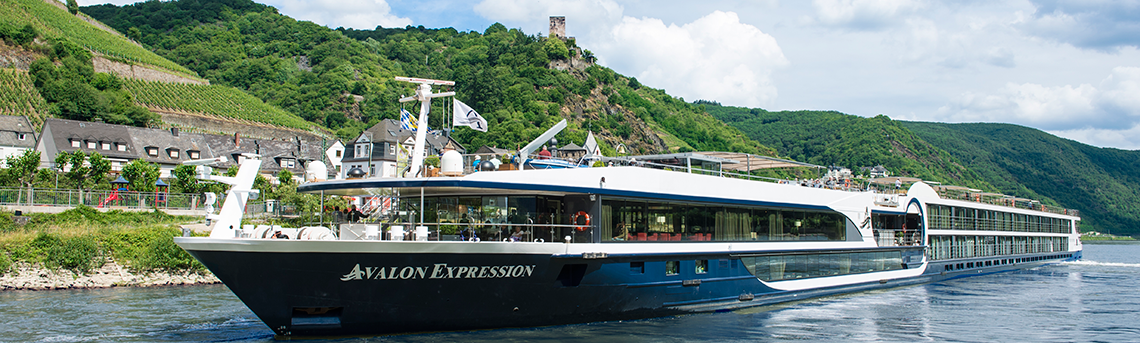
The Victoria Sophia was not far from the Eastern Star when the latter ship capsized on the Yangtze.

As search and rescue efforts continued Tuesday following the capsizing of the Chinese river cruise vessel Eastern Star on the Yangtze River, two of the largest Yangtze River cruise operators serving the U.S. market said that their passengers and vessels are safe.

“Despite heavy rain and wind, Victoria Cruises’ fleet had not experienced out-of-the-ordinary navigation issues. The Victoria Sophia, which was downstream from the Eastern Star in nearby Wuhan when the tragedy occurred, is sailing on schedule and reports manageable conditions,” New York-based Victoria Cruises said in a statement.

While it’s too early to determine exactly what went wrong on the Eastern Star, Victoria Cruises executives said the tragedy underscores the need for higher safety and inspection standards on the Yangtze.

The Eastern Star was a much smaller vessel in comparison to most of the Victoria ships, yet it was carrying nearly double the number of passengers that Victoria vessels carry, according to Victoria Cruises.

The Eastern Star, at 2,200 gross tons, was carrying 405 passengers, five travel agents and 47 crew members for a total of 457 people aboard when it capsized. By comparison, the smallest vessel in the Victoria fleet is the 198-passenger Victoria Grace, which is 3,868 gross tons. The largest ship in the Victoria fleet is the 378-passenger Victoria Jenna, which measures 10,680 gross tons.

Chinese river cruise line Century Cruises, which provides charters for several U.S. river cruise companies and tour operators including Uniworld Boutique River Cruise Collection and Avalon Waterways, said that its vessels do not normally sail on the stretch of river where the Eastern Star capsized.

Century Cruises vessels normally travel between Chongqing and Yichang, and the capsizing took place further downstream near Wuhan in China’s Hubei Province, noted Richard Xie, director of marketing and sales for Century.

Century also said that its vessels have a much larger gross tonnage-to-passenger ratio than the Eastern Star. The smallest vessel in the Century fleet is the 186-passenger Century Star at 4,255 gross tons. And the two largest vessels in the fleet, the 398-passenger Century Legend and Century Paragon, each measure 12,516 gross tons.

“Our hearts go out to the families of the Chinese passengers [onboard the Eastern Star] as we pray for their safe rescue,” James Pi, chairman of Victoria Cruises, said in a statement. Rescue attempts are underway with many pitching in to support emergency workers, including local fishing boats.

“This is just too sad,” said Xie. “We feel sorry for those who have not been rescued and make the best wish to all of them.”

The lessons learned from Tom Harper’s closure

When a company suddenly shuts its doors, a lot of different factions are often left picking up the pieces, which has certainly been the case in the aftermath of river cruise reseller Tom Harper River Journeys abruptly closing its doors in early May.

There still isn’t any clear course of action for the now cruise-less travelers who had booked river cruises with Newton, Mass.-based Tom Harper River Journeys. Founded in 2013 by CEO Bret Gordon, a former Vantage Deluxe World Travel executive, Tom Harper has now gone mum.

Michelle Baran
Michelle Baran

Travel Weekly hasn’t seen a bankruptcy filing for the company, but the Better Business Bureau has an alert stating that Tom Harper is no longer in business, and the company has been placed onTravel Guard’s financial default alert list.

Until (and if) Tom Harper resurfaces, travelers and their agents have been taking matters into their own hands, scrambling to try to get their money back and to salvage their vacations. River cruise companies that had sold inventory to Tom Harper, including Haimark Travel, CroisiEurope and Zambezi Queen, are dealing with the fallout as well.

Unfortunately, sometimes it takes a calamitous event such as this to be reminded of the precautions travelers and agents should take when booking a river cruise. Really, there are three main ones: book with a credit card; buy travel insurance; and look for river cruise companies that have some kind of financial safety net, such as being a member of an association like the U.S. Tour Operators Association (USTOA).

Many of the major river cruise lines are active members of USTOA — including Viking Cruises, Uniworld Boutique River Cruise Collection, Avalon Waterways, Tauck and Grand Circle Cruise Line — and as such are required to post $1 million in the form of a bond or letter of credit that is held by a USTOA trust for the sole purpose of reimbursing consumers for payments or deposits lost in the event of bankruptcy, insolvency, cessation of business, or failure of an active member to refund consumer deposits or payments within 120 days following the company’s cancellation of a vacation.

According to CLIA, passengers sailing on ships serving U.S. ports (for river cruising this would apply to vessels that ply U.S. rivers) are protected by a performance bond of up to $15 million, administered by the Federal Maritime Commission, which covers passenger refunds for “non-performance of transportation.”

“Travelers purchasing a cruise also can protect themselves by paying with a major credit card, and/or obtaining low-cost travelers’ insurance that covers trip cancellation for any reason, including supplier default,” CLIA advises.

For many who booked Tom Harper, much of this is too little, too late. For passengers who are booked on upcoming river cruises through Tom Harper, the river cruise lines on which they are booked have advised that they find a travel agent to help them or that they get in touch with the river cruise line directly to salvage their booking.

The larger lesson learned is that no sector of the travel industry is safe from sudden financial turmoil, not least the booming river cruise segment.

It’s all about relationships

It’s no big secret that so much in the travel industry is about relationships — relationships between agents and their clients, relationships between suppliers and agents, relationships between suppliers and vendors.

Indeed, relationships are the building blocks that create the foundation for the high-touch world of travel.

So, perhaps it should come as little surprise that on the last evening of the christening cruise for Avalon Waterways’ freshly minted Avalon Tapestry II, when the travel agents at my dinner table were asked by consumer press why they choose to sell certain river cruise lines over others, they responded, “It’s all about relationships.”

Initially, the answer was a bit disappointing to me. I was hoping for some real insight into how the agents choose between the river cruise lines, something more about the vessels themselves or about the overall experience that sets the companies apart. But saying that they choose based on “relationships” felt a bit like a copout; like code for better commissions or enhanced perks for their clients.

Michelle Baran
Michelle Baran

But when I thought about it a bit more, I realized that in a segment of the travel industry that is only just now starting to see more differentiation between the players involved, it can still prove challenging at times to explain what sets one company’s product apart from another. The fact that Avalon has positioned the majority of the beds in its cabins facing towards the balcony; that Uniworld Boutique River Cruise Collection has invested heavily in its extravagant exteriors; that Viking River Cruises is churning out sleek vessels at hard to beat prices; that AmaWaterways is pushing the themed river cruise envelope; or that Tauck has reinvented the lower deck cabin — these nuances might sway some, but for others these factors might still not seem like explanation enough for why they should book one line over another. Enter relationships.

The two agents at the table worked for two different host agencies that had both selected Viking and Avalon as preferred suppliers, so the decision to book more customers with those river cruises lines had already been pre-selected for them. But what dawned on me after the conversation is that while it’s definitely important for river cruise lines to continue to help us better understand and embrace their tangible differences, perhaps their most important differentiator is just that, relationships — including those between the river cruise lines and their agent partners, group travel leaders, tour operators, and of course their customers. And it will be how they continue to initiate those relationships and what they do to maintain them that will likely decide how the game plays out in the long-term.