Victoria cancels Yangtze cruises over coronavirus concerns

Image result for victoria cruises yangtze
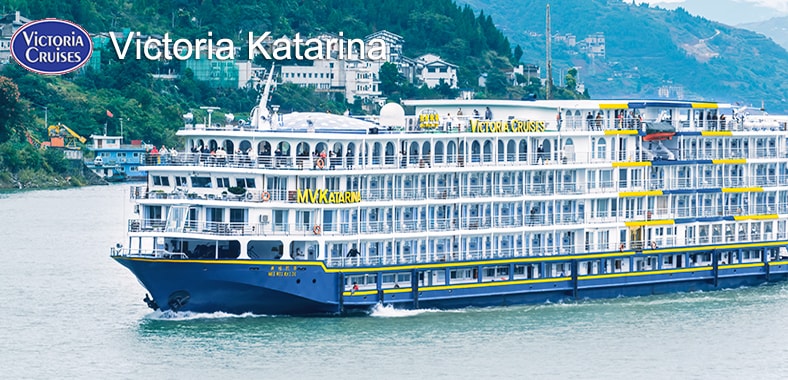
MVKatarina

Victoria Cruise Lines says it has cancelled six cruises on China’s Yangtze River due to concerns about the coronavirus.

“While operations have not been directly impacted by the situation in Wuhan — more than 500 miles away from the American-managed company’s Chongqing office — many passengers travel through transportation hubs which have been affected by proactive measures taken by the Chinese government, creating logistical difficulties,” the company said in a statement.


Additionally, the company said China’s Ministry of Culture and Tourism has asked the tour sector to temporarily suspend operations. In response, Victoria said, it has cancelled all sailings through Feb. 16, six offseason winter departures.

“Victoria Cruise Lines will monitor the situation in the interim and continue to prioritize the safety and enjoyment of its valued guests,” the company said.


#Coronavirus #VictoriaCruise #Yangtze #rivercruise

The capsized Yangtze cruise ship’s outer cabin doors were reportedly sealed shut

The Eastern Star
The Eastern Star cruise ship that capsized on June 1 had undergone a retrofit in which passenger cabin doors that led directly out to the ship’s deck were sealed shut and turned into windows, according to the Beijing News (link in Chinese). That, among several other changes to the ship, made the vessel more dangerous and especially more prone to capsizing, the newspaper reported.

Beijing News has since deleted the report from its website but it remains accessible via its WeChat page , and includes before and after shots of the boat.

Each cabin on the ship used to have two doors, one leading to an interior corridor and one to the outer deck, the report said, but after the retrofit only the interior doors remained.

Unnamed ship inspectors and people who had worked on the Eastern Star before the retrofit told the paper that other amendments to the boat include replacing the fixed beds with wooden ones. This adds further safety risks, the report says, as unfixed beds can slide during winds, shift the boat’s center of gravity, and hasten a ship’s capsizing. They can also block the exits as passengers try to escape.

The retrofit was conducted in Chongqing in 1997, with the purpose of turning what was then a utilitarian ferry into a cruise ship. An unnamed company employee stated in the report that the ship was lengthened from 66 meters to 76.5 meters, which the report states was longer than regulations permit. Its previously flat bow was converted to its current pointed style to reduce drag and save on fuel costs.

So far no charges have been brought against either the captain of the ship or the company that owns it. The fact that the report was eventually pulled from the Beijing News website suggests that the government is trying to stifle discussion about the retrofit until it formulates a response, just as it has censored discussion and other reports about the accident.

Victoria, Century Cruises assure their Yangtze vessels are safe

The Victoria Sophia was not far from the Eastern Star when the latter ship capsized on the Yangtze.

As search and rescue efforts continued Tuesday following the capsizing of the Chinese river cruise vessel Eastern Star on the Yangtze River, two of the largest Yangtze River cruise operators serving the U.S. market said that their passengers and vessels are safe.

“Despite heavy rain and wind, Victoria Cruises’ fleet had not experienced out-of-the-ordinary navigation issues. The Victoria Sophia, which was downstream from the Eastern Star in nearby Wuhan when the tragedy occurred, is sailing on schedule and reports manageable conditions,” New York-based Victoria Cruises said in a statement.

While it’s too early to determine exactly what went wrong on the Eastern Star, Victoria Cruises executives said the tragedy underscores the need for higher safety and inspection standards on the Yangtze.

The Eastern Star was a much smaller vessel in comparison to most of the Victoria ships, yet it was carrying nearly double the number of passengers that Victoria vessels carry, according to Victoria Cruises.

The Eastern Star, at 2,200 gross tons, was carrying 405 passengers, five travel agents and 47 crew members for a total of 457 people aboard when it capsized. By comparison, the smallest vessel in the Victoria fleet is the 198-passenger Victoria Grace, which is 3,868 gross tons. The largest ship in the Victoria fleet is the 378-passenger Victoria Jenna, which measures 10,680 gross tons.

Chinese river cruise line Century Cruises, which provides charters for several U.S. river cruise companies and tour operators including Uniworld Boutique River Cruise Collection and Avalon Waterways, said that its vessels do not normally sail on the stretch of river where the Eastern Star capsized.

Century Cruises vessels normally travel between Chongqing and Yichang, and the capsizing took place further downstream near Wuhan in China’s Hubei Province, noted Richard Xie, director of marketing and sales for Century.

Century also said that its vessels have a much larger gross tonnage-to-passenger ratio than the Eastern Star. The smallest vessel in the Century fleet is the 186-passenger Century Star at 4,255 gross tons. And the two largest vessels in the fleet, the 398-passenger Century Legend and Century Paragon, each measure 12,516 gross tons.

“Our hearts go out to the families of the Chinese passengers [onboard the Eastern Star] as we pray for their safe rescue,” James Pi, chairman of Victoria Cruises, said in a statement. Rescue attempts are underway with many pitching in to support emergency workers, including local fishing boats.

“This is just too sad,” said Xie. “We feel sorry for those who have not been rescued and make the best wish to all of them.”