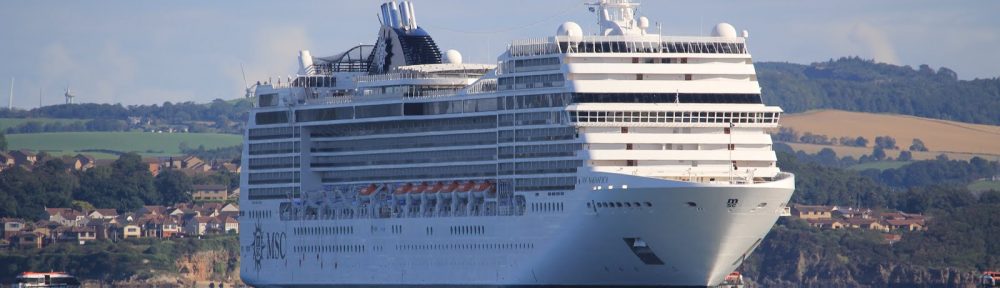
Puerto Vallarta Welcomes Return of Carnival Miracle

Carnival Miracle

The Puerto Vallarta Tourism Board has announced the return of Carnival Cruise Line’s Carnival Miracle to Puerto Vallarta after a seven-year absence.

Connecting San Diego and Puerto Vallarta, the ship is scheduled to make its first call in December 2019.

For the 2019-2020 winter season, the Carnival Miracle will offer 10 voyages from the Port of San Diego. The schedule kicks off on December 1, 2019, with a seven-day cruise to the Mexican Riviera featuring calls at Puerto Vallarta, Mazatlan, and Cabo San Lucas.

Other cruise lines that sail from San Diego to Puerto Vallarta include Holland America Line and Disney Cruise Line.

For 2018, Puerto Vallarta is projecting 154 calls with 404,734 passengers, up from 145 calls in 2017.

According to the tourism board, calls to the destination are expected to increase annually and Puerto Vallarta’s International Port (API) is committing $22 million for an extensive renovation and construction project to the port infrastructure.

In charge of the project is the local company, Puerto Mágico PV. The work will cover La Hacienda, a new passenger centre, a Tequila distillery, an art gallery, artisan shops, a cultural centre; El Nido, a new commercial centre with a food court, a 400-car parking lot; and what is set to be the biggest aquarium in Latin America. The port will also be accessible to non-passenger, open to visitors and local residents. The project is scheduled to be unveiled before the end of 2018.

A tale of two cruise lines

Image result for silverseas muse

Two European businessmen created two different cruise lines in the 1990s. Both have been successful in their own terms, but one formula for success has a lot more scale than the other one.

The two lines are Silversea Cruises and MSC Cruises. Silversea was formed in 1994 by building two new ships straight out of the gate for the luxury market. It was marketed primarily, if not exclusively, in North America.

MSC took a different route. Created from the leftovers of the Lauro Lines in 1995, MSC operated used, some would say very used, tonnage. Like Carnival Cruise Line, it deployed its older ships to cater to the mass market. It was marketed primarily to Europeans, with a few winter itineraries in the Caribbean.

Silversea’s first newly built ship, the Silver Cloud, was a thing of beauty. It was instantly competitive with other luxury vessels.

MSC’s first newly built ship didn’t arrive until a decade after the Silver Cloud was delivered and it was a takeover of an option that couldn’t be exercised by the Greek line Festival Cruises when it went into bankruptcy.

Since launching, Silversea has acquired a fleet of nine ships, with two more vessels on order.

With the delivery of the MSC Seaview, MSC has 15 ships in its fleet, with another nine on order through 2026.

Image result for msc seaview christening

Last week, Silversea and Royal Caribbean announced an agreement in which Royal will get a 67% equity stake for $1 billion. Silversea gives up its autonomy as a private company in exchange for continued growth and investment in its brand.

MSC is investing in its own future with a $10.5 billion newbuild program, and its autonomy is not in doubt.

MSC took a slower, less glamorous route to success but in the end, it is the company that stands independent.

Two major differences steered MSC and Silversea towards different outcomes. The first is that MSC Cruises was a side project for MSC chairman Gianluigi Aponte, whose main business, container shipping, made it easier to secure the financing that kept MSC’s order book growing.

The second is that MSC operates in the low-price, high-profit segment of the cruise business. Catering to the mass market may not be where the glamour is, but it is where the money is. The finances of both MSC and Silversea are private, so it is perhaps unfair to say one is more profitable than the other.

Carnival wins a challenge against Bermuda same-sex marriage ban

Image result for same sex marriage caribbean

A ban imposed against same-sex marriages on cruise ships registered in Bermuda is being lifted after a successful Carnival Corporation-backed legal challenge on the island

The Supreme Court in the British Overseas Territory yesterday upheld a constitutional challenge against the Domestic Partnership Act, allowing gay couples to once again be able to marry.

Chief justice Ian Kawaley, delivering his judgment, said the sections of the Act which revoked the right to same-sex marriage were invalid because they were inconsistent with provisions in the Constitution which give the right to freedom of conscience and creed.

It came after a court battle fought by gay Bermudians Rod Ferguson and Maryellen Jackson and the gay rights charity OutBermuda, with part funding by Carnival.

The ban, which came into force in February, meant P&O Cruises, Cunard and Princess Cruises ships registered in Bermuda were prevented from conducting same-sex marriages on board.

Carnival had faced calls for a boycott due to some of its ships being registered in Bermuda.

Carnival UK president Josh Weinstein said: “We are delighted that the supreme court of Bermuda has decided that same-sex marriage is legal in Bermuda and we congratulate OutBermuda on its hard-won challenge.

“As a result of the judgment, it will also now be legal for same-sex couples to marry onboard cruise ships registered in the country.

“As a company committed to equality, inclusion and diversity, we believe everyone deserves equal dignity and respect, and we are proud to have provided our support to OutBermuda’s efforts to champion marriage equality.

“We will now be working closely with the Bermudan authorities to understand when we will be able to resume marrying same-sex couples on board.”

The Domestic Partnership Act was passed by Bermuda’s parliament in December, reversing a supreme court ruling from May last year, which enabled gay couples to marry on the island.

The new legislation came into force on Friday, revoking the right of gay couples to marry and offering them – and heterosexual couples – the option of a legally-recognised civil union.

But chief justice Kawaley’s ruling will mean gay couples can wed once more and domestic partnerships will also be available.

The DPA meant Bermuda was the only country in the world to have allowed gay marriage and then revoked that right.

Ferguson then launched a crowdsourced civil case on the grounds that his constitutional rights had been breached.

Jackson and OutBermuda, with partial funding from Carnival Corporation, later filed a separate lawsuit and asked for it to be joined with Ferguson’s case.

However, the Bermuda government has an automatic right to appeal the ruling and it will not go into effect immediately.

The chief justice agreed to an application by solicitor-general Melvyn Douglas to stay the effect of the judgment for six weeks until it decides whether to appeal, meaning the current ban on same-sex marriage will remain in place, according to Bermuda’s Royal Gazette newspaper.