The move comes in response to a recent uptick in demand for the luxury line’s fly-cruise offering.
Adding to Silversea’s existing Antarctica Bridge offering for 2022 and 2023, the line has added two new five-day expedition voyages aboard Silver Cloud, departing 2 and 7 February 2024, and a six-day sailing departing 12 February 2024.
After arriving at Chile’s Eduardo Frei Montalva air base on King George Island, Silver Cloud’s guests will spend the same amount of time exploring Antarctica as on the cruise line’s conventional itineraries. They will journey to destinations such as Antarctic Sound, the Antarctic Peninsula and the South Shetland Islands.
“In response to exceptional demand, we have added three new fly-cruise voyages aboard Silver Cloud for 2024, enhancing our industry-leading Antarctica offering and strengthening our destination leadership,” said Roberto Martinoli, Silversea’s president and chief executive.
“We offer guests the luxury of choice, with the most diverse offering in ultra-luxury Antarctica cruising.”
Editor in chief Arnie Weissmann, far left, and Royal Caribbean Cruises Ltd. CEO Richard Fain, far right, moderated a panel of RCCL presidents, seated: Mark Conroy of Silversea, Lisa Lutoff-Perlo of Celebrity and Larry PImentel of Azamara.
FORT LAUDERDALE — Cruise line presidents from Royal Caribbean Cruises Ltd. brands took on the subject of over-tourism, the evolution of luxury cruising and female leadership during a panel at CruiseWorld.
Regarding over-tourism, they said that in the general travel industry, cruise lines are a small part of the phenomenon — but a highly visible one.
“Our reality is, perception rules,” said Lisa Lutoff-Perlo, president of Celebrity Cruises. “There are these big white ships pulling in and it’s a lot of people at once.”
Larry Pimentel, president of Azamara, said that 25 years ago there were only 1.4 million outbound travellers from China; today there are 150 million. “India is also coming,” he said. “By no means is this only a cruise issue; it is an industry issue.”
And Mark Conroy, managing director of the Americas, for Silversea Cruises, said that overreacting to over-tourism could be overly damaging to some local residents in destinations such as Venice.
“Tourism is the largest employer in the world overall,” Conroy said. You can’t just shut it down. If you banned all tourism into Venice, there’d be a big unemployment problem there.”
Silversea redefining expedition cruising
Conroy said that 10 years ago when he was working for a rival company he thought that Silversea chairman Manfredi Lefebvre was crazy to bolt an expedition arm onto a luxury brand.
“I thought he’d lost his mind until I saw the per diems from the expedition business,” Conroy said.
Silversea, as a top-tier luxury brand, also brought a different concept to what was then more of a rustic product. At that time, Conroy recalled, “You had to sacrifice your lifestyle to go on an expedition.”
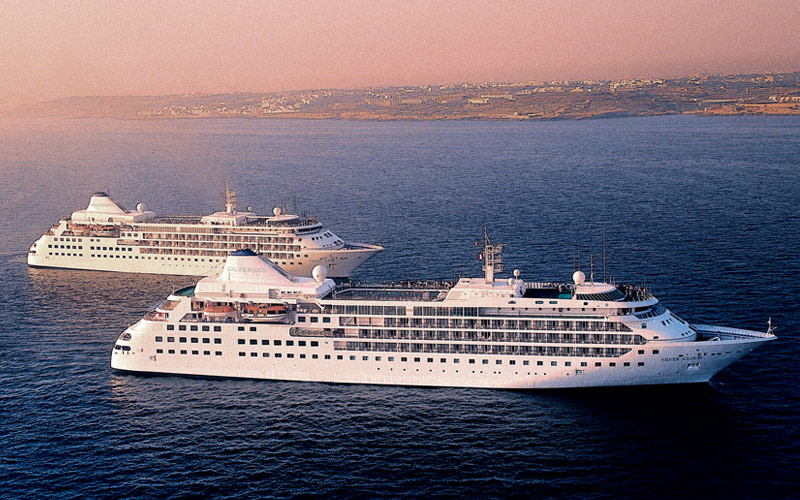
But when Silversea renovated its two oldest ships, the Silver Cloud and Silver Wind, it decided to transform them into expedition vessels but with the space and amenities of a luxury ship.
Conroy said that one of the unintended consequences was that the larger ship had faster speeds than most expedition ships.
“We can cross the Drake Passage [to Antarctica] in 28 hours instead of two days,” Conroy said
In defining the “luxury” appeal of his Azamara brand, Pimentel said that value plays a bigger part than in traditional luxury brands. As a department store, Azamara would compare to Nordstrom, he said.
“We’re not Saks Fifth Avenue.” As a car, we would be more like a Lexus.”
A woman in charge
The panel followed the CEO Conversation between Royal Caribbean Chairman Ltd. chairman and CEO Richard Fain and editor in chief Arnie Weissmann, and Fain returned to the stage to co-moderate the panel of presidents.
Lutoff-Perlo, who was named the president of Celebrity five years ago, and Fain asked her what was is like to be one of the few women to run a cruise line. She said at first, she took it for granted.
“When I was appointed I didn’t think about my gender at all,” she said. “But then when I was appointed, to the rest of the world apparently it is a really big deal.
“The great part is the part I can do to pay it forward” to other females in the industry, she said.
Two European businessmen created two different cruise lines in the 1990s. Both have been successful in their own terms, but one formula for success has a lot more scale than the other one.
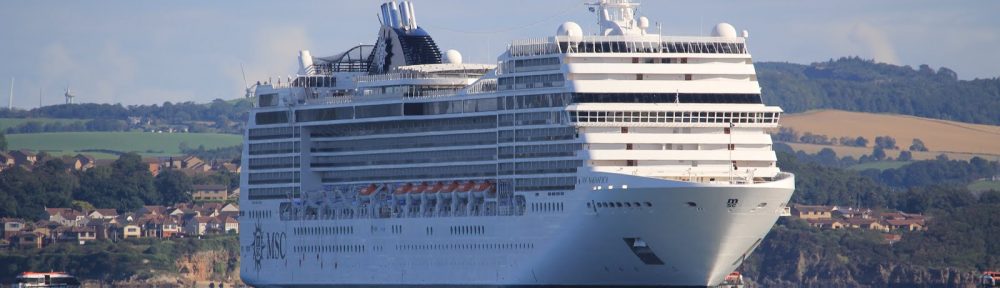
The two lines are Silversea Cruises and MSC Cruises. Silversea was formed in 1994 by building two new ships straight out of the gate for the luxury market. It was marketed primarily, if not exclusively, in North America.
MSC took a different route. Created from the leftovers of the Lauro Lines in 1995, MSC operated used, some would say very used, tonnage. Like Carnival Cruise Line, it deployed its older ships to cater to the mass market. It was marketed primarily to Europeans, with a few winter itineraries in the Caribbean.
Silversea’s first newly built ship, the Silver Cloud, was a thing of beauty. It was instantly competitive with other luxury vessels.
MSC’s first newly built ship didn’t arrive until a decade after the Silver Cloud was delivered and it was a takeover of an option that couldn’t be exercised by the Greek line Festival Cruises when it went into bankruptcy.
Since launching, Silversea has acquired a fleet of nine ships, with two more vessels on order.
With the delivery of the MSC Seaview, MSC has 15 ships in its fleet, with another nine on order through 2026.
Last week, Silversea and Royal Caribbean announced an agreement in which Royal will get a 67% equity stake for $1 billion. Silversea gives up its autonomy as a private company in exchange for continued growth and investment in its brand.
MSC is investing in its own future with a $10.5 billion newbuild program, and its autonomy is not in doubt.
MSC took a slower, less glamorous route to success but in the end, it is the company that stands independent.
Two major differences steered MSC and Silversea towards different outcomes. The first is that MSC Cruises was a side project for MSC chairman Gianluigi Aponte, whose main business, container shipping, made it easier to secure the financing that kept MSC’s order book growing.
The second is that MSC operates in the low-price, high-profit segment of the cruise business. Catering to the mass market may not be where the glamour is, but it is where the money is. The finances of both MSC and Silversea are private, so it is perhaps unfair to say one is more profitable than the other.




 Wetravel2u's Weblog