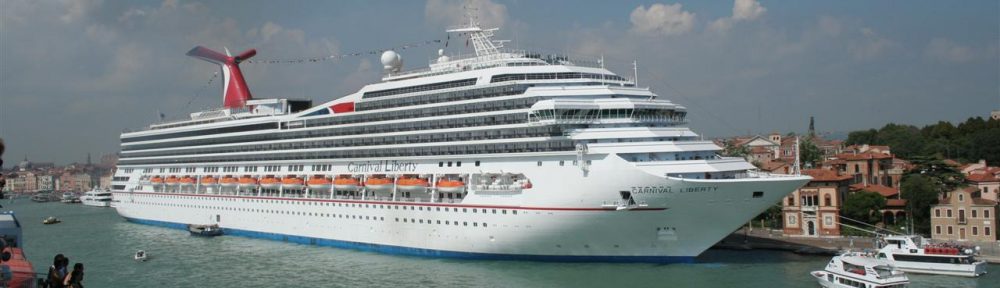
Carnival Vista wears its innovations well

The patio of a Havana Cabana suite includes a swing chair. Photo Credit: Tom Stieghorst
The patio of a Havana Cabana suite includes a swing chair. Photo Credit: Tom Stieghorst


The Carnival Vista, four years in the making, is distinguished by a number of new features that seem so right on a cruise ship, you wonder why no one thought of them before.

At least three stand out in my mind as concepts that work intuitively to enhance a cruise.

The one that will send a lot of photos out onto social networks is SkyRide, the recumbent bicycle that riders propel beneath an 800-foot-long track suspended 150 feet above the waterline.

SkyRide is just fun, the heart of the Carnival brand promise. It lasts about 90 seconds at normal pace and riders can reach speeds of 18 miles an hour if they pedal hard.

The dual track on SkyRide allows for companions to cycle together or friends to race the 800-foot circuit. Photo Credit: Tom Stieghorst
The dual track on SkyRide allows for companions to cycle together or friends to race the 800-foot circuit. Photo Credit: Tom Stieghorst

“It was excellent,” said Spencer Clarke, a film producer and director from Los Angeles who tried SkyRide on a recent cruise from Barcelona. “I liked the fact that it gave you a little bit of that weightless feeling as you come down that incline,” he said.

Although its appeal to kids is obvious, Carnival said its oldest rider on a recent cruise was 87.

Wait times on a recent cruise peaked at 35-40 minutes, but that may grow as more children board during the summer months.

Then there is the Family Harbor: a class of cabins grouped around a key-carded lounge for families. The concept is so functional, it’s hard to believe no one has tried it before.

The Family Harbor Lounge is surrounded by family-friendly cabins and access is controlled by key card. Photo Credit: Tom Stieghorst
The Family Harbor Lounge is surrounded by family-friendly cabins and access is controlled by key card. Photo Credit: Tom Stieghorst

Some family cabins are designed with a bed nook and TV that can be curtained off from the rest of the cabin, which both kids and parents will find a cool idea for different reasons.

In addition to a unified nautical design theme, the cabins come with perks such as free meals for kids at most specialty restaurants and a night of free babysitting.

Alex Aguilar, of Orange County, Calif., said she expects to use the Family Harbor Lounge two or three times a day.

“I’m genuinely excited there’s milk,” she said. “And the fact I can just run out here and get it is great.”

Dreamscape is a central pillar in the atrium that projects moving images through LED technology. Photo Credit: Tom Stieghorst
Dreamscape is a central pillar in the atrium that projects moving images through LED technology. Photo Credit: Tom Stieghorst

Bringing IMAX to sea also seems a no-brainer, if a little complicated to execute. Carnival has taken a three-deck space in the interior to put 178 raked seats in front of the enormous IMAX screen.

To install the screen without damage, IMAX had to roll it up and thread it through a three foot hole in the side of the theater.

“It was an incredible challenge,” said IMAX Corp. chief executive Rich Gelfond.

Programming includes documentaries ($5.50), and 3-D family features and current Hollywood blockbusters ($12.95), which by the third quarter will be delivered digitally by satellite at the same time that they open in 1,100 IMAX land theaters.

The Vista has other innovations that merit high grades. Visitors gawk at Dreamscape, a multi-story mushroom-shaped pillar that is programmed with ever-changing images crafted in LED lights.

The Vista’s photo gallery is the first end-to-end digital gallery on Carnival. Photos display on a video wall and are available for purchase on a guest’s hand-held device through the Carnival Hub app.

Light fixtures that look like rocket nozzles are part of the design scheme for Carnival Vista. Photo Credit: Tom Stieghorst
Light fixtures that look like rocket nozzles are part of the design scheme for Carnival Vista.Photo Credit: Tom Stieghorst

Another winning space on the ship is the Cuban-themed complex on Deck 5 aft. Havana Bar has been upgraded from the Carnival Sunshine to have more seating, a better bandstand/dance floor, and better theming, including dominos tables and a colonial map of Cuba on the wall.

It extends outdoor to an aft pool area, and is surrounded by Cuban-themed cabins and suites. The latter come with open air patios that connect via a deck walk to the pool. The whole outdoor area is private to Havana cabin guests from 6 am to 5 pm, giving it a club atmosphere.

I didn’t catch all of the entertainment, but more than ever before Carnival is taking musicians and dispatching them to parts of the ship you don’t expect to see them in. Examples include a strolling accordion player and a New Orleans jazz trio stationed at the entrance to one of the main dining rooms.

The stateroom corridors on Carnival Vista feature floor-to-ceiling photo panels. Photo Credit: Tom Stieghorst
The stateroom corridors on Carnival Vista feature floor-to-ceiling photo panels. Photo Credit: Tom Stieghorst

For my money, the Vista’s design is the most elegant ever for a Carnival ship. I particularly liked the orange light fixtures that look like rocket nozzles and give the ship a lot of visual thrust.

Another neat trick is the use of floor to ceiling photo panels in the stateroom corridors, which make the cabin doors almost disappear and keep the corridors from being visual dead zones.

A few things about the Vista were disappointing, puzzling, or didn’t work.

Not building USB charging outlets next to the beds is a missed opportunity on any new cruise ship. The Vista doesn’t have them.

There are odd changes of elevation of an inch or two in some stateroom corridors that could catch walkers by surprise.

An eye-catching hammock in the renderings of the Havana Cabana suite patio has turned into a swing chair because there wasn’t adequate space for a full-body hammock, Carnival officials said.

The Pixels photo gallery is the first end-to-end digital gallery in the Carnival Cruise Line fleet. Photo Credit: Tom Stieghorst
The Pixels photo gallery is the first end-to-end digital gallery in the Carnival Cruise Line fleet.Photo Credit: Tom Stieghorst

The otherwise appealing Lido Marketplace buffet can feel overcrowded at breakfast, and the excursion staging areas at times are overwhelmed, resulting in long lines.

The new a la carte Seafood Shack seemed expensive to me, compared to the great value Carnival delivers in other specialty restaurants, and I wasn’t bowled over by a lobster roll I had there.

Robin Reed, a property manager from the Bronx who was dining on the $6 fish and chips, said they were fine, but that snow crab legs a companion ordered “weren’t really seasoned.”

“The prices are not bad compared to what you get someplace else,” Reed said.

There were a few things I didn’t get to try but that sounded intriguing: “Clue,” a murder mystery game, and “Lights. Camera. Interaction,” described as “Movie-oke” in which passengers re-enact scenes from famous movies.

MSC Cruises evolves to match competitors’ policies


MSC Seaside

MSC Cruises, as reported previously, will implement several new sales policies that make its terms less generous and more closely aligned with those offered by its competitors in North America.

Among the changes are its first policy restricting the practice of commission rebating, a rule in place for more than a decade at brands such as Royal Caribbean International and Carnival Cruise Line.

“We want travel agents to advertise us at the going rate,” said Ken Muskat, the executive vice president of sales, public relations and guest services at MSC Cruises USA. “We want it to be fair across the board.”

The other policy changes include raising deposit minimums, making it harder to cancel cruises without a penalty, and setting a two-month window for passengers to move a direct booking to their agent’s account.

Taken together, Muskat said, the changes signal that MSC is evolving.

“MSC is starting to become very well-established in the market. We’ve got more demand. We’ve got more travel agents selling us,” he said.

The changes are set to go into effect on May 1.

Under the new policies, passengers will have 60 days from initiating a booking to switch it to their agent, provided the booking is not yet past the final payment date. While some agents would prefer that transfers be permitted all the way up until the final payment, Muskat said the new policy is competitive.

“Giving them 60 days to transfer that booking is more than enough time,” Muskat said. “It’s one of those things that, again, makes us more in line with what the other brands do.”

Other companies are also changing penalties for canceling a deposited cruise.

Under MSC’s new plan, previously adopted by Norwegian and Royal, passengers on cruises shorter than 15 days can lose their deposit if they cancel up to 90 days before sailing. It had previously been up to 60 days.

Muskat said MSC is trying to open sales 18 months to two years in advance, and with that comes the tougher terms.

MSC will also raise deposits from $100 to $200 per person on shorter cruises and to $300 on cruises longer than 15 days. Other lines are in the $250 range on deposits, so MSC retains an advantage, Muskat said, but “the higher deposits will make people a little more serious.”

The anti-rebating policy provides that sales can’t be made “at a price below [MSC’s] published or contracted pricing programs.”

Agents can use value-added gifts as incentives, but not cash equivalents, such as gift cards. Group bookings are not subject to the new terms.

Muskat said rebating hasn’t been a huge problem at MSC, but the policy should benefit home-based agents who can’t compete with larger players who can rebate in a big way.

Cuban protesters picket Carnival headquarters

A group of about 30 to 40 protesters marched outside Carnival Corp. headquarters in the Doral section of Miami, concerned about next month’s groundbreaking Fathom voyage to Cuba.

The protesters held placards accusing Carnival of “apartheid” because Cuban-born U.S. residents and citizens aren’t permitted on the Fathom trip to Cuba.

The protest was organized by the Movimiento Democracia, headed by Ramon Saul Sanchez, a long-time anti-Castro activist.

Cuban regulations stipulate that anyone born in Cuba cannot reenter the country by ship. Carnival released a statement saying it was sympathetic to the protest but that “we must comply with the visa, entry and exit policies of each country.”

Carnival said it is requesting that the Cuban policy be changed. “There has been a policy change with air travel to Cuba, so we are hopeful that a similar change can also happen with travel by sea,” the statement said.

In addition to picketing Carnival, the Sanchez group plans a flotilla of small boats in Biscayne Bay on May 1 when the first Fathom cruise to Cuba is scheduled to depart. In a website posting, Sanchez said he planned a meeting with the Coast Guard to discuss the idea.

In January, a flotilla of small protest boats at Labadee, Haiti, led Royal Caribbean International to cancel several calls at its private beach destination there.