Large cruise lines increase practice of staggered check-in


Disney cruise check-in terminal at Port Canaveral Florida

Big cruise lines are increasingly requiring passengers to pick a boarding time in hopes of streamlining embarkation on large ships.

The idea is to offer a smoother, more tranquil first day onboard.

In the past year, Carnival Cruise Line, Royal Caribbean International and Norwegian Cruise Line have all rolled out staggered check-ins on some or all of their ships.

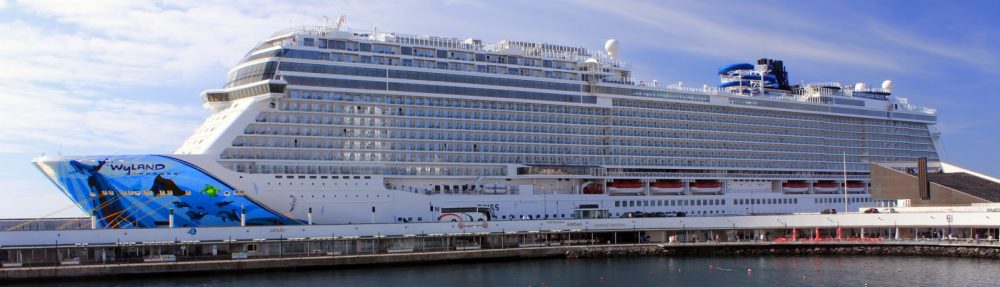
Norwegian is the furthest along. Last June, it began enabling guests on the 4,000-passenger Norwegian Breakaway to select their arrival time when they downloaded documents as part of the online check-in process. Guests select a half-hour window to board between 11 a.m. and 3 p.m. The line continued to expand the idea to its other ships; by November, almost anyone on a Norwegian ship departing from a U.S. port was able to take advantage of staggered check-in.

The only exceptions are Norwegian’s Hawaii-based Pride of America, due to later departure times, and its Anchorage/Seward itinerary because of cruise-tour complexities.

Carnival says it strictly enforces the staggered times and will ask guests to return to the terminal later if they show up early. Norwegian is less strict.

Carnival’s version started last year in Galveston, Texas. The line extended it to two of its New Orleans-based ships, the Carnival Elation and Carnival Dream, and is targeting Miami next, beginning March 4. The Carnival Triumph, also based in New Orleans, is scheduled to begin staggered check-in this April.

Royal Caribbean’s staggered check-in program is currently limited to the Anthem of the Seas. Royal assigns arrival times, rather than enabling guests to choose.

Andy Stuart, president of Norwegian, said staggered check-in helps break up the “big block” of passengers who tend to arrive around noon.

Stuart said that so far the idea has been a qualified success: “I won’t say it’s perfect; I think it’s improved it. It has started to spread people out a little more effectively.”

One important difference between Carnival and Norwegian is the policing of early arrivals. Carnival says it strictly enforces the staggered times and will ask guests to return to the terminal later if they show up early.

However, if guests show up later than their assigned times, “we allow them to come in and check in,” Carnival spokesman Vance Gulliksen said.

Norwegian is less strict, Stuart said. “We don’t force anyone to sit and wait. People embark as quickly as we can get them on,” he said.

“There are people who are rule keepers,” Stuart continued. “They say ‘OK, I was told to arrive between 11 and 11:30, and that’s what I’m going to do.’ And then there are rule breakers who say, ‘I don’t care what you tell me; I’m going to get there for lunch.’ So we like the rule keepers, but we don’t penalize the rule breakers.”

Stuart said Norwegian is working on other ways to speed the process of embarkation.

“Nobody books the trip to be on the embarkation; they book the trip to be on the ship,” he said. “We think investments in technology and automation to accelerate the process will continue to improve that experience.”

Gladys Knight, Trace Adkins to perform on Carnival ships

Carnival Cruise Line released the initial set of artists that will perform in its Carnival Live program of ship concerts for next year.

Shows will kick off in February in St. Thomas with R&B legend Gladys Knight. Other artists that will give shows include the rock band Journey, country star Trace Adkins and disco icon KC & the Sunshine Band.

Carnival Live performances will be offered on cruises departing from eight U.S. ports with concerts taking place while vessels are docked in Cozumel, Nassau and St. Thomas.

Ticket prices for next year’s concerts will range from $40 to $75 for general admission. VIP tickets are available for $150 to $250 and offer seating in the first four rows, a photo opportunity with the artist and a commemorative concert pass.

One by one, cruise lines increase gratuities

Photo Credit: Shutterstock

Cruise passengers are paying more in gratuities, as almost all big cruise lines seek to retain and attract good service personnel and remain competitive with each other.

Five lines have raised or announced increases so far this year, with one, Norwegian Cruise Line, raising its gratuities twice.

Princess Cruises was the latest to jump on the bandwagon, saying last week that it would raise gratuities 12.6% starting Jan. 1.

The moves raise the overall cost of a cruise without raising the fares on which travel agents earn commission. But several agents said clients are not noticing or pushing back against higher gratuities and that agents don’t go out of their way to discuss them, other than to say they are automatically billed at the end of a cruise.

“Most of the people, when they are initially booking a cruise, they know they have to pay gratuities,” said Shari Marsh, owner of Cruise Holidays Land and Sea in Raleigh, N.C.

“They know that it’s in that $12 vicinity. They don’t seem to have that much concern about it.”

That kind of accepting attitude on the part of many passengers has opened the door to increases that were harder to pass along during the economic swoon that lasted for several years beginning in 2008.

Princess, which as late as 2007 was at $10 a day, raised the figure by 50 cents in 2008 and then waited until May 2011 to increase it to $11.50. Beginning with cruises departing Jan. 1, the suggested gratuity will jump  to $12.95 a day, with suite guests paying $13.95.

Brian O’Connor, vice president for public relations, said Princess is simply catching up with the field.

“We were not in line with our competition, so these increases bring us in line with other premium brands,” O’Connor said.

While most lines’ gratuities are now at $12.95, Carnival Cruise Line’s are at $12 after raising its rate to that level a year ago.

At the high end of the scale, Norwegian Cruise Line’s suggested gratuity charge is $13.50, having raised it in March from $12 to $12.95 and then again, in August, to the current rate.

At a press luncheon several weeks ago in Papenburg, Germany, where Norwegian is completing construction of its next ship, Norwegian President Andy Stuart declined to go into detail about the line’s rationale for higher gratuities, saying merely that management feels they are now at an appropriate level.

Frank Del Rio, chairman of Norwegian’s parent company, Norwegian Cruise Line Holdings, has made it known that he considers better service one of the keys to improving customer retention at Norwegian.

It isn’t clear exactly how much of crew compensation is derived from tips, since most cruise lines closely guard that information. But O’Connor said that gratuities represent an “important” part of crew compensation.

Estimates of the share of crew salary that tips constitute vary from around 50% to nearly all of it in some positions. Cabin stewards earn from $1,400 to $2,400 a month in wages alone, according to Cruiseshipjob.net, a recruitment site. Waiters earn between $2,500 and $4,000 a month in combined wages and tips, according to another site, Cruiselinesjobs.com.

Throughout the economy, the level of tips in general has been rising, although not at the same rate as gratuities at sea.

“Tips increase over time,” said William Michael Lynn, a professor at the school of hotel management at Cornell University, who said that the average tip at a U.S. restaurant is now approaching 20%.

The most recent Zagat Dining Trends Survey found the average meal tip in the U.S. was 19.3%. That compares with an average of 18.6% in 2004.

Historically, cruise lines have provided breakdowns of where tips go, and some still do. On its website, Carnival says of its $12 total gratuities that $6.10 is allocated to dining staff, $3.90 to stateroom attendants and $2 to kitchen, entertainment, guest services and other hotel staff members.

Increasingly, however, gratuities are being treated as lump-sum service charges added to the bill at the end of the cruise. Guests remain free to adjust the amounts, although Norwegian recently said charges can only be altered after guests depart the ship, not onboard.

“A lot of people will not take the time and be disciplined enough to go through that process,” said Adrienne Greben, a CruiseOne agent in Concord, Ohio, near Cleveland.

Other lines continue to ask that adjustments be made at the guest services office, with some saying amounts are final if undisputed by the time of disembarkation.

Agents say cruise lines have made raising gratuities more palatable with some loopholes.

“They all give a little window of time where you can go ahead and prepay your gratuity” at the old rate, Marsh said. “Clients appreciate that, and a lot of people will go forward as long as they know about it.”

Increasingly, cruise lines are also offering promotions in which free gratuities are one among a choice of three or four options.

Greben said clients seldom pick the free-gratuity option, however.

“When you do the math to see the value of those amenities, gratuities only come out ahead if it’s a longer sailing,” she said. “On a typical seven-night sailing, frankly, that’s the lowest value.”

But most lines also allow onboard credits to be applied to gratuities, and many do that, Greben said. Guests can also apply onboard credits they get from shareholder perquisites, from credit card offers or by booking their next cruise while on the current voyage.

Rising gratuities mean a family of four now pays $336 or more in tips for a seven-night cruise. “It does add up,” Greben said. “People sort of resign themselves to the fact that it is part of the overall cruise price.”

Some travel agents said they were also resigned to the fact that rising gratuities don’t add up to rising commissions. Among them is Amy Fields, owner of Amy’s Total Travel in Towanda, Pa.

“It is what it is,” Fields said. “That’s something we don’t get upset about.”