Largest Cruise Companies Projecting Significant 10-Year Annual Capacity Growth

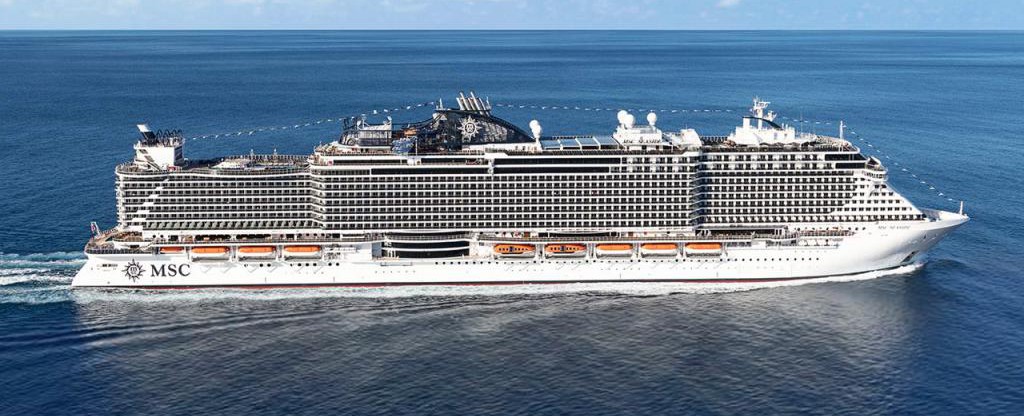
MSC Magnifica
MSC Magnifica.

The five largest cruise companies are projected to see dramatic capacity growth over the next 10 years, ranging from 114 percent for MSC Cruises to 36 percent for Royal Caribbean Cruises.

The projections are based on new ships to be introduced and known ship withdrawals and deployment changes.

Carnival Corporation is expected to grow its annual passenger capacity from approximately 11.1 million to 15.8 million passengers, for a 42 percent increase, and the largest industry-wide hike in terms of actual passengers, 4.7 million more passengers over 10 years.

MSC will see the second largest estimated increase in terms of actual passenger capacity, going from 2.1 million to 4.6 million, an increase of 2.5 million passengers, or 114 percent.

Royal Caribbean is projected to grow its annual passenger capacity from approximately 6.2 million to 8.4 million passengers, for 2.2 million more passengers, an increase of about 36 percent.

Norwegian Cruise Line Holdings will see its capacity go from 2.5 million to 3.5 million, climbing 1 million, a 40 percent increase.

Genting Hong Kong will grow its capacity from 1.2 million passengers to 2.0 million, for a 66 percent increase.

The largest industry-wide growth year will be 2020 with global passenger capacity increasing 7.9 percent from the previous year.

Carnival Accepts Delivery of Horizon

Rendering of Carnival Cruise Line's Carnival Horizon
PHOTO: Rendering of Carnival Cruise Line’s Carnival Horizon. (photo courtesy of Carnival Cruise Line)

The race to build the world’s biggest cruise ship is over

Image result for symphony of the seas

Royal Caribbean’s Symphony of the Seas
Can we call it now?
The race to build the biggest cruise ship ever is over, I think.
And the winner is Royal Caribbean International.
Will anyone ever build a cruise ship bigger than Royal’s Oasis-class ships, the fourth of which was delivered last week? It might happen, but the evidence suggests that it won’t. The reason why I think not is that many cruise companies, including Royal itself, have had a chance to design something bigger since the Oasis of the Seas first took to the oceans in 2009.
No one has.
Of the 36 cruise ships over 120,000 gross tons delivered since 2009, none are bigger than the 228,081-ton Symphony of the Seas, which is on its way from the shipyard in France to Barcelona, Spain, where it will begin seven-day cruises on April 7.
Of the 43 cruise ships over 120,000 gross tons on order or about to be delivered, none are bigger than the Symphony.
Those orders include ships for nearly every major cruise operator besides Royal Caribbean Cruises Ltd., including Carnival Corp., Norwegian Cruise Line Holdings, Walt Disney Co., MSC Cruises and Genting Hong Kong.
Image result for msc seaside
MSC Seaside.
Each had an opportunity to design the new biggest cruise ship in the world. The closest will be Dream Cruises, which is building a pair of 204,000 gross ton Global class ships for delivery in 2020 and 2021.
Royal Caribbean also has had two chances to top itself but has designed the smaller Quantum class at 168,666 gross tons and the upcoming Icon class at 200,000 gross tons. Royal is still cranking out Oasis-class ships the next is due in 2021. So perhaps when it is finished with that class, it will design something bigger.
For decades, the biggest cruise ship in the world was the 70,327 gross ton Queen Elizabeth 2, which reigned for 21 years from 1967 to 1988 when the 73,192 gross ton Sovereign of the Seas de-throned it.
Image result for rms queen elizabeth 2
RMS Queen Elizabeth 2nd
Thereafter, in the 20 years from 1988 to 2009, a series of newbuilds followed that each topped the last in size. Now there has been a nine-year lull. To match the QE2’s longevity as No. 1, the Symphony of the Seas would have to be the biggest until 2039.
Maybe that won’t happen. There’s always economies of scale to be reaped by building bigger, although the evidence seems to suggest that beyond 5,500 passengers, operators reach a point of diminishing returns.
But for now, long live the Symphony of the Seas.