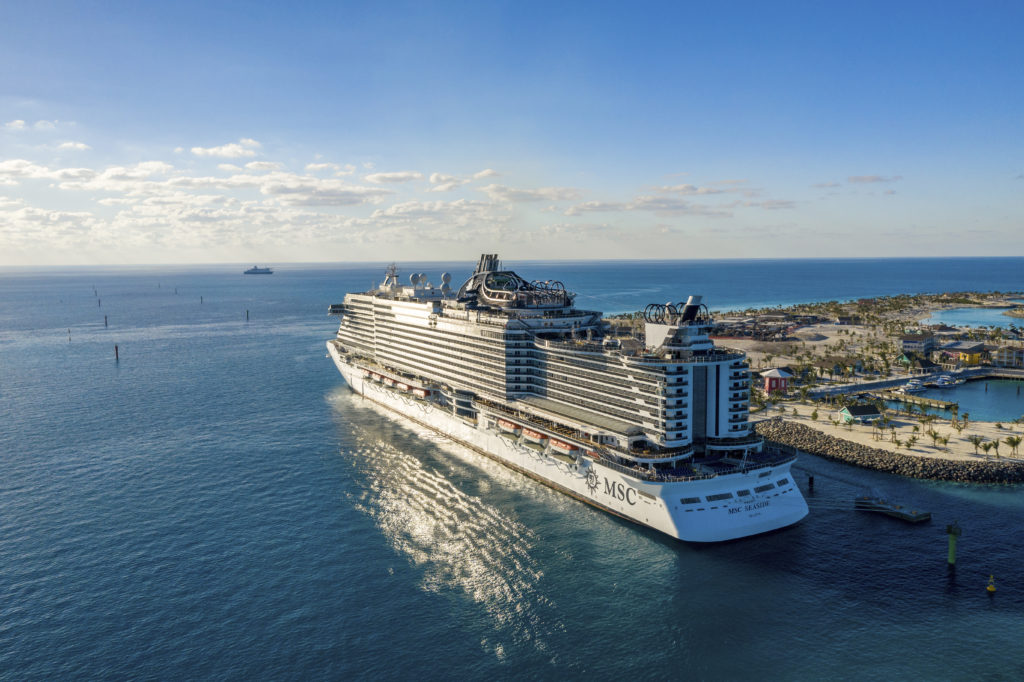
MSC Cruise has put together a Blue ribbonCovid group to put in protocols for safety.
By Johanna Jainchill
The past week has seen major movement in the shaping of protocols around the resumption of cruising. Last week, the European Union released guidelines for the resumption of cruising. Yesterday, Royal Caribbean Group and Norwegian Cruise Line Holdings Ltd. revealed that they had assembled a panel to develop health and safety protocols for the industry to resume operations. MSC Cruises has put together a Blue Ribbon Covid Expert Group that will advise it on sanitation and health protocols.
What’s missing from all of these advancements is any word from the U.S. Centers for Disease Control and Prevention (CDC), which will ultimately determine when large cruise ships can resume sailing from U.S. ports. The agency has said nothing about the cruise industry since updating its No Sail Order on April 9 to expire on July 24.
The cruise industry has not publicly said that the CDC is being uncooperative, but in a conversation with Travel Weekly last month, CLIA CEO Kelly Craighead praised Europe for enabling the industry to “participate in dialogue about thoughtful resumption protocols” but said that with the CDC it was “having some challenges with having that kind of engagement and dialogue with them.”
CLIA said it had been actively engaged in the development of the guidance published last week by the EU.
UBS analyst Robin Farley said in a note to investors in June that according to her sources, the reason CLIA announced a voluntary suspension of cruises through Sept. 15 is “likely so that [the] CDC would not have to extend its No Sail Order while negotiations continue.”
“It sounds like there needs to be an agreement with the CDC in place about 30 days before ships can restart,” Farley said.
However, Farley also said that according to Royal Caribbean Group management, the company “is in constant communication with the CDC in a constructive dialogue, and at this point, they are going back and forth with iterations of an agreement.” And one of the co-chairs of the Royal/Norwegian panel, Mike Leavitt, a three-term governor of Utah and former secretary of the U.S. Department of Health and Human Services, said that the CDC was “very pleased to know the panel was being proposed. We described the membership and told them how we were going to work and we pledged transparency and they received it warmly.”
But publicly, at least, the CDC has been quiet. And several industry stakeholders have privately said the CDC is being unresponsive and uncooperative with the industry. The CDC did not respond to outreach from a Travel Weekly reporter.
It has been suggested that the CDC has been hamstrung by the Trump administration, such as in a scathing New York Times report in June that detailed the CDC’s failures overall in its response to the Covid-19 pandemic. In one example of its shortcomings, the article cited the CDC’s No Sail order and reported that the CDC wanted the order to be indefinite, but that the White House intervened, and so the agency replaced it with the order the ends in July.
It’s not the only article on the agency’s failures: the Washington Post this week reported that the CDC’s mishandling of the coronavirus is similar to the mistakes it made with the Zika outbreak in 2016.
CLIA and the cruise industry may not want to rock the boat and cause any further delay, but given the fact that so many travel advisors depend on the ability to relaunch operations in the world’s No. 1 cruise market, ASTA CEO Zane Kerby might have spoken for the industry at large when he called the CDC’s communications about travel “uneven at best.” In a letter to its director, Robert Redfield, on June 9, he said that prioritizing of the restart of the cruise industry is one of four main goals the CDC should tackle.
“In the absence of clear communication, the entire population remains essentially in the dark, left to rely on a patchwork of regional, state and local pronouncements to inform their decision-making with respect to travel,” Kerby wrote. “Airlines, hoteliers, cruise lines, tour operators, car rental companies, insurance providers and others are similarly left to their own devices as to when to restart operations in the face of an unprecedented global pandemic.”


 Wetravel2u's Weblog