Australia and Europe tackle cruise ship sulphur emissions

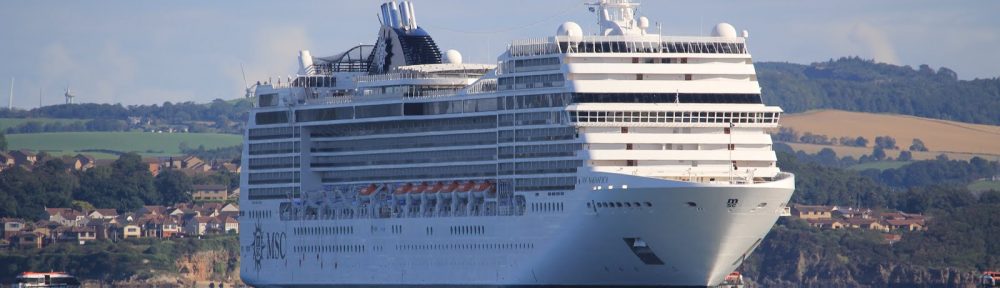
The Quantum of the Seas is one of the first Royal Caribbean ships to be equipped with exhaust gas scrubbers.

Challenges related to air pollution from cruise ship engines are cropping up elsewhere in the world, even as they’ve been overcome for now in waters around North America.

In Australia, a newly elected government ran in part on a pledge to reduce the amount of sulphur coming from cruise ship smoke stacks to the same low level as in the U.S. and Canada.

Meanwhile in Europe, some regulators are asking whether a popular solution to reducing sulphur emissions — exhaust gas scrubbers — might contribute to water pollution in some areas.

The issues are percolating because of a worldwide effort to cut pollution from ship engines, which rely on oil particularly high in sulphur.

Since Jan. 1, all ships, including cruise vessels, have had to meet a much-reduced standard for sulfur in North America and certain other regions such as the Baltic Sea.

The standard, which remains 3.5% of fuel volume in much of the world, was reduced to 0.1% in so-called Emission Control Areas (ECAs). The change will prevent 14,000 early deaths annually by 2020, according to estimates from the U.S. Environmental Protection Agency (EPA).

Now Australia is seeking parity with the U.S. In late March, voters retained the New South Wales state government led by premier Mike Baird, who campaigned on a pledge to reduce the sulphur content of fuel for cruise ships in Sydney to 0.1% by July 2016.

Such quick action could disrupt Australia’s cruise sector, which has been growing by leaps and bounds.

Bud Darr, senior vice president of technical and regulatory affairs at CLIA, said the industry is “directly and actively engaged” with New South Wales authorities and the Australian EPA on air pollution issues.

“We are exploring a range of possibilities with those authorities,” Darr said in a statement. “We encourage those officials to take into account operational considerations and the results of a science-based study they have commissioned before taking any unilateral actions locally or nationally.”

Globally, the framework for air pollution control is set by the International Maritime Organization (IMO). Sulfur standards are scheduled to drop to 0.5% worldwide in 2020.

Countries can act earlier by setting up ECAs, such as the one formed jointly by the U.S. and Canada. The CLIA statement noted that so far Australia has chosen not to create an ECA.

Because of the expense and time involved in the installation of scrubbers — Carnival Corp. is currently installing scrubbers on 70 of its ships in a three-year project that will cost $400 million — the cruise industry has focused on installing scrubbers for ships with ECA itineraries, not those sailing in non-ECA areas such as Australia.

Darr said that the sulphur content of fuel has been on the decline and in most cases is below 3.5%. He said in Australia, which imports all of its marine fuel, indications are that the content is about 2.5%.

In the past, ships were powered with “residual” fuel left over from distillation of refined products such as gasoline, leaving behind oil with particularly high sulphur levels.

In addition to using more refined fuel, ship owners have turned to exhaust gas scrubbers.  Carnival Corp. and Royal Caribbean Cruises Ltd. are among the companies that have won permission from the EPA to meet lower sulphur standards by scrubbing it from engine exhaust.

The scrubbers generally fit in a ship’s smokestack and use either seawater or fresh water augmented with alkaline to create a chemical reaction that transfers the sulphur from air to water.

The water is then treated and discharged. It can also be recirculated with a smaller discharge amount. The treated water is generally more acidic than seawater, although tests have mostly shown it to fall within parameters set by the EPA.

But some worry that the water, if discharged in certain vulnerable areas such as ports, estuaries and coastal waters, could harm marine life and otherwise disrupt the environment.

Regulators in some European countries have questioned whether discharging scrubber wash water can be reconciled with the European Union’s “Water Framework Directive,” which gives local jurisdictions say over water matters in their areas.

A group of ship owners last year petitioned the EU for clarity, saying the uncertainty over enforcement jeopardizes their investment in scrubbers as a solution to lowering sulfur emissions.

In its statement, CLIA said about one-third of ships operated by its members have either installed scrubbers or committed to do so.

In January, many EU states submitted a plan to the IMO to create an alternate standard for verifying the acidity of washwater. CLIA said it endorsed the proposal, which is set to go before the IMO’s Marine Environmental Protection Committee in May.

CLIA added that the IMO global standards should be the ones used by individual governments to fully encourage development of the new technology.

Overboard sensors not required on cruise ships?

Note; Handrails around the ship and on balconies are a minimum of 4 inch’s (100mm) higher than land based/home stairs. Housing standards state; Handrail height, measured above the stair tread nosing, shall be uniform, not less than 34 inches and not more than 38 inches and the cruise states; The Cruise Vessel Safety and Security Act (CVSSA) of 2010 proposed measures aimed at improving cruise ship safety, such as increasing the guardrail height to 54 inches.

The Coast Guard said it expects cruise lines to rely on video monitors rather than automatic detection and alarm systems to meet a safety requirement regarding passengers falling or jumping off ships.

The agency’s newly proposed rule, implementing a 2010 safety law, would allow cruise lines to use recording technology to address the problem of passengers going overboard while at sea.

So-called man overboard (MOB) technology has been tested by various cruise lines, and its backers say it could save lives and reduce search-and-rescue costs. But the Coast Guard noted that CLIA believes the detection systems “are not yet reliable under marine conditions.”

“The technology to reliably detect persons as they are in the process of going overboard does not presently exist,” CLIA asserted.

The Coast Guard went on to say that “we expect that owners and operators will select the image-capture option provided by Congress until such time that fall-detection technology is believed to be sufficiently reliable.”

The issue of how to curb the number of overboard incidents has been raised by groups such as the International Cruise Victims, which was formed in 2006, in part to raise awareness of cruise ship disappearances. According to the Coast Guard, about 2.2 deaths or missing persons a year result from overboard incidents on cruise ships around the world. A database kept by University of Newfoundland professor Ross Klein, which tracks ferries as well as cruise ships globally, includes 243 overboard reports since 2000.

One of the latest occurred Jan. 8 off Cozumel, Mexico, when a 22-year-old male passenger fell or jumped from Royal Caribbean’s Oasis of the Seas, only to be rescued several hours later by the passing Disney Cruise Line ship Disney Magic.

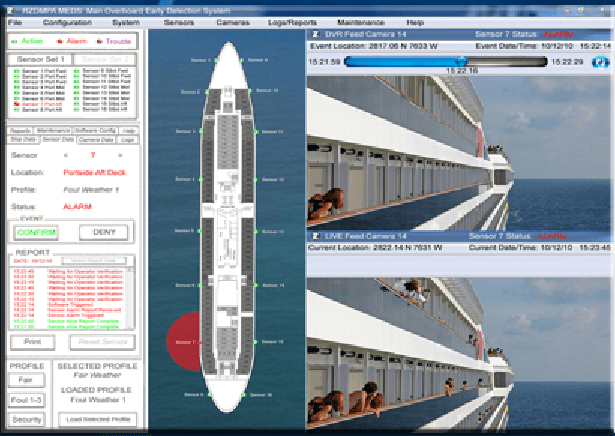
Marine surveillance companies have been working for a decade to perfect an alarm system that would sound when it detects a person tumbling off a ship.

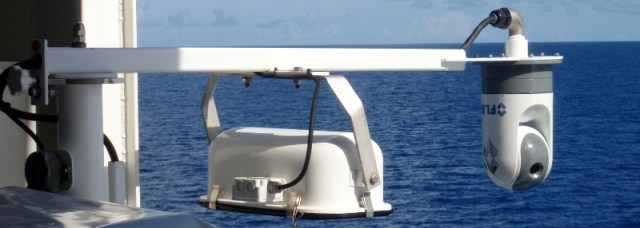
The system uses thermal cameras mounted on the hull and other parts of a ship to detect body heat. The images are fed through computers that use algorithms to quickly assess what the camera is seeing.

The alarm can be sounded on the bridge or at other centralized security stations.

Supplier companies say cruise lines are actively interested in the idea, but CLIA listed nearly a dozen obstacles to reliability.

Some have to do with the special factors of a marine environment, such as salt corrosion or encrustation on camera lenses.  Surface glare from the water, the pitch and yaw of a ship, extreme weather, vessel vibration and a continually changing horizon are all listed as constraints.
“CLIA recognizes that many systems exist and are suitable in a static land-based environment,” the white paper stated. “However, the cruise industry has evaluated and demonstrated numerous MOB detection systems, and most have been determined to be unworthy of further consideration.”

Companies that have been testing systems on cruise ships as far back as 2006 include Seafaring Security Services of Virginia Beach, Va., and PureTech Systems of Phoenix.

Larry Bowe, president of PureTech, said he believes his company’s system can meet the reliability requirements of the cruise lines.

“Given our extensive testing to date, we do feel the technology is readily available and can be deployed in the near future,” he said.

Bowe said the problem of an unstable horizon can be addressed with the proper computer analytics and that maintenance in a marine environment likewise is manageable.

“Cameras have been on ships for a long time, so I have to believe those issues can be addressed,” he said.

The proposed Coast Guard rule gives cruise lines the choice of either using detection systems or capturing images that can later be used in a search-and-rescue operation, or a combination of both.

Bowe said it would be vastly more effective to have the capability of instant alert.

“If you have cameras onboard and you’re capturing imagery, why not add detection?” he asked. “These events can take as little as half a second. What’s the likelihood that someone is going to be watching that imagery in a half a second time during a seven-day cruise to happen to catch them?”

Under the Coast Guard proposal, the recordings of captured images would have to be time-stamped and archived for 14 days. They would be used to narrow a search for any missing persons.

Some of the same companies that make MOB systems also provide security cameras for ships. The new Coast Guard proposals also set rules for such surveillance, as required by the 2010 Cruise Vessel Safety and Security Act. The agency has been writing rules to implement provisions of the act.

The surveillance rule would require coverage of any area on a ship where passengers and crew both have access. CLIA had warned a rule that was too detailed and proscriptive wouldn’t fit every ship.

One passenger group had asked for active monitoring of cameras as well as recording, but the Coast Guard did not adopt that approach.

The surveillance requirement won’t change much for most cruise lines, which  already extensively monitor their ships. According to one surveillance supplier, some ships carry as many as 1,400 security cameras.

The Coast Guard is proposing that video from the cameras be kept for 14 days, rather than for the 90 days advocated by passenger groups.

Other provisions of the proposed rule, which was published in the Federal Register Jan. 16, would require a printed guide to security in every stateroom and establish more procedures for training ship personnel on crime investigation practices. It would also codify a 42-inch height standard for exterior guard rails and bulwarks.

The Coast Guard said its rules would apply to 147 ships that either board or disembark passengers in U.S. territory but not to ships that merely visit for a port call.

It estimated the 10-year cost of the rules to the cruise lines and the U.S. government at nearly $80 million, including about $30 million for image-capturing systems.

Once the rules are finalized, it would complete the Coast Guard’s implementation of the cruise safety act, most of which is already in force.

Bowe said the MOB technology has continued to advance since the Coast Guard first sought comment in 2011 and that cameras, processing power and algorithms have substantially improved.

Long cruises in demand, CLIA survey shows

Travel agents are reporting an increase in bookings for longer cruises, according to an agent survey by CLIA.

Thirty-seven percent of agents reported an increase in bookings for 14- to 100-day cruises. Such cruises are increasingly popular with both retired and affluent travelers.

Agents said longer cruises are attractive because they give passengers the ability to see many places hassle free, without having to deal with multiple airports and packing and unpacking. Travelers also like the itineraries to destinations that would be difficult to visit on land.

CLIA conducted the survey of 434 CLIA agents in September, using Survey Monkey.