Carnival Corp boss denies sector was slow to react to coronavirus

Carnival Corp boss denies sector was slow to react to coronavirus

Carnival Corporation boss Arnold Donald has refuted suggestions the cruise industry was “slow” to react to the outbreak of coronavirus.

He argued that cruise is actually one of the best-placed sectors of travel to cope with anticipated stricter health and safety protocols in the future.

The chief executive of the nine-brand cruising giant said: “The cruise industry put a pause on the cruise before anybody else did. Before hotels or restaurants and other places of social gathering.

“Cruise ships are not the cause. Neither are they the reason for the spread.”

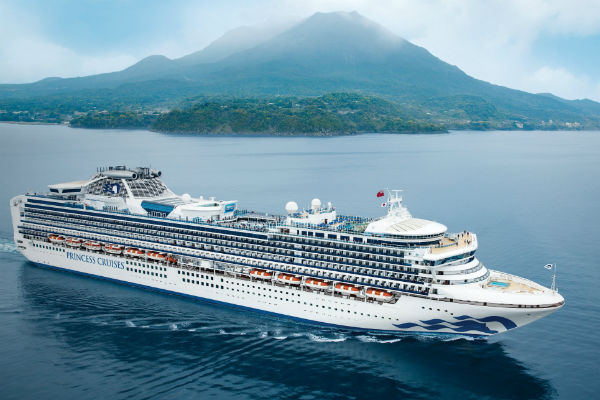
Commenting on the outbreak onboard Diamond Princess which was held in quarantine off Yokohama by Japanese authorities, Donald said: “This was an evolving situation. There was very little knowledge early on, in February and early March.

“But we did exactly what we were told to do. We co-operated fully with the Japanese Ministry of Health. They decided to hold the ship and put a quarantine in place, so we complied with that and at the same time, we tried to make it as comfortable as possible for our passengers and crew.”

And he added: “If you listen to our guests on Diamond or Grand Princess, you’ll hear lots of plaudits for our crew and our corporation. Our guests feel strongly that we did our best.”

Asked if he blamed authorities of the destinations and ports that wouldn’t allow ships with confirmed cased of Covid-19 to disembark passengers, Donald said: “I won’t sit and judge anybody at the moment. We all need to focus on helping.

“There were certain situations where we had ships with people on board that needed medical attention – not even Covid-19 related – that couldn’t get it in a timely manner they would have normally. That was unfortunate. There’s no question that happened and we tried to give assistance where we could. But I will not judge.”

Donald concluded: “So people say we were slow, but we were first [to suspend operations] – before all the other social gathering venues.”

And he added that cruise was well-placed for the future when stricter health and safety protocols are expected to be introduced across the travel industry.

“I don’t think there’s anything unique to this that particularly ascribable to cruise alone. In fact, in many ways, a cruise is better set up to handle this than society in general,” said Donald.

“We already do isolation, deep cleaning, hold medical records, do temperature scanning, use hand sanitizers and promote regular hand-washing. We also document a lot of passenger information. So we’re uniquely suited in some ways.

“Airport terminals? Not so much. Subways? Not so much. Hotels? Restaurants? Not so much,” he said.

But he added: “Covid-19 has its own epidemiology. Whatever the medical experts deem is necessary to deal with it in the future, we will cooperate and implement.”

Loyalty programs scramble to stay relevant

Loyalty programs scramble to stay relevant

With travel at a standstill, several U.S. airline and hotel loyalty programs have taken steps such as extending status through next year, reducing the requirements to obtain status for 2021 and delaying point expirations.

Analysts, though, said that loyalty programs should also creatively and strategically leverage their resources to maintain brand awareness now as well as to spur travel when the Covid-19 crisis starts to ease.

“Loyalty programs that are built on travel, when travel comes to a halt, they need to think of ways to stay top of mind,” said Nick Ewen, points and miles editor for the Points Guy.

As of April 8, Delta, United, Alaska, Hilton, Hyatt and Best Western were among the travel brands that had announced that members with loyalty status would keep their levels through 2021. United and InterContinental Hotels Group had reduced 2021 accrual requirements for those who don’t already have status. Various companies, including American, Wyndham and Radisson, had temporarily halted point expirations.

But a few companies have also started to get creative with loyalty programs in order to maintain brand awareness even while people aren’t travelling. Ewen pointed to Air Canada’s Altitude program, which is currently awarding elite qualifying miles in exchange for donations of the program’s Aeroplan points. For every five points, an Altitude member donates to a charity fighting Covid-19, that member gets one elite qualifying mile.

Another example is Russia’s S7 Airlines, which is running a promotion through April 30 in which customers can earn 100 of its Priority program miles each day simply by clicking an “I’m home” button on its website.

Seth Miller, editor of the airline-focused passenger experience website PaxEx.Aero, said travel loyalty programs should also leverage partnerships while people are staying at home. By way of example, Miller said that he has made Home Depot purchases through the United app in the past in order to accrue MileagePlus points. Armed with that data, the MileagePlus program might want to push an advertisement to him about home improvements. If Miller were to then shop Home Depot online using MileagePlus points, it would give United the dual benefit of remaining relevant while moving those points off its liability sheet.

“The most important thing is that the loyalty programs aren’t just about getting passengers on planes or heads into beds,” Miller said. “They are really a branding experiment.”

Still, when the Covid-19 pandemic ebbs, loyalty programs will be an important tool for getting people back on planes and in hotel rooms.

Just as the programs can use customer data to encourage alternative types of point to spend now, they can also use that data to spur travel during the early phases of recovery. For example, said Miller, an airline might know that a customer goes to the same destination every June and stays at the same hotel. In such a case, the carrier can push out a targeted promotion.

In a recent column on his View From the Wing website, miles and points expert Gary Leff wrote that loyalty programs will be a key to the resurgence of travel brands. Airlines, he noted, devalued programs during the several years of the boom that preceded the Covid-19 crisis. But now, with lots of empty seats to fill, carriers can more aggressively use the programs to incentivize travel, just as they have done in the past.

Leff suggested that loyalty programs use promotions to award miles to members for such activities as exercising or sharing future travel aspirations on the program’s website. He also suggested that programs sell points inexpensively.

“Usually, the biggest risk of cheap mileage sales is immediate redemption for the most expensive awards, but that’s mostly not an option for consumers now,” Leff wrote. “Generate cash flow and dreams.”

On the redemption side, Leff suggested carriers commit to lowering award pricing for a period of time while also making more redemption seats available. He even suggested that carriers take advantage of parked planes, cheap fuel and having too many employees by running and promoting redemption-only flights.

Ewen said he expects that loyalty programs will, in fact, make redemption cheaper as the Covid-19 crisis starts to lift. He also noted that Hyatt cancelled plans that had been set for March to alter its awards chart by adding peak and off-peak pricing.

Still, said Ewen, it will be important for loyalty programs to discount with caution.

“You don’t want to do bargain basement, because that can shift the mindset of the consumer as to what the price should be,” he said.

Canada further tightens cruising restrictions

Canada further tightens cruising restrictions

Canada’s government has enacted tighter restrictions on passenger ships, prohibiting commercial vessels with a capacity for more than 12 passengers from engaging in tourism and other recreational activities through at least June 30.

Last month, Canada banned cruise ships with more than 500 passengers from making port calls.

In other measures that will remain in place through Oct. 31, Canadian cruise ships are prohibited from the mooring, navigating or transiting in the country’s Arctic waters, and any foreign passenger vessel seeking to enter Arctic waters must give Canada’s minister of transport 60 days’ notice.

The new restrictions do not apply to “essential passenger vessels” such as ferries, water taxis and medical-use vessels nor to cargo ships and fishing vessels, said Transport Canada.

“These new measures will help reduce the spread of Covid-19 while continuing to support the continued movement of goods through the supply chain and ensuring Canadians can access their homes, jobs and essential services in a safe manner,” said transport minister Marc Garneau.