Coronavirus: MSC Opera passengers ordered to stay on the ship in Greece

Image result for msc opera

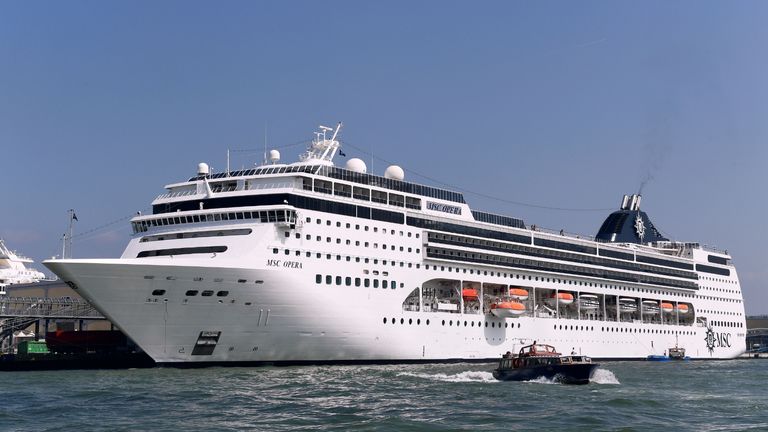
Passengers on MSC Opera were ordered to stay on board on Wednesday after an Austrian passenger from a previous cruise tested positive for coronavirus.

Austrian health authorities informed the line of the test results of the passenger who cruised in the eastern Mediterranean from February 17 to 28 on the 2,142-passenger ship.

MSC told passengers to remain on the vessel after requesting guidance from Greek health authorities.

The line has confirmed no passengers or crew members on the ship have any flu-like symptoms.

The Austrian passenger returned directly to Austria through northern Italy on February 28 after disembarking in Genoa.

A spokesperson for MSC said: “The Greek health authorities gave MSC Opera permission around 13:00 CET to sail from Piraeus, Greece, and continue its journey to its next scheduled port in Corfu, Greece.

“No additional health measures were required to be taken and the ship is currently sailing as planned.

“There are no passengers or crew members currently onboard the ship who have reported any flu-like symptoms.”

The spokesperson also added: “The health and safety of our passengers and crew will always remain our top priority.”

Last week MSC Meraviglia was denied entry to Ocho Rios, Jamaica, and George Town, Grand Cayman Island, over fears a crew member had coronavirus even though tests had shown they had Type A influenza.

The ship later was finally allowed to dock in Cozumel, Mexico and the line issued an apology to passengers for the missed ports of call.

Coronavirus: Cruise lines adopt strict new screening measures

Image result for CLIA

Passengers face the prospect of being denied boarding onto cruise ships due to enhanced screening measures being adopted by global cruise lines in response to the spread of coronavirus.

The new policies have been outlined by cruise industry body Clia.

The association said: “With strict measures in place, as guided by national and international health authorities, Clia and its member lines, in concert with pronouncements from the World Health Organisation, do not believe restrictions on the movement of ships are justified.”

Clia president and chief executive Kelly Craighead added: “The adoption of these measures further demonstrates the cruise industry’s unique ability to respond quickly as circumstances evolve.

“We remain in close contact with local governments around the world, and while we regret that these changes will result in the denial of boarding for some of our guests, travellers should know that their health and safety is the absolute priority for the industry.”

Under the changes, ships will deny boarding to anyone who has travelled from, visited or transited via airports in South Korea, Iran, China, including Hong Kong and Macau, plus areas in Italy under lockdown within 14 days prior to embarkation.

Lines will also conduct illness screening for people who have travelled from, visited or transited via airports in any destinations listed on the US Centers for Disease Control and Prevention (CDC) coronavirus disease list page within 14 days before embarkation.

“Illness screening includes symptom history checks for fever, cough and difficulty breathing in the 14 days before embarkation and taking of temperature,” Clia said.

Passengers will also be denied boarding if they have had contact with, or helped care for, anyone suspected or diagnosed as having the virus or who are subject to health monitoring for possible exposure to Covid-19 within two weeks prior to sailing.

Companies will conduct pre-boarding screening “necessary to effectuate these prevention measures”.

Enhanced screening and initial medical support will be provided to anyone exhibiting symptoms of suspected coronavirus.

The association added: “In co-ordination with cruise lines, medical experts and regulators around the world, Clia and its member lines will continue to closely monitor for new developments related to Covid-19 and will modify these policies as necessary with the utmost consideration for the health and safety of passengers and crew.

Coronavirus outbreak ‘biggest tourism challenge since 1991 Gulf War’

Image result for coronavirus map

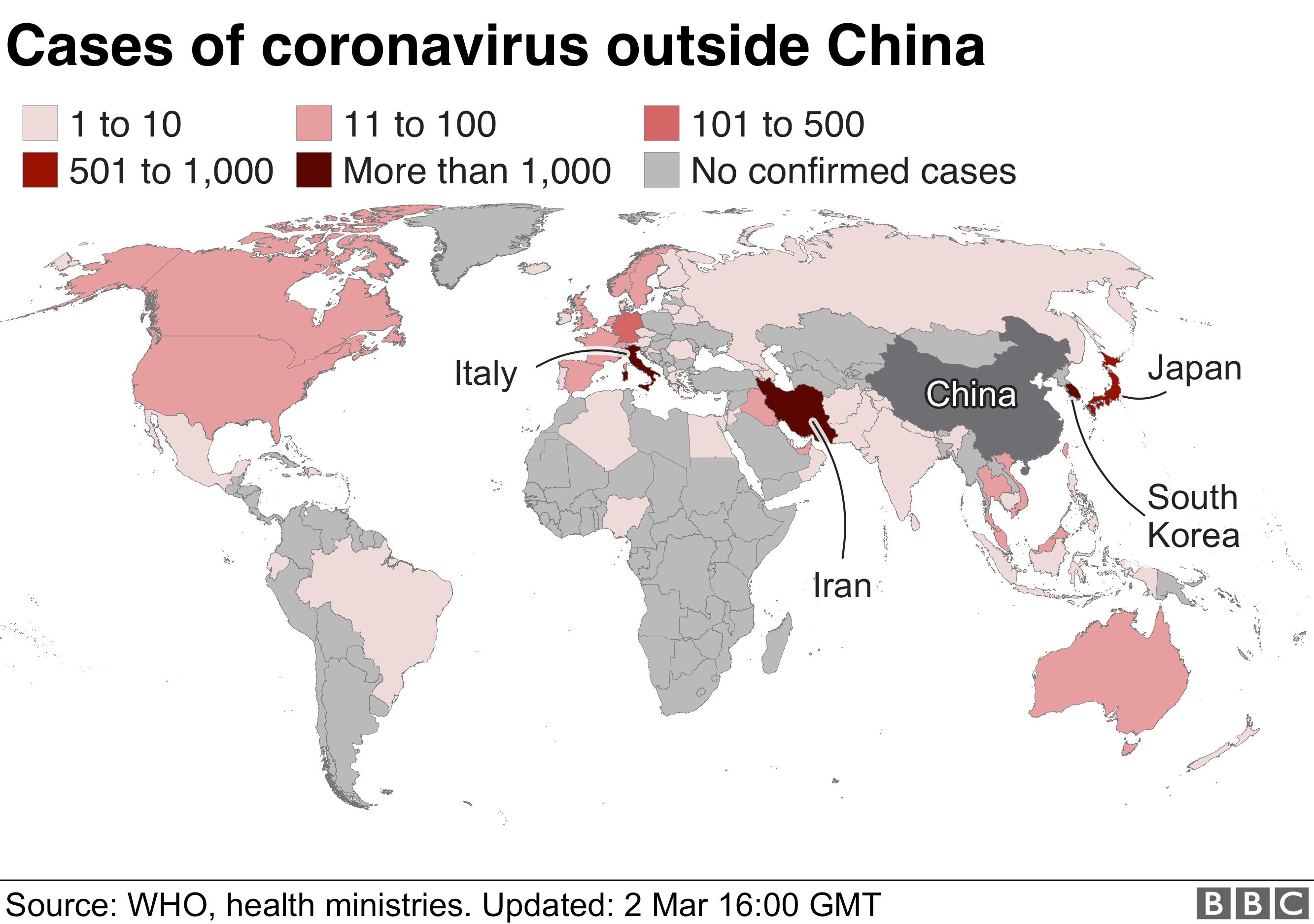
The coronavirus crisis means tourism into Europe faces its biggest challenge since the 1991 Gulf War, a trade association has warned.

The threat posed by the virus and the “inherently irrational” fear generated by the threat has been highlighted as the two main problems by the European Tourism Association (ETOA).

Chief executive Tom Jenkins said: “The new coronavirus outbreak is posing extraordinary difficulties for the European Inbound travel industry.

“Inbound European tourism is facing its toughest challenge since the 1991 Gulf War.

“There are two principal problems: the threat posed by the virus, and the fear generated by this threat.

“The first is comprehendible: strains of ‘flu are regular occurrences, though not with this level of celebrity status. The news from China that the epidemic is plateauing is heartening, as are the statistics on the severity of its impact on individuals.

“The second is the major problem as it is inherently irrational. Local governments spray antiseptic over buildings. Facemasks are used as a prophylactic against disease rather than a block to spreading it.

“You cannot reason with such irrationality. All you can do is file it alongside the cholera bonfires of the nineteenth century, rubbing yourself with a dead pigeon to cure the plague or striking an offending body part with a bible to cure syphilis.”

He added: “At best this is harmlessly weird behaviour, but it becomes genuinely alarming when confidence is eroded.

“A balance has to be struck between containing what is becoming a pandemic and the damage such containment measures cause.

“The danger lies when governments act because they feel they need to pander to fear. This fans the problem that it ostensibly seeks to extinguish, as they struggle to control what they cannot influence.

“Public panic is a natural reaction to authorities addressing what they assert is a crisis with floundering impotence.  What is served by a country stopping outbound trips, but allowing inbound visitors?”

ETOA expects coronavirus will continue to spread within the next three weeks, and then gradually “fizzle out” over the following six weeks.

“Influenza outbreaks are seasonal and dissipate with the spring. It is likely that the pandemic of fear will run for the same period,” Jenkins said.

“The third, which is the wider economic impact is harder to establish, but we have to assume that the impact of a shut down in the Chinese manufacturing sector, combined with a crisis of confidence in the service sector, will depress demand.

“How far this occurs is contingent on how governments handle the crisis. If the coronavirus scare triggers a recession, then the figures projected will have to be downgraded.

“It ought to be remembered that influenza outbreaks are seasonal: they tend to dissipate with the spring in the northern hemisphere. But it is likely that the pandemic of fear will run for the same period.”

ETOA operators will continue to run tours, unless “explicitly ordered otherwise,” Jenkins stressed.

“People from a non-affected area visiting another non-affected area pose no threat.

“As an association, we are running all scheduled events and attending all forthcoming events.

“Tourism is a vital component in the economy and a bell-weather for confidence in the service sector. Where it can continue, it must.

“We have every intention of running our China European Marketplace (CEM) in Shanghai on May 12 – this is where European suppliers meet Chinese buyers.

“China is a vital and growing market who now needs – it deserves – cultivation and support. The recovery will come, and we need to lay the groundwork now.”