Coronavirus outbreak ‘biggest tourism challenge since 1991 Gulf War’

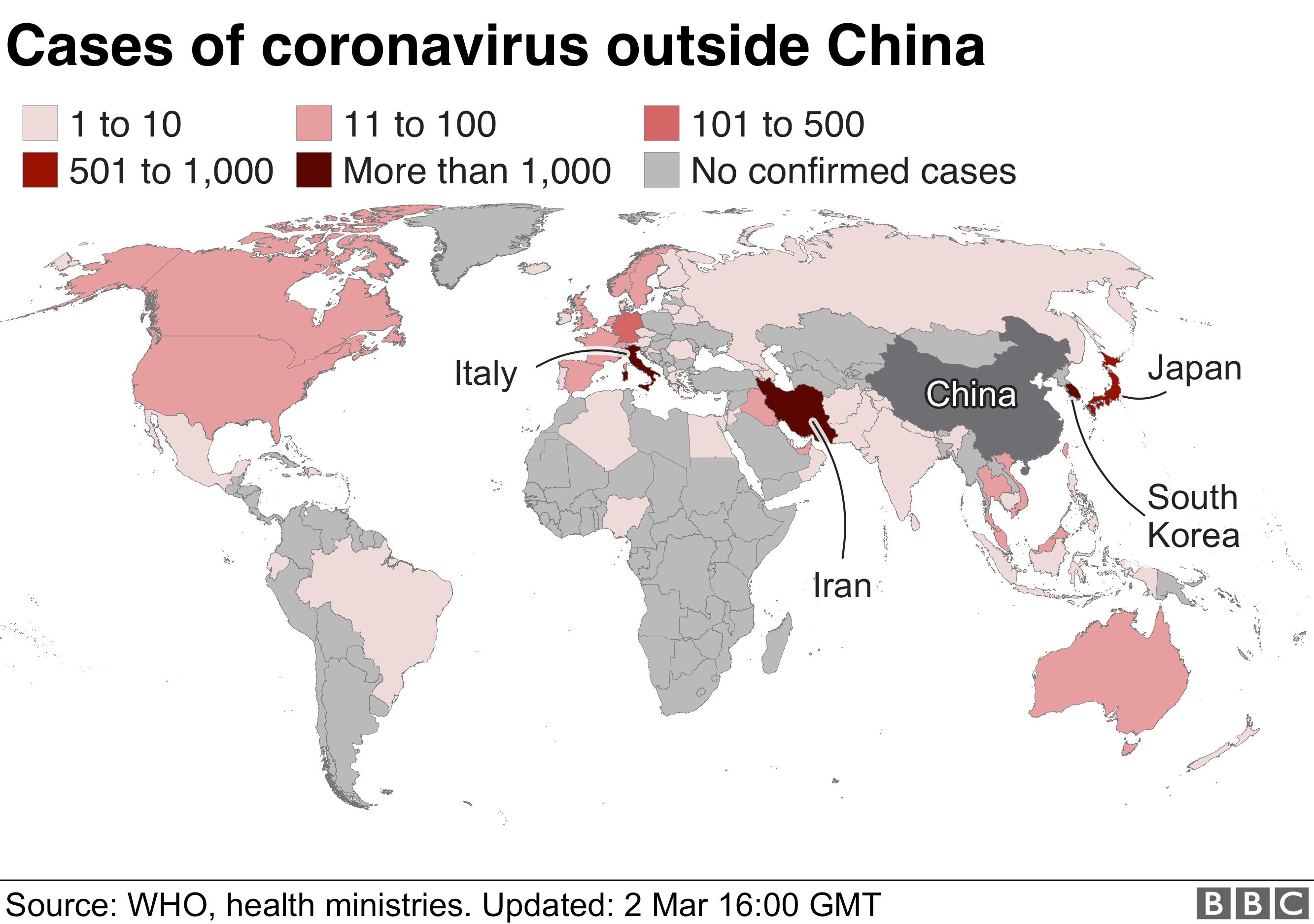
Image result for coronavirus map

The coronavirus crisis means tourism into Europe faces its biggest challenge since the 1991 Gulf War, a trade association has warned.

The threat posed by the virus and the “inherently irrational” fear generated by the threat has been highlighted as the two main problems by the European Tourism Association (ETOA).

Chief executive Tom Jenkins said: “The new coronavirus outbreak is posing extraordinary difficulties for the European Inbound travel industry.

“Inbound European tourism is facing its toughest challenge since the 1991 Gulf War.

“There are two principal problems: the threat posed by the virus, and the fear generated by this threat.

“The first is comprehendible: strains of ‘flu are regular occurrences, though not with this level of celebrity status. The news from China that the epidemic is plateauing is heartening, as are the statistics on the severity of its impact on individuals.

“The second is the major problem as it is inherently irrational. Local governments spray antiseptic over buildings. Facemasks are used as a prophylactic against disease rather than a block to spreading it.

“You cannot reason with such irrationality. All you can do is file it alongside the cholera bonfires of the nineteenth century, rubbing yourself with a dead pigeon to cure the plague or striking an offending body part with a bible to cure syphilis.”

He added: “At best this is harmlessly weird behaviour, but it becomes genuinely alarming when confidence is eroded.

“A balance has to be struck between containing what is becoming a pandemic and the damage such containment measures cause.

“The danger lies when governments act because they feel they need to pander to fear. This fans the problem that it ostensibly seeks to extinguish, as they struggle to control what they cannot influence.

“Public panic is a natural reaction to authorities addressing what they assert is a crisis with floundering impotence.  What is served by a country stopping outbound trips, but allowing inbound visitors?”

ETOA expects coronavirus will continue to spread within the next three weeks, and then gradually “fizzle out” over the following six weeks.

“Influenza outbreaks are seasonal and dissipate with the spring. It is likely that the pandemic of fear will run for the same period,” Jenkins said.

“The third, which is the wider economic impact is harder to establish, but we have to assume that the impact of a shut down in the Chinese manufacturing sector, combined with a crisis of confidence in the service sector, will depress demand.

“How far this occurs is contingent on how governments handle the crisis. If the coronavirus scare triggers a recession, then the figures projected will have to be downgraded.

“It ought to be remembered that influenza outbreaks are seasonal: they tend to dissipate with the spring in the northern hemisphere. But it is likely that the pandemic of fear will run for the same period.”

ETOA operators will continue to run tours, unless “explicitly ordered otherwise,” Jenkins stressed.

“People from a non-affected area visiting another non-affected area pose no threat.

“As an association, we are running all scheduled events and attending all forthcoming events.

“Tourism is a vital component in the economy and a bell-weather for confidence in the service sector. Where it can continue, it must.

“We have every intention of running our China European Marketplace (CEM) in Shanghai on May 12 – this is where European suppliers meet Chinese buyers.

“China is a vital and growing market who now needs – it deserves – cultivation and support. The recovery will come, and we need to lay the groundwork now.”

Princess Issues RFP to Clean and Sanitize Diamond Princess

Image result for princess cruises

Princess Cruises announced today a global search for a service provider with advanced, scientifically proven cleaning and disinfection capabilities to perform work onboard the Diamond Princess.

The work will begin after the guests and crew have disembarked, following the quarantine of the ship in Yokohama.

Princess is seeking proposals and estimates from the most technologically advanced service providers in this business, the company said.

The company is in action to manage an extensive out of service cleaning, disinfection and refurbishment period. The exact location of the project will be announced soon.

“Our focus continues to be on the safety and well-being of our guests and crew. We are seeking to identify the best resources to partner with to clean and disinfect the ship from bow to stern,” said Jan Swartz, Princess Cruises president. “To accomplish this critically important undertaking, Princess will engage a vendor that has experience in significant cleaning and disinfection projects and experience in the use of the disinfectant agent Virox®, which is well-known to be an effective disinfectant. The expert use of personal protective equipment is also a requirement for the chosen service provider.”

The company has detailed the areas and requirements for cleaning and disinfecting which include, but are not limited to, the following locations and all surfaces:

• Staterooms: the removal and proper disposal of all towels (bath, face, hand), bed linens, mattress pads, pillows, duvets, shower curtains, and mattresses
• Carpets, draperies, and other soft furnishings
• All corridors and handrails
• Housekeeping storage and service areas
• Galleys, pantries, dishes, service ware
• Restaurant and food and beverage areas
• Entertainment areas
• Public venues (retail shops, spa, salon, fitness centre, etc.)
• Technical and machine spaces
• All crew living areas
• All deck areas and handrails
• Medical Center
• Air handling units and ventilation: Cleaning and disinfecting of air handling units including ducts, fan rooms, coils and systems will be developed by Princess’ Technical Services separately using specialist cleaning contractors.
• All marine, hotel and operations equipment
• Any other areas required after an appropriate assessment

Companies who wish to submit a proposal should be prepared to comply with detailed standards set forth by experts in health protocols and administration such as the Japanese Ministry of Health, the U.S. Center for Disease Control and the World Health Organization, in addition to the operational standards established by Princess Cruises.

Coronavirus: Slump in-demand set to cost airlines almost $30bn

Image result for airlines

A slump in demand due to the coronavirus outbreak is set to cost the global airline industry $29.3 billion in lost revenue this year.

The bulk of the revenue loss – $27.8 billion – will hit carriers in the Asia-Pacific region, as Iata warned that 2020 would be a “very tough” year for the sector.

An estimated $12.8 billion will be lost in the Chinese domestic market alone with those outside the region expected to lose $1.5 billion in revenue, the airline trade body calculated.

The total forecast drop in demand of 4.7% would wipe out expected growth this year, resulting in a 0.6% contraction in passenger demand for the year.

This would represent the first overall fall in demand in more than a decade.

The estimated impact of coronavirus assumes that the centre of the public health emergency remains in China.

If it spreads more widely to Asia-Pacific markets then impacts on airlines from other regions would be larger, according to Iata.

The estimates are based on a scenario where coronavirus has a similar impact on demand as was experienced during the SARS outbreak in 2003.

“That was characterised by a six-month period with a sharp decline followed by an equally quick recovery,” Iata said.

“It is premature to estimate what this revenue loss will mean for global profitability. We don’t yet know exactly how the outbreak will develop and whether it will follow the same profile as SARS or not.

“Governments will use fiscal and monetary policy to try to offset the adverse economic impacts. Some relief may be seen in lower fuel prices for some airlines, depending on how fuel costs have been hedged.”

Iata director general and chief executive Alexandre de Juniac said: “These are challenging times for the global air transport industry. Stopping the spread of the virus is the top priority.

“Airlines are following the guidance of the World Health Organisation (WHO) and other public health authorities to keep passengers safe, the world connected, and the virus contained.

“The sharp downturn in demand as a result of COVID-19 (coronavirus) will have a financial impact on airlines – severe for those particularly exposed to the China market.

“We estimate that global traffic will be reduced by 4.7% by the virus, which could more than offset the growth we previously forecast and cause the first overall decline in demand since the global financial crisis of 2008-09. And that scenario would translate into lost passenger revenues of $29.3 billion.

“Airlines are making difficult decisions to cut capacity and in some cases routes. Lower fuel costs will help offset some of the lost revenue. This will be a very tough year for airlines.”

De Juniac called on governments to provide support. He said: “We have learned a lot from previous outbreaks, and that is reflected in the International Health Regulations (IHR). Governments need to follow these consistently.”

He added: “Airlines and governments are in this together. We have a public health emergency and we must try everything to keep it from becoming an economic crisis.”

Iata medical advisor Dr David Powell advised: “If you are sick, don’t travel.

“If you have flu-like symptoms, wear a mask and see a doctor. And when you travel wash your hands frequently and don’t touch your face.

“Observing these simple measures should keep flying safely for all.”