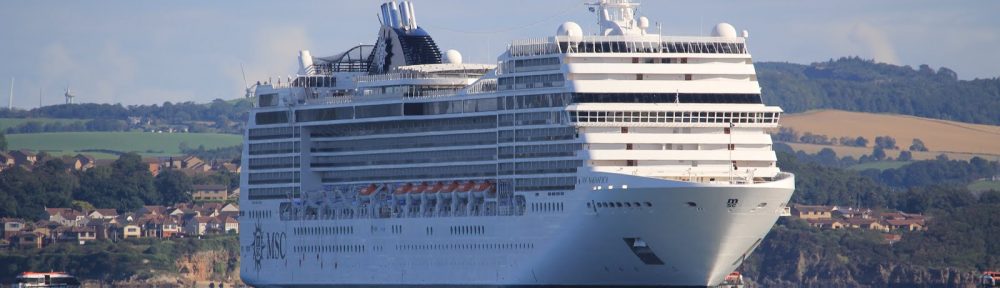
Italian investigators detail Concordia ‘chaos and confusion’
 The findings of the Italian Marine Casualties Investigative Body are part of a definitive 176-page report on the 2012 accident.
While it did not absolve Costa Cruises’ shoreside oversight, the report said Capt. Francesco Schettino lied about the extent of damages to authorities. It further said that his delays in declaring an emergency and in deciding to abandon ship had fatal consequences.
Had passengers been called to lifeboats earlier, “all of them could have reached their salvation out of the Concordia,” the report said.
The report variously describes the evacuation as adequate and chaotic and faults the bridge team for being too passive. But it said the key mistakes lay in the navigation planning phase of the voyage and in Schettino’s reluctance to accept that the ship was sinking.
In Italy, the board plays a role similar to that of the National Transportation Safety Board in the U.S. Separately, an Italian judge has accepted the indictment of Schettino on manslaughter and other criminal charges. A trial is scheduled for July 9.
The report includes recommendations to safety regulators. It urges reforms for bridge officer training and consideration of a double hull skin to surround key electrical and propulsion gear.
The Concordia was all but doomed from the start by the decision to change the plotted course to one close to Giglio Island in order to offer its residents a salute, the report said.
“The ship was sailing too close to the coastline, in a poorly lit shore area, under the Master’s command who had planned to pass at an unsafe distance at night time at high speed (15.5 knots). The danger was considered so late that the attempt to avoid grounding was useless,” the report said.
Schettino’s attitude in reviewing the navigation plan was “arbitrary,” the report asserted.
“The passive attitude of the staff on the bridge is just as reprehensible,” it added, chiding the officers for failing to waive Schettino off the risky course despite having criticized it among themselves before his arrival on the bridge.
The Concordia hit the rock that ripped a 175-foot gash in its side at 9:45 p.m.
Rather than sound the emergency alarm, Schettino told passengers only that the ship had an electrical blackout, a lie he would repeat to the Civitavecchia harbor master and the Coast Guard station there, the report said.
Not until 10:33 p.m. was the general emergency alarm sounded, the first announcement calling passengers to their muster station followed at 10:36 p.m. By that time, the ship was already listing 11 degrees. It isn’t until 10:54 p.m. that the ship’s second officer communicated “abandon ship” in English over the public address system.
By that time, some passengers had boarded lifeboats on their own. The report said many procedures set for emergency management were not followed.
“There was chaos and confusion, lack of communication,” the report stated. “In other words, a complete disorganization, mainly because nobody by the bridge coordinated the emergency according with the muster list and the related procedure for abandoning ship.”
Still, the crew performed “adequately” under increasingly dire conditions, it said.
It also noted that while the work language of the ship was Italian, officers such as the Bulgarian first engineer said they didn’t fully understand Italian.
Conversely, the helmsman said he sometimes couldn’t follow orders given by the captain in English.
 The report said had passengers been mustered at roughly 10 p.m., when the bridge first learned that three watertight compartments of the ship had flooded, they could have been in lifeboats before 11:12 p.m., when listing of 30 degrees started to make it hard to lower them to safety.
Although the Italian Navigation Code says the captain must be the last person onboard to abandon ship, the report says Schettino departed at 11:19 p.m. with 200 to 300 passengers and crew still aboard the Concordia, leaving only a single officer temporarily on the bridge to manage their escape.
At 12:30 a.m. the Coast Guard reached Schettino by radio in a lifeboat, which he said he had tumbled into as the ship listed. He was ordered to return to the ship but did not.
In accordance with the International Convention for the Safety of Life at Sea, the Concordia was designed to survive the flooding of two of its watertight compartments beneath the bulkhead deck, but five compartments were breached, which led to the accelerated listing.
In addition, once it rose high enough, water began spreading through openings in the bulkhead deck to other compartments. The ship was built with a double bottom, but the gash occurred farther up on the side, where only a single hull kept water outside the ship.
The report’s recommendation section suggests a double skin be considered for watertight compartments where critical electrical and propulsion gear are located, so that they could survive to run pumps, for example.
It also recommends that new ships be built with fewer openings in the bulkhead deck to reduce the progress of a flood.
More separation of compartments with the ship’s essential systems should be considered, along with wider distribution of bilge pumps and a relocation of the main switchboard rooms above the bulkhead deck.
The report recommends an emergency light in each cabin to highlight the location of the lifejacket.
Bridge officers should be required to pass courses in Bridge Team Management and their training should emphasize “an enhanced collective decision making process and ‘think aloud’ attitude,” the report recommended.
More care should also be taken to document that crew members with muster duties have the certifications to perform their emergency jobs, the report said.
 Have you have used your cell phone or tablet during a cruise ship safety demonstration?
 But still, some thought and effort should go into the presentation of these life-saving exercises. Perhaps some sort of interactivity is called for. Or a quiz at the end. A cruise credit for the passenger that correctly demonstrates they’ve been paying attention.
 Wetravel2u's Weblog