Boeing to investigate wiring defect in Dreamliner

Boeing to investigate wiring defect in DreamlinerBoeing has said that it will investigate a wiring defect that was found in a fire extinguisher system on three of its 787 Dreamliner jets.

The fault was found on jets operated by Japan’s All Nippon Airways (ANA).

The problem – the latest in a series of setbacks for Boeing’s 787 – was first discovered during pre-flight maintenance of a jet at Tokyo airport, an ANA spokeswoman said.

Rival Japan Airlines turned back a 787 travelling from Tokyo to Helsinki to check the wiring after ANA reported the fault on Wednesday.

It is the latest issue to hit the 787 jet after battery problems grounded the entire fleet earlier this year.

Boeing said it was aware of the latest issue and was looking into the matter.

“The safety of those flying on Boeing aeroplanes is our top priority. We will thoroughly examine this issue and take the appropriate steps,” the firm said in a statement.

In July, a fire broke out on a 787 Dreamliner jet operated by Ethiopian Airlines while it was parked at Heathrow airport.

The fire was traced to the upper rear part of the plane where a transmitter used to locate aircraft after a crash is located.

US carrier United Airlines also found a pinched wire during an inspection of one of its six 787s.

Boeing has since asked airlines to carry out inspections of the transmitters.

It has also asked operators of other aircraft models – the 717, Next-Generation 737, 747-400, 767 and 777 – to inspect aircraft.

Carnival Triumph returns to duty!

Carnival Triumph returns to duty!

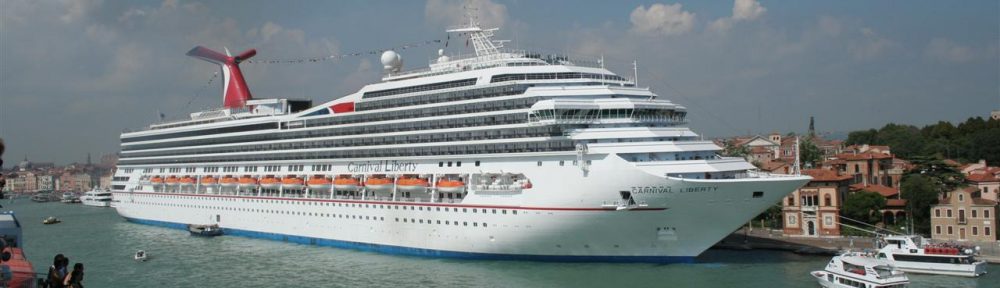
The Carnival Triumph has successfully undergone repair-work following its ill-fated engine failure and subsequent problems in Alabama, and is now ready to return to active duty.

Extensive work was required to address damage caused by the engine room fire that left 3,143 passengers and more than 1,000 crew stranded for five days without power in February.

Originally, this work had been scheduled to take place at the BAE Shipyard in Mobile, Alabama. However, the ship ran into further problems here, undergoing extensive exterior damage after a freak storm caused the vessel to break free of its moorings and drift into a dredger.

Following these various setbacks, the Triumph was moved to Grand Bahama Shipyard in May, where it could finally undergo the repairs that were required.

As well as being fixed up, the vessel has also been equipped with new emergency power capabilities to avoid a repeat of the February incident, when Carnival came under severe pressure from the cruise industry press after passengers stranded on the ship were left without running water.

It has also been fitted with improved fire safety technology and new operating redundancies that were developed as part of the $300 million (£190 million) fleet-wide review that Carnival carried out after the Triumph incident.

According to Seatrade-Insider, Carnival also took the opportunity while the ship was out of action to give it a bit of a makeover as well, with enhanced dining and bar venues, including a new Guy’s Burger Joint, BlueIguana Cantina, Alchemy Bar and EA Sports Bar.

Upon returning to Galveston in Texas today, the Triumph will now resume its schedule of cruises to Cozumel and Progreso in the Caribbean.

But while the ship may look as good as new, it appears that passengers have not yet forgiven and forgotten. In fact, a recent poll of US adults by Harris Interactive indicated that people are less trusting of major cruise lines than they were before the Triumph incident. Unsurprisingly, faith in Carnival Cruises appears to have been shaken the most.

How do you feel about the state of the industry and its major players following the Triumph debacle?


A muster drill that’s life-saving and lively

A muster drill that’s life-saving and lively

By Tom Stieghorst

*InsightHave you have used your cell phone or tablet during a cruise ship safety demonstration?

During a recent muster drill, a crew member stopped me from using my phone to send a tweet. No pun intended: It was the right call. Passengers are supposed to be paying attention to the safety message.

Except that there were long stretches when nothing happened. No instruction, no videos, nothing but waiting. Some sort of communication seemed to be happening behind the scenes. And granted, sometimes it takes more than a few minutes for everybody to report to their assigned muster stations. But in the meantime, passengers are cooling their heels.*TomStieghorst

Getting attention for routine safety messages is a problem that has plagued many companies in the business of transportation. On every flight, airline personnel are required to tell passengers something that most of them have already heard. The natural impulse for most listeners is to tune it out. Social media and portable devices (cameras not forgotten) are just the latest means of avoiding a mind-numbing couple of minutes.

The recent fire on Grandeur of the Seas offers a reminder of why it’s worth it to pay attention to the safety message. Passengers roused at 2:50 a.m. had at least some idea of what was happening, where to go, what to do.

And of course one of the lessons from the Costa Concordia tragedy, which occurred just hours after leaving an embarkation port, was the need to conduct a muster drill before sailing and to compel every passenger’s participation during the drill.

But still, some thought and effort should go into the presentation of these life-saving exercises. Perhaps some sort of interactivity is called for. Or a quiz at the end. A cruise credit for the passenger that correctly demonstrates they’ve been paying attention.

Cruise lines also owe it to passengers to make the drill as effective as possible. Please keep it moving, to minimize the boredom. Make whatever is said audible, especially announcements on the ship’s public address system.

And try to involve the crew in communicating to small groups of guests. The more personal the safety demonstrations are, the more attention and respect they will command.

And now one long tone signals the end to the muster drill. Back to your phones!