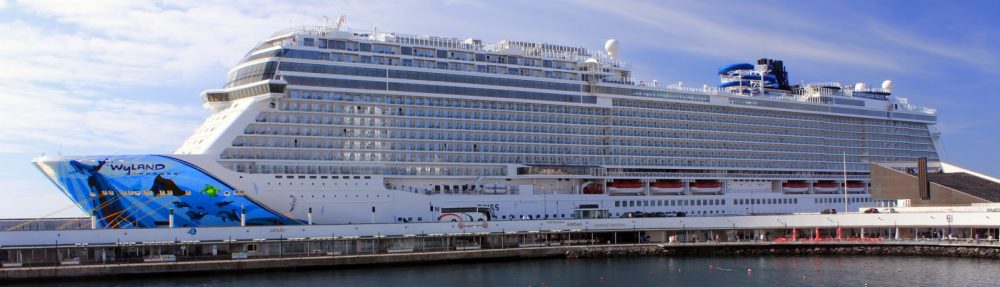
MSC To Be Third Biggest Luxury Player

2027 Luxury Market Breakdown

With MSC Cruises entering the luxury market with dedicated 1,000-guest ships, the family-owned company will be the third biggest luxury operator by 2027, according to Cruise Industry News estimates.

Viking Ocean will control most of the market pie, with 18 ships and an estimated market share of 35.7 per cent based on passenger capacity.

Silversea, with an aggressive newbuilding program and a new owner in Royal Caribbean Cruises, will be the second largest luxury line, with 12 ships and 13 per cent of the market come 2027, based on the existing cruise ship orderbook.

MSC Funnel

MSC Cruises is next, as the Italian brand will have four 64,000-ton luxury ships, 4,000 berths and just under 10 per cent of the luxury market, not including the company’s Yacht Club berths on its quickly-expanding fleet of megaships.

Crystal and Seabourn round out the top five, as both are expanding into the expedition market with new ships and Crystal has also committed to a new class of larger ocean-going vessels.

What Viking’s growth means for river cruising

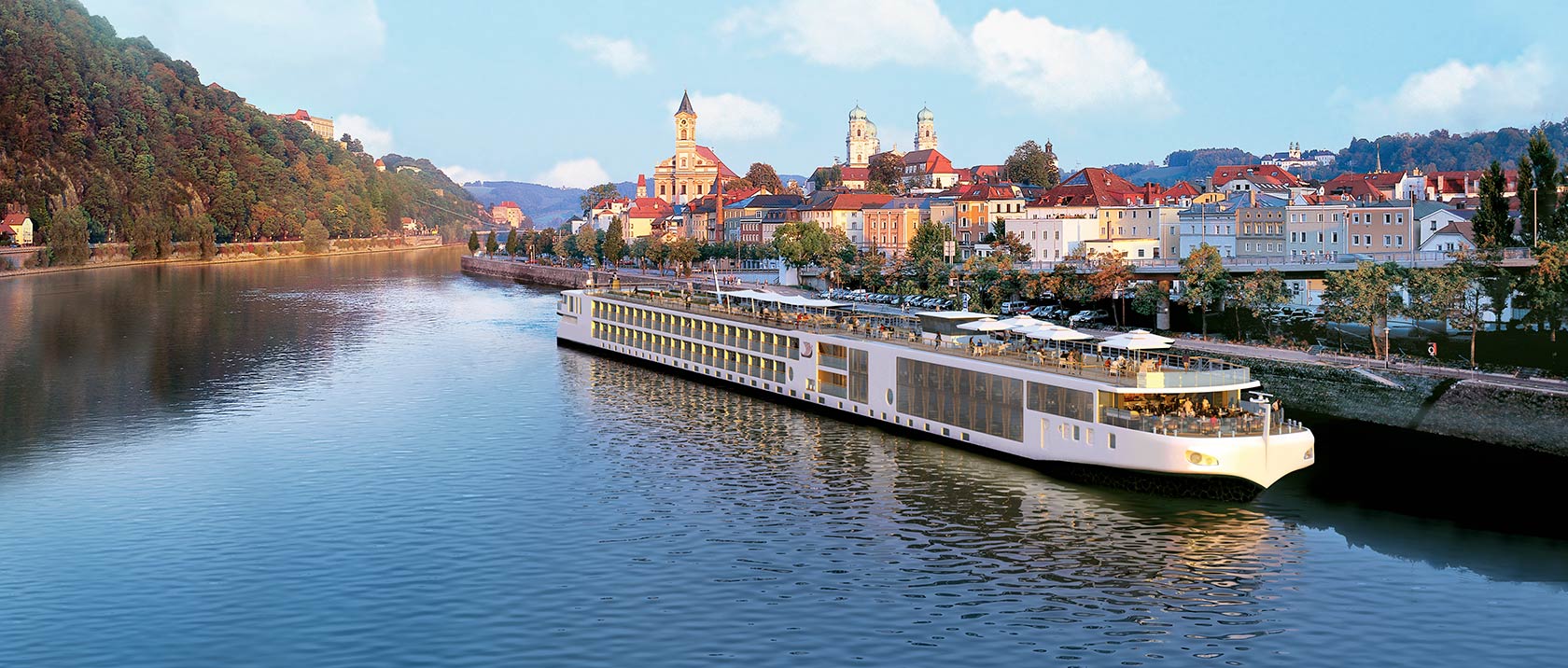
Image result for viking river cruises
The news that Viking River Cruises will add 24 Longships to its fleet signals two things: That following a brief lull in shipbuilding momentum, Viking is experiencing strong enough demand to merit a hefty commitment to more ships, and that the river cruise industry at large is entering a new growth phase.
So, let’s start with Viking. With the addition of 24 vessels in addition to the existing 65 ships already in the company’s river fleet (though we don’t know if and how many ships the company may retire in the coming years), one has to ask, what is in Viking’s secret sauce that lets it sustain such growth?
While only Viking is privy to the nuances of its success, the line has certain unique features that have likely helped fueled its expansion and popularity.
For one, Viking has become a household name in river cruising thanks in large part to its ads that blanketed popular TV programs like Downton Abbey on PBS and that air on National Public Radio. That kind of brand recognition definitely gives it an advantage.
In addition to product awareness, Viking has found the sweet spot in offering well-designed hardware at affordable prices. The line’s newest vessels, the Viking Longships, launched in 2012, feature open and airy public areas and contemporary Scandinavian design that makes them feel like unstuffy, sleek floating hotels. They also offer a wide range of stateroom options, from a modest 150-square-foot lower deck cabin with small windows to 275-square-foot veranda suites with step-out balconies and 445-square-foot explorer suites with a separate living room and bedroom.
It doesn’t hurt that Viking is also known for its attractive deals. For travellers who find river cruising to be too expensive, Viking’s promotions make its cruises more attainable.
Viking also pays agent commission on all components of its river cruises, including port charges and airline fees, which few other lines do.
Image result for amaways river cruises

While Viking’s fleet expansion always makes good headline fodder, Viking isn’t the only river cruise line that is growing. AmaWaterways recently announced that it will launch three vessels in 2019, including the double-wide 196-passenger AmaMagna, and this spring the last two of Crystal Cruises’ four new-build river ships set sail (the first two launched last fall).

The steady stream of ship orders suggests that demand for river cruising hasn’t let up. So, can Europe’s rivers sustain all the inventory? Well, there are certain issues the industry needs to consider as it continues on its shipbuilding path, including staggering itineraries so that that numerous ships aren’t all docked in the same ports at the same times. And docking space itself needs to be re-evaluated and solutions explored to ensure that ports don’t get overcrowded.

Physical growth logistics aside, however, river cruise lines often point out that the demand for the new ships is there. The number of river cruise passengers is still a small fraction of the number of ocean cruise passengers, meaning that many cruisers have yet to discover river cruising. For the river cruise lines, that fact alone signals that this segment is poised to continue on its current expansion path for years, if not decades, to come.

Genting Hong Kong Reports 2017; Outlines Future Strategy

Double Star Call

Genting Hong Kong has reported a segment loss of $186 million on revenues of $1.1 billion for its cruise operations for the year ended Dec. 31, 2017, compared a loss of $106 million on revenues of $908 million for the previous year. Genting owns and operates Dream Cruises, Crystal Cruises and Star Cruises.

Overall Genting posted a loss of $244 million on revenues of $1.2 billion for 2017, compared a to a loss of $504 million on revenues of $1.0 billion for 2016. This includes profit or loss contributions from its shipyards and joint ventures.

For its cruise operations, Genting said in its year-end report that passenger ticket revenue and onboard revenue increased significantly in 2017 mainly to the full year’s service of the Genting Dream and the Crystal Mozart, as well as the launch of the World Dream. Crystal Bach and Crystal Mahler during the year.

Depreciation of the new Dream and Crystal vessels and start-up costs for the new Crystal river ships resulted in the segment loss, according to Genting.

Shipyard operations also posted a segment loss.

For 2017, passenger ticket revenue was $728.3 million or $197.26 per passenger cruise day. Onboard spending was $287.7 million or $77.92 per passenger day.

For 2016, the passenger ticket revenue was $625.4 million or $213.99 per passenger cruise day. Onboard spending was $96.73.

With Dream and Star operating in Asia, Genting stated that Asia generated approximately 68 percent of its cruise revenues in 2017, 30.4 percent came from Europe and 1.6 percent from “other.” In 2016, Asia generated 56.2 percent of the revenues, Europe 42.3 percent and 1.5 percent came from “other.”

While Dream Cruises improved its occupancies and yields in the Hong Kong/Guangzhou and Singapore markets, the arrival of new ships was said to have had a negative impact on Star, creating downward pressure on occupancies and yields. This situation is expected to improve, however, as other brands are reducing their capacity in the market.

Crystal is also seeing more competition with competing brands launching new ships, according to Genting.

Overall, the three brands had a 77.2 percent occupancy in 2017, compared to 81.7 percent in 2016.

The two-ship Dream Cruises fleet, which launched service with the first ship in 2016, will see two more global-class ships join in 2020 and 2021. Plans call for them to sail from Shanghai and Tianjin during the summer months and Australia, New Zealand, California and the ASEAN region during the winter months. The brand is being tagged as “Asia’s Global Cruise Line” by Genting, which also said it will have the youngest fleet in the world.

Star Cruises will continue to sail from China, Taiwan, Malaysia.

Crystal Cruises two ocean-going ships are being extensively renovated. The river fleet will grow to five vessels in 2018, and the yacht expedition segment will grow from one to two ships, with the introduction of Crystal Endeavor in 2020. Furthermore, Genting said that a new class of ocean ships are being designed for Crystal’s fleet to provide more itineraries and reach better economies of scale.