Fathom cruise prices vary widely

P&O Adonia will change its name to Fathom Cruise.

Fathom released a full schedule of fares for its social-impact cruises in the Dominican Republic and Cuba, showing a variation depending on season and cabin category.

An inside cabin on an off-peak cruise to the Dominican Republic is priced at $974 for a seven-day voyage. A peak-season suite is priced at $4,468.

On a mid-May shoulder-season cruise for Fathom, prices range between $1,256 and $4,259 compared with a range of $809 to $2,059 for sister brand Carnival Cruise Line.

Fathom prices for Cuba have ranged higher than the Dominican Republic itineraries. The lead-in price of $1,800 for an interior cabin on an off-peak cruise compares to a suite during peak dates of $8,250.  The suite price during off-peak dates is $7,350.

When Fathom was first announced, it released only a mid-point price for each cruise for the sake of simplicity, saying higher and lower cabin categories would be priced later.

Fathom cruises to the Dominican Republic in September are listed as off-peak, with cruises in June, July and mid-August listed as peak season. Late August, April and May are considered shoulder season.

In Cuba, peak season runs from May 29 to Aug. 7, with low season departures listed as Sept. 18 and Oct. 2.

Also, Fathom detailed the visa, port expenses and other extra charges not included in its fares. It said those charges will total $500 per person per voyage in Cuba and $200 for the Dominican Republic.

The Future of U.S. Cruises to Cuba

Havana Cuba.
Havana will soon be bustling with U.S. cruise passengers

Although U.S. laws still prohibit leisure travel to Cuba, cruise lines are waiting with plans in hand for the green light. Since last month’s announcement that Fathom, Carnival Corporation’s new social impact brand, was granted a license to sail from the Port of Miami starting next May, the floodgates seem ready to open.

Although Fathom is accepting bookings, negotiations with Cuba are not yet complete, and settling on ports of call remains up in the air. Rates for Cuba cruises, which start at $2,990 per person, are double those for Fathom’s originally announced Dominican Republic sailings, and Cuban fees will be tacked on to the cruise fare.

Meanwhile, Tom Baker, co-owner of Houston-based Cruise Center, has found land tours extremely high-priced in comparison to cruises.

“We’re looking at around $1,000 per day for a destination that is not a luxury experience,” he said. “I’m sure the tour operators are doing wonderful things, but they are still left with mediocre hotels, terrible roads and buses that may or may not maintain air conditioning. So I went to Cuba Cruise, where the highest-priced staterooms run around $3,000 for two people on a weeklong cruise, including shore excursions and an all-inclusive beverage package. You don’t have to take long bus rides, and both food and accommodations are going to be comfortable, at the very least.”

Baker originally booked a people-to-people cruise for himself, then decided to see if a LGBT group he was working with wanted to go as well. Now, he has more than 200 clients sailing on a Jan. 1 cruise, and the number of passengers continues to grow, all with little marketing.

Bonnie Habel, president of Fuller Travel in San Antonio, sees the current requirement for cruise passengers to interact with locals on the ground as another positive selling point.

“A lot of work and thought goes into those excursions, and it’s not just shopping and seeing a historic site,” she pointed out. “And with the cruise, people get a predictable level of food and lodging.”

One of the most intriguing aspects of the Fathom announcement is that president Tara Russell is also tasked with finding social impact cruise opportunities for other brands in Carnival Corporation’s huge fleet.

Habel and others believe they could sell the highest-level accommodations on a luxury ship in Cuba.

“If Carnival is smart, they will put Seabourn Cruise Line in there,” Habel said. “The highest-priced accommodations would fly out the door.”

Cuban-born Frank Del Rio, president and CEO of Norwegian Cruise Line Holdings Ltd., called the Carnival move a “critical first step.”

“Cuba will shine new light on the Caribbean, still the biggest cruise destination in the world,” he said.

According to Del Rio, Cuba has five or six ports with qualities “as different as New York and Texas,” and he believes all three of his brands — Norwegian Cruise Line, Oceania Cruises and Regent Seven Seas Cruises — could differentiate themselves enough to more than satisfy the desires of various clienteles.

In addition to Fathom, a group of Florida ferry companies has been approved by the U.S. government to operate service to Cuba, including United Caribbean Lines, run by veteran cruise executive Bruce Nierenberg. His company is working with Haimark Ltd. to put the 210-passenger Saint Laurent into operation as the first small ship operated by a U.S. cruise line to circumnavigate Cuba in more than four decades. The line will offer nine-night roundtrip departures from Miami to Cuba beginning Feb. 20, pending final government approval.
 

Carnival’s new Fathom brand to sail to Cuba

P&O Adonia to become Fathom

Carnival Corp.’s new Fathom brand has already received permission from the U.S. government to mount cruises to Cuba and it plans to start next year.

Fathom’s Cuba cruises are scheduled to begin in May 2016, a month after the brand launches its inaugural social-impact travel experiences in the Dominican Republic. Carnival said the U.S. Treasury and Commerce departments have signed off on the cruises, which will qualify for exceptions in the law that prevents general travel to Cuba by U.S. citizens.

“We are excited about receiving U.S. approval as the very important first step to ultimately take travelers to Cuba under the existing 12 criteria for authorized travel,” Carnival Corp. CEO Arnold Donald said in a statement. “We look forward to working with the Cuban authorities for their approval to help make the social, cultural and humanitarian exchanges between U.S. citizens and the people of Cuba a reality.”

Donald appeared on “CBS This Morning” on Tuesday to talk about cruising to Cuba.

The move is a major departure for Carnival Corp., which like other U.S.-based cruise lines has strictly avoided business dealings with the Castro government.  The issue has been particularly sensitive in the large Cuban-American community in Miami, where Carnival and several other major cruise brands are headquartered.

Many Cubans in Miami emigrated there after the Communist-led coup in 1959, some emigrating after their businesses or properties were confiscated by the government and many leaving all of their possessions and property behind as they sought political refuge.

General travel to the island has been off-limits to Americans since a trade embargo enacted in the early 1960s.

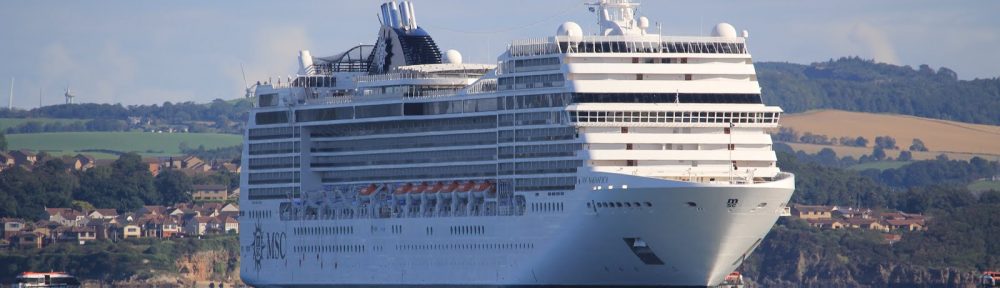
The new diplomatic thaw with Cuba initiated by the Obama administration has several cruise lines seeking an opening for cruises to the island. Over the weekend, MSC Cruises, based in Geneva, Switzerland, said it will begin weekly seasonal cruises from Havana on its 2,106-passenger MSC Opera in December.

In the Dominican Republic, Fathom has identified two domestic organizations that are doing social-improvement projects already in the country. Carnival’s announcement didn’t say who it would work with in Cuba, or whether the organizations would be affiliated with the Cuban government.

However, the Carnival statement said one of its partners in the Dominican Republic, the Instituto Dominicano de Desarrollo Integral, would be interested in partnering with Fathom in Cuba.

“IDDI has longstanding relationships in Cuba and more than a decade of experience working on the ground side-by-side with local officials to make a positive impact in Cuban communities,” IDDI founder and executive director David Luther said.

Carnival said prices for a seven-day Cuban itinerary will start at $2,990 per person, more than triple the cost of a typical seven-day Caribbean cruise from Miami on its flagship Carnival Cruise Line brand. It said the price includes onboard social-impact immersion experiences and on-the-ground cultural immersion activities, but excludes taxes, port charges and other fees.

Tara Russell, president of Fathom and global impact lead for Carnival Corp., said she was incredibly excited by the potential for expanding the brand’s mission to Cuba.

“We are looking forward to building what we intend to be a beautiful and lasting friendship with the Cuban people,” she said.