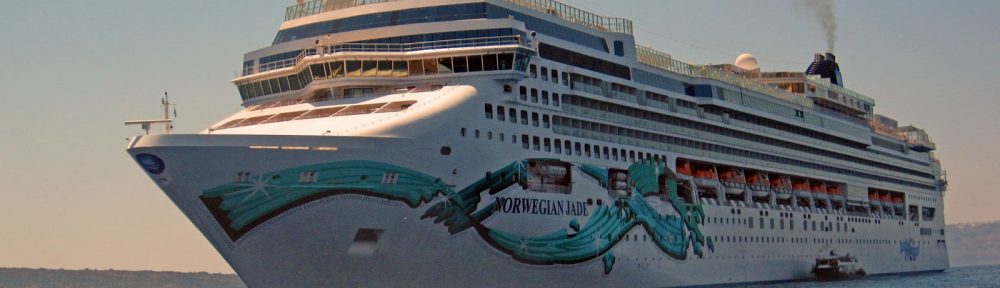
Frank Del Rio Forecasting Record 2023 for Norwegian Cruise Line Holdings

Norwegian Cruise Line Holdings (NCLH) will generate record EBITDA and net yield in 2023, according to a very upbeat and confident Frank Del Rio, CEO and president, who spoke at a two-hour presentation aboard the Norwegian Prima in New York City on Thursday morning.

Del Rio said that bookings for 2023 were up from 2019, including a 16 per cent capacity increase, and at significantly higher prices.

Talking about the so-called key value drivers, Del Rio asked analysts not to lump NCLH in the same pool as the other cruise companies, and that the company differentiates itself in many ways, including targeting a more upmarket demographic, featuring ships for its three brands that are at the top of each market segment, and premium itineraries.

Other companies, he said, have so many brands they are sabotaging each other. In contrast, Norwegian Cruise Line, Oceania Cruises and Regent Seven Seas Cruises (the NCLH brands) are clearly differentiated, each in a different market segment.  Del Rio described the brands as stand-alone that do not compete against each other.

Del Rio went on to say that itineraries are the number one driver of pricing and that he spends more time on itinerary planning than anything else. Another key driver is the cabin mix and he noted that the brands have a richer mix of cabins, with a higher percentage of outside balcony cabins.

He said that NCLH’s go-to-market strategy is focused on filling the ships, offering consumers value and deals they are happy with, while not discounting, and noted that they are beating their competitors by a large margin.

Pricing is almost irrelevant, according to Del Rio, who said the key is to have consumers feel they get a deal. And when products are bundled in that consumers buy dining and beverage packages up front, as well shore excursions, they come onboard with a so-called “fresh wallet” and spend more.

He noted that onboard spending on the Norwegian Prima on its trans-Atlantic crossing had been double of the company’s average.

By comparison, in 2018, 52 per cent of the passengers bought packages in advance of their cruise. For 2022, Del Rio said that number has increased to 85 per cent. He added that also means that more cruises are “sticking,” meaning there are fewer cancellations and higher advance deposits.

The average booking curve is now more than eight months out, he noted. From 171 days in 2016, the booking curve is now 245 days. The extended booking window also gives the company more visibility and the ability to manage pricing to maximize ticket and onboard yield.

Another key factor contributing to a strong 2023 is that NCLH is a U.S.-centric company, according to Del Rio, who said that 78 per cent of the passengers come from the U.S.

Among the trends noted were more direct bookings with the travel agency community constricting during the pandemic and with consumer behaviour changing to more online purchasing.

Looking forward, Del Rio and Mark Kempa, CFO and executive vice president, said the brands will continue to benefit from the underserved and unserved markets while continuing to be U.S.-centric.

They also said that NCLH has a lot of “headroom” to raise prices while comparing cruise to land vacations.

Among the key takeaways from the presentation, Del Rio underscored that not all cruise companies are created equal and that NCLH has laid the foundation for a strong 2023, surpassing 2019, targeting a higher-end demographic, which is reflected in its stronger pricing and bookings.

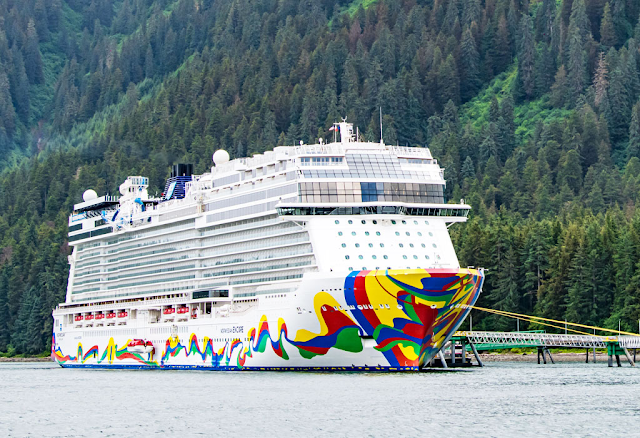
Norwegian Cruise Line Holdings Maintaining Strong Pricing, Won’t Discount to Fill

Norwegian Cruise Line Holdings won’t be discounting ticket prices to chase short-term occupancy levels, said Frank Del Rio, president and CEO of Norwegian Cruise Line Holdings, on the company’s second-quarter earnings call.

“We could, like others, chase short-term occupancy and sell cruises for crazy prices, but we don’t want to do that. We never have done that. That is not our strategy,” he said.

“I remind you what happened back in ’08 and ’09, when (during) the great recession, certain cruise companies did drop their prices to ridiculous levels. And it took them, in some cases, 10 plus years, and in some cases, they’ve not yet reached those pre-great recession yields. I’m not willing to mortgage the company for 10-plus years in order to window dress the next quarter or so. I just won’t do it. We’re here for the long term,” he said.

“We’re managing the business on a long-term basis. COVID had a major impact. We were shut down for 18 months or so, and the recovery is not instant mashed potatoes. If you want instant mashed potatoes, you got to go elsewhere because we’re here for the long run. And our pricing strategy, how disciplined it is, is proof of that.

“We simply don’t want to chase short-term occupancy at the expense of long-term pricing. Pricing has a long tail,” he added.

Del Rio said the company had 40% more ticket sales on the books right now compared to 2018 despite a 20% increase in capacity.

“And I’ve been doing this for 30 years. I’ve managed cruise companies in good times and in bad times, and I am convinced beyond a shadow of a doubt that you don’t sacrifice the long-term pricing power of your brand in order to achieve short-term load factor gains,” Del Rio continued.

Norwegian Cruise Line Raises Onboard Prices and Posts Strong Onboard Revenue Numbers

Onboard revenue is seen as a real-time now indicator of how guests are feeling about their financial situation right now and while onboard company ships, according to Frank Del Rio, president and CEO of Norwegian Cruise Line Holdings.

“Onboard revenue generation has continued to be impressive, even as we continue to ramp up occupancy carrying more guests across all ships and cabin classes. In the second quarter, onboard revenue per passenger cruise day was approximately 30 per cent higher than during the comparable 2019 period,” he said, on the company’s second-quarter earnings call.

Mark Kempa, CFO, added that the company had raised prices for “all of our offerings” onboard the ships.

“We’ve gotten smarter in the pre-marketing of our products, creating that sense of urgency before the consumer steps onboard,” he said. “Those consumers who have a stronger propensity for presales, they also spend more, about 30% or 40% more once they’re on board. So, it’s a combination of all those. But the numbers are strong. We’re seeing a strong consumer today, spending today’s dollars. And we feel that bodes well for ourselves and the industry.”

Del Rio said that pre-cruise revenue was up 50 per cent compared to 2019 levels.

“We continue to focus on enhancing our market-leading bundled offerings and increasing quality touch points with our guests starting from the time of booking to capture even more revenue pre-cruise, allowing guests to arrive on board with an ever fresher wallet, which ultimately results in higher overall spend. In fact, our pre-cruise revenue on a per passenger day basis for the second quarter of ’22 is up over 50% versus 2019 levels. At a high level, guests who make pre-cruise purchases tend to spend approximately double that of guests who do not pre-book onboard activities,” he said.