Fathom has created three new excursions for guests on its Cuba cruises that leave every other week from Miami.
“In Hemingway’s Footsteps” shows off Havana through the eyes of the American author and includes stops at his home, Finca Vigia, and his favorite fishing village, Cojimar, where guests can step into the room in which he wrote “For Whom the Bell Tolls.” The five-hour tour is $59 per person.
In “Beyond Havana: Exploring the Cuban Countryside,” passengers will explore the rural side of Cuba, including coffee and sugar cultivation and visit Las Terrazas biosphere reserve. The nine-hour tour includes lunch and is $69.
Also priced at $69 is “Magic of Santiago Featuring El Cobre.” Highlights include the final resting place of Cuban hero Jose Marti and a tour of San Juan Hill, home to the Rough Riders assault during the Spanish-American War.
The six-hour tour ventures beyond the limits of the Santiago city center into the Sierra Maestra mountain range for the city of El Cobre, a historic copper-mining town with African influence.
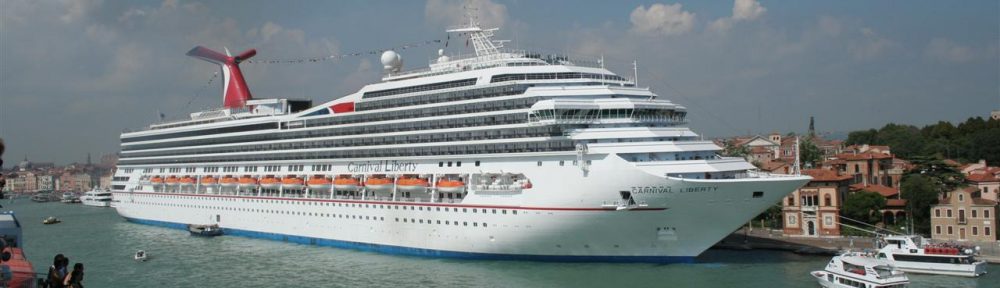
A group of about 30 to 40 protesters marched outside Carnival Corp. headquarters in the Doral section of Miami, concerned about next month’s groundbreaking Fathom voyage to Cuba.
The protesters held placards accusing Carnival of “apartheid” because Cuban-born U.S. residents and citizens aren’t permitted on the Fathom trip to Cuba.
The protest was organized by the Movimiento Democracia, headed by Ramon Saul Sanchez, a long-time anti-Castro activist.
Cuban regulations stipulate that anyone born in Cuba cannot reenter the country by ship. Carnival released a statement saying it was sympathetic to the protest but that “we must comply with the visa, entry and exit policies of each country.”
Carnival said it is requesting that the Cuban policy be changed. “There has been a policy change with air travel to Cuba, so we are hopeful that a similar change can also happen with travel by sea,” the statement said.
In addition to picketing Carnival, the Sanchez group plans a flotilla of small boats in Biscayne Bay on May 1 when the first Fathom cruise to Cuba is scheduled to depart. In a website posting, Sanchez said he planned a meeting with the Coast Guard to discuss the idea.
In January, a flotilla of small protest boats at Labadee, Haiti, led Royal Caribbean International to cancel several calls at its private beach destination there.
Kempinski is refurbishing the Hotel Manzana de Gomez in Old Havana. Photo Credit: Johanna Jainchill
In advance of President Obama’s historic trip to Havana this week, his administration made perhaps the most significant changes so far to the regulations surrounding Cuba tourism by allowing Americans to visit the island without being a member of a tour group.
On its face, the rules about what U.S. visitors can do in Cuba don’t change: Individuals are only allowed to travel to Cuba for one of 12 reasons, including “people-to-people educational” trips. But on people-to-people trips, they no longer have to travel with a licensed group.
Regular tourism to Cuba is still technically illegal, but the rules are essentially unenforceable. Americans will be able to travel on their own in Cuba by self-certifying via an affidavit that they are conforming to the regulations, which the Department of the Treasury defined as “a full-time schedule of educational exchange activities intended to enhance contact with the Cuban people, support civil society in Cuba or promote the Cuban people’s independence from Cuban authorities and that will result in a meaningful interaction between the traveler and individuals in Cuba.”
Ronen Paldi
Tour operators to Cuba said last week that they were not concerned about the effects of the new rule on their business. Even if the embargo were lifted tomorrow, they said, the island is sorely lacking in the infrastructure necessary to accommodate a mass influx of individual travelers.
“Cuba is facing tremendous challenges,” said Ronen Paldi, the president of Ya’lla Tours USA, which has been operating in Cuba since 2002. “In the last 15 to 16 months, the administration is doing all this easing of the restrictions. But what has not changed is the infrastructure in Cuba. Hotels are full, completely sold out until May 2018. Prices are going up, space is becoming more and more limited.”
Diane Mullahy, the president of Travel Leaders in Framingham, Mass., has been building a Cuba business since regulations first relaxed last year and has had to contend with a lack of rooms and restaurants.
“The problem is travel there has increased 70% since last year, and there are not enough hotels, and each time I go the restaurants are packed,” she said. “It’s just so busy. They have a long way to go.
Diane Mullahy
“I have clients go down, and I tell them anything can happen. You have to be flexible.”
Another major impediment to the ease of traveling individually is that even though the Obama administration last year made it legal for credit-card companies to operate in Cuba, U.S.-issued credit cards are still not usable on the island, and U.S. banks have not enabled ATM withdrawals there, meaning everyone has to go with cash only.
“The problem is that, so far, relatively few U.S. banks have been willing to go through the process of making arrangements with the Cuban government and with Cuban merchants to actually accept U.S. credit cards,” said William LeoGrande, a professor at American University. “The profit margin is small, and they are afraid of large fines from the Department of the Treasury if they inadvertently violate the embargo.”
And while the Obama administration said the change was intended to make educational travel to Cuba more accessible and less expensive for Americans, so far the opposite is true.
“We’ve seen costs increase by 40% and 20%, respectively, over the past year,” said Tom Popper, president of Insight Cuba. “If demand increases, it’s more likely we will see prices increase even more.”
But for some businesses, the relaxed regulations are a boon.
Tom Popper
Havana-based Cuba Travel Network has specialized in individual travel to Cuba since 2002. Founder and CEO Eddie Lubbers, who is Dutch, said that while his business is predominately non-Americans, that is changing: Americans represented 6% of his business in 2014, a number that shot up to 23% in 2015. With the recent changes, he expects the U.S. portion to grow to as much as 50% of his business.
The company is ideally positioned to take advantage of the recent changes because it enables travelers to book individual components in Cuba, such as hotels, flights and cars online, and also offers individual itineraries that fall into the categories under which people can legally travel.
Lubbers said the U.S. travel agent side of his business is also growing, with agents using Cuba Travel Network to book entire itineraries for small groups or individuals and receiving commission.
“It gives them a perceived expertise in the market,” he said.
While the changes may mean the opening of new businesses geared toward individual Cuba travelers, Paldi is among the long-time operators who noted that having years of relationships and experience in Cuba means more than ever right now, especially with hotel space so limited.
“We can service you [last-minute] because we have access to what’s available and what’s not available,” Paldi said.
Lubbers added that Cuban leaders recently made it clear at events in Europe that they respect companies that have been doing business in Cuba during the last 20 years.
“Agencies will spring up and say, ‘We are going to offer travel to Cuba,’ ” he said. “They may be able to do that from the demand side, but from the supply side it’s more difficult.”


 Wetravel2u's Weblog