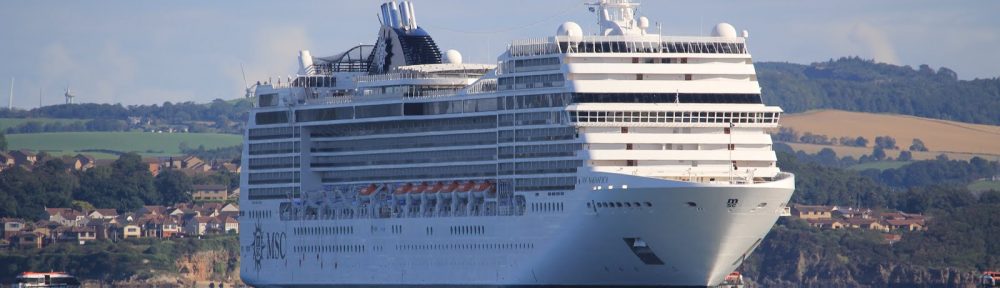
Carnival, Holland America will sail to Cuba as planned

Image result for Carnival cruise in cuba
Carnival Fathom in Havana

Carnival Corp. said it understands the policy changes on Cuba that President Trump will announce in Miami today do not include any changes for cruises.

In a statement, Carnival said it is “pleased” that its ships will continue to sail to Cuba.

Carnival Cruise Line plans sailings from Tampa to Cuba starting later this month and Holland America Line recently announced plans to visit Cuba in the fall.

Trump is expected to end the ability of travelers to “self-certify” that they comply with rules for traveling to Cuba, which became the practice last year under President Obama.

“We will review the extent of the tightening of the travel rules, but our guests have already been traveling under the 12 approved forms of travel to Cuba since we undertook our historic first cruise to Cuba more than a year ago,” a Carnival Corp. statement said.

The first cruise to Cuba from a U.S. port in decades was by Carnival’s Fathom brand, which has since returned its single ship to P&O Cruises.

“Our experience in Cuba this past year has been extremely positive,” Carnival Corp. said. It also said other Carnival Corp. brands have applied to travel to Cuba.

Costa included Cuba on some itineraries from 1995 to 1998, before it was purchased by Carnival Corp. from its Italian owners.

Other cruise lines chimed in after Trump finished giving his speech in Miami.

“Based on the information shared today, we are very pleased to learn the news that cruises to Cuba will continue under the new guidelines laid out by the administration,” a statement from Norwegian Cruise Line Holdings said.

NCLH operates Norwegian Cruise Line, Oceania Cruises and Regent Seven Seas Cruises, all of which sail to Cuba.

Royal Caribbean Cruises Ltd. also praised the new Cuba policy.

“Royal Caribbean is pleased there is no impact to any of our cruises to Cuba as announced in the new U.S. policy toward Cuba today,” said a statement from RCCL, whose Royal Caribbean International and Azamara Club Cruises brands make stops in Cuba.

Although cruise lines appear to have emerged unscathed from the Cuba policy review, the exact impact will depend on rule revisions forthcoming from the Treasury Department and other U.S. agencies.

“We will continue to review the full and exact scope of the policy changes and any updated regulations during the implementation period which may take several months,” RCCL said.

Both cruise companies emphasized that their shore excursion programs were already in compliance with Treasury regulations governing Cuba tourism.

Both also said that their cruises with Cuba in the itinerary are popular. NCLH said it has 70,000 bookings for future cruises that include Cuba. “We are delighted our guests will continue to have the opportunity to experience the wonderful culture and incredible history of Cuba.” the statement said.

Carnival CEO says Trump likely to be pro-business

T1114ARNOLDDONALDTALK_JB_HR.jpg

Carnival Corp. CEO Arnold Donald with Travel Weekly editor in chief Arnie Weissmann at CruiseWorld. Photo Credit: Jamie Biesiada
 

Carnival Corp. CEO Arnold Donald said that the election of Donald Trump as president has the potential to be good for the cruise industry, but he also said he hopes that Trump will do “the right thing” internationally.

Donald made the comment during a conversation with Travel Weekly editor in chief Arnie Weissmann at CruiseWorld, an annual Travel Weekly event in Fort Lauderdale that brings together travel agents and travel suppliers.

Asked by Weissmann for his response to the election, Donald quoted Secretary of State John Kerry, who several years ago said that there are no winners or losers after a U.S. presidential election. “The next morning we all wake up as Americans” who work on problems together, Donald said.

CRUISEWORLD300x171

More specifically, Donald said, “On the surface, President Trump will be pro-business. At the same time, I hope he does the right thing internationally. Most of our business is outside the U.S.”

In a follow-up about Cuba, Donald said that despite Trump’s campaign rhetoric about reversing President Obama’s openings toward Cuba, “I’m cautiously optimistic that bringing the two countries together is the right thing to do.”

Earlier this year, Carnival Corp.’s Fathom brand became the first line to regularly shuttle passengers between the U.S. and Cuba in over 50 years.

Donald said Carnival continues to work on a private destination in the Bahamas but isn’t ready to announce anything. Carnival executives have said in the past they have a potential site picked out on Grand Bahama Island.

“We want the right one on the right terms,” Donald said. “We think we have something coming soon, but we don’t want to count the chickens before they hatch, so to speak.”

Donald took the chance to show the audience of several hundred travel agents clips from the new Carnival-produced Saturday-morning network TV shows, such as “Vacation Creation” and “Ocean Treks with Jeff Corwin.”

He also regaled the group with a tale of highlights from his rise to CEO of Carnival Corp. He said his initial introduction to Carnival Corp. chairman Mickey Arison was engineered by board member Uzi Zucker, a Bear Stearns partner who also served as an adviser to a private equity firm of which Donald was a part.

He also told about his ambition as an 11th-grader to be a very specific level of manager at a specific type of Fortune 50 company. He said the teachers at the all-boys Catholic high school in New Orleans he attended on scholarship constantly reminded their students to think big.

“Three times a day they told us, ‘Gentlemen, prepare yourselves. You’re going to run the world.'”

Big changes in Cuba, but infrastructure needs to catch up

T0328CUBAKEMPINSKI_JJ_HR.jpg

Kempinski is refurbishing the Hotel Manzana de Gomez in Old Havana. Photo Credit: Johanna Jainchill
 

In advance of President Obama’s historic trip to Havana this week, his administration made perhaps the most significant changes so far to the regulations surrounding Cuba tourism by allowing Americans to visit the island without being a member of a tour group.

On its face, the rules about what U.S. visitors can do in Cuba don’t change: Individuals are only allowed to travel to Cuba for one of 12 reasons, including “people-to-people educational” trips. But on people-to-people trips, they no longer have to travel with a licensed group.

Regular tourism to Cuba is still technically illegal, but the rules are essentially unenforceable. Americans will be able to travel on their own in Cuba by self-certifying via an affidavit that they are conforming to the regulations, which the Department of the Treasury defined as “a full-time schedule of educational exchange activities intended to enhance contact with the Cuban people, support civil society in Cuba or promote the Cuban people’s independence from Cuban authorities and that will result in a meaningful interaction between the traveler and individuals in Cuba.”

Ronen Paldi

Ronen Paldi

Tour operators to Cuba said last week that they were not concerned about the effects of the new rule on their business. Even if the embargo were lifted tomorrow, they said, the island is sorely lacking in the infrastructure necessary to accommodate a mass influx of individual travelers. 

“Cuba is facing tremendous challenges,” said Ronen Paldi, the president of Ya’lla Tours USA, which has been operating in Cuba since 2002. “In the last 15 to 16 months, the administration is doing all this easing of the restrictions. But what has not changed is the infrastructure in Cuba. Hotels are full, completely sold out until May 2018. Prices are going up, space is becoming more and more limited.”

Diane Mullahy, the president of Travel Leaders in Framingham, Mass., has been building a Cuba business since regulations first relaxed last year and has had to contend with a lack of rooms and restaurants.

“The problem is travel there has increased 70% since last year, and there are not enough hotels, and each time I go the restaurants are packed,” she said. “It’s just so busy. They have a long way to go.

Diane Mullahy

Diane Mullahy

“I have clients go down, and I tell them anything can happen. You have to be flexible.”

Another major impediment to the ease of traveling individually is that even though the Obama administration last year made it legal for credit-card companies to operate in Cuba, U.S.-issued credit cards are still not usable on the island, and U.S. banks have not enabled ATM withdrawals there, meaning everyone has to go with cash only.

“The problem is that, so far, relatively few U.S. banks have been willing to go through the process of making arrangements with the Cuban government and with Cuban merchants to actually accept U.S. credit cards,” said William LeoGrande, a professor at American University. “The profit margin is small, and they are afraid of large fines from the Department of the Treasury if they inadvertently violate the embargo.”

And while the Obama administration said the change was intended to make educational travel to Cuba more accessible and less expensive for Americans, so far the opposite is true.

“We’ve seen costs increase by 40% and 20%, respectively, over the past year,” said Tom Popper, president of Insight Cuba. “If demand increases, it’s more likely we will see prices increase even more.”

But for some businesses, the relaxed regulations are a boon.

Tom Popper

Tom Popper

Havana-based Cuba Travel Network has specialized in individual travel to Cuba since 2002. Founder and CEO Eddie Lubbers, who is Dutch, said that while his business is predominately non-Americans, that is changing: Americans represented 6% of his business in 2014, a number that shot up to 23% in 2015. With the recent changes, he expects the U.S. portion to grow to as much as 50% of his business.

The company is ideally positioned to take advantage of the recent changes because it enables travelers to book individual components in Cuba, such as hotels, flights and cars online, and also offers individual itineraries that fall into the categories under which people can legally travel.

Lubbers said the U.S. travel agent side of his business is also growing, with agents using Cuba Travel Network to book entire itineraries for small groups or individuals and receiving commission.
“It gives them a perceived expertise in the market,” he said.

While the changes may mean the opening of new businesses geared toward individual Cuba travelers, Paldi is among the long-time operators who noted that having years of relationships and experience in Cuba means more than ever right now, especially with hotel space so limited.

“We can service you [last-minute] because we have access to what’s available and what’s not available,” Paldi said.

Lubbers added that Cuban leaders recently made it clear at events in Europe that they respect companies that have been doing business in Cuba during the last 20 years.

“Agencies will spring up and say, ‘We are going to offer travel to Cuba,’ ” he said. “They may be able to do that from the demand side, but from the supply side it’s more difficult.”