Cruise Outlook by industry sector

Tracking where cruise ships will go in a given year increasingly means looking at global growth. Cruise fleets have become so large and cruise companies so adept at sourcing globally that the game has become one of matching assets to the regional economies where they can reap the most benefit.

Or suffer the least damage.

There’s no better example than China, where cruise companies are determined to take advantage of relatively strong economic growth and an underdeveloped market.

The International Monetary Fund forecasts growth in China of 6.3% in 2016, down from 6.8% this year but still more than double the expected rate of growth in the U.S.

Responding to that growth, Royal Caribbean International will send a second newbuild, the Ovation of the Seas, which will sail from Tianjin, joins the Quantum of the Seas, which will sail its first full year from Shanghai in 2016, and the Legend of the Seas, which will sail from Tianjin and Quingdao.


Legend of the Seas

Carnival Corp.’s China deployment will grow from four ships to six, as the Costa Fortuna joins the Costa Serena, the Costa Atlantica and the Costa Victoria, while Princess Cruises will deploy the Golden Princess to join the Sapphire Princess. In all, Carnival expects to carry close to 1 million passengers in China next year.

Closer to home, the IMF expects economic growth in the U.S. of 2.8% in 2016, enough to support North Americans buying cruises in the Caribbean and Alaska.

Economic growth in Europe is forecast at 1.6% next year, while Latin America and the Caribbean will grow at a 0.8% rate, up from negative growth this year.

The weak showing in Latin America is reflected in the decision by Royal Caribbean Cruises Ltd. to pull the Pullmantur Empress back to the Royal fleet next year, where it will sail as the Empress of the Seas starting in the spring. Royal also canceled the scheduled transfer of the Majesty of the Seas to Pullmantur.

In 2016, Pullmantur will be a two-ship line focused on Spain instead of Latin America.

Across their markets, cruise executives are optimistic about pricing in 2016, having laid the groundwork by filling ships in 2015 to minimize the need for last-minute discounts. Both Carnival Corp. and RCCL say the booking curve has lengthened.

In a Sept. 22 conference call, CFO David Bernstein said that despite an almost 3% capacity increase in the first half of 2016, Carnival had less remaining inventory to sell than it did at the same time a year ago.
Royal executives said in an Oct. 23 call that 2016 load factors were the highest in the company’s history, and average per diems were ahead of the same time a year earlier.

The diplomatic opening with Cuba forged by President Obama this year is poised to pay dividends for cruisers, with several lines saying they will try Miami-Havana routes in 2016.

The most closely watched of those will be Fathom, Carnival’s new social impact brand, which also will be cruising to the Dominican Republic starting in April. Fathom has generated more than 18 billion media impressions since it launched and is drawing more attention to the Caribbean in general, Carnival CEO Arnold Donald said.

In the Dominican Republic, Fathom’s ship will dock at the $85 million Amber Cove private port opened by Carnival in October on the country’s north coast near Puerto Plata.

Another big private port is expected to open in 2016 when Norwegian Cruise Line Holdings inaugurates Harvest Cay, a $50 million island in Belize with sandy beaches, a water sports lagoon, an island-style village and an excursion staging area.

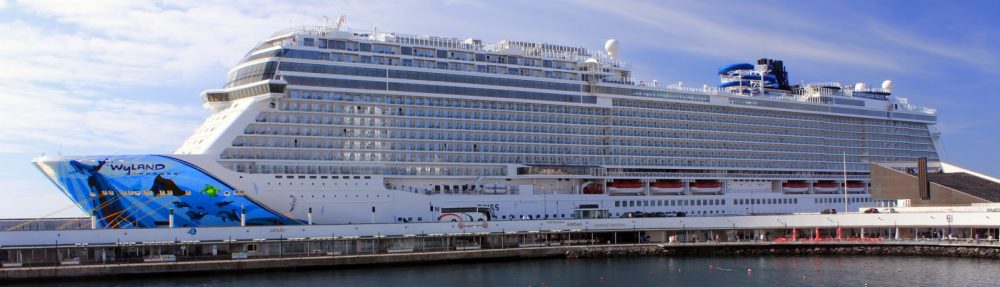
Having just added the Norwegian Escape to its fleet, Norwegian Cruise Line is one of the few big lines that won’t be adding new tonnage next year.

One of the most anticipated ships is the 2,650-passenger Koningsdam, which in April will become the biggest Holland America Line ship and its first new vessel since the Nieuw Amsterdam in 2010.

The Koningsdam’s new features include a circular theater with LED panels surrounding the audience, a large culinary arts center, a wine mixing experience and a two-level pool area.

Also replete with new features will be the 3,936-passenger Carnival Vista. Passengers will be able to ride a recumbent bicycle suspended from an 800-foot-long oval track, watch an IMAX movie or take advantage of a families-only lounge.

Viking Ocean Cruises’ second ship, Viking Sky, is scheduled to be delivered in March. In September, the line’s first ship, the Viking Star, will make its debut in North America, with a cruise to Montreal ahead of its winter season of 11-night Caribbean sailings from San Juan.

The first Oasis-class ship from Royal Caribbean in seven years, the Harmony of the Seas, will sail in Europe after a June delivery before heading for its homeport in Fort Lauderdale, freeing the Oasis of the Seas to sail from Port Canaveral.

In the luxury segment, Regent Seven Seas Cruises will get its first new capacity in 13 years with the July debut of the 750-passenger Seven Seas Explorer.

The ship is on track to be christened in Monaco and sail in the Mediterranean for the summer before moving to Miami in December for its winter season.

Also new in 2016 will be the Seabourn Encore, a cousin to the line’s three Odyssey-class ships. The Encore, due out in December, will have an extra deck, giving it a passenger capacity of 604, up from the 450 carried by the other Odyssey-class ships.

Senior editor Tom Stieghorst covers the cruise industry for Travel Weekly.

Fathom cruise prices vary widely

P&O Adonia will change its name to Fathom Cruise.

Fathom released a full schedule of fares for its social-impact cruises in the Dominican Republic and Cuba, showing a variation depending on season and cabin category.

An inside cabin on an off-peak cruise to the Dominican Republic is priced at $974 for a seven-day voyage. A peak-season suite is priced at $4,468.

On a mid-May shoulder-season cruise for Fathom, prices range between $1,256 and $4,259 compared with a range of $809 to $2,059 for sister brand Carnival Cruise Line.

Fathom prices for Cuba have ranged higher than the Dominican Republic itineraries. The lead-in price of $1,800 for an interior cabin on an off-peak cruise compares to a suite during peak dates of $8,250.  The suite price during off-peak dates is $7,350.

When Fathom was first announced, it released only a mid-point price for each cruise for the sake of simplicity, saying higher and lower cabin categories would be priced later.

Fathom cruises to the Dominican Republic in September are listed as off-peak, with cruises in June, July and mid-August listed as peak season. Late August, April and May are considered shoulder season.

In Cuba, peak season runs from May 29 to Aug. 7, with low season departures listed as Sept. 18 and Oct. 2.

Also, Fathom detailed the visa, port expenses and other extra charges not included in its fares. It said those charges will total $500 per person per voyage in Cuba and $200 for the Dominican Republic.

Carnival’s Fathom brand melds cruise, charity for new kind of vacation fun

Distributing ceramic water filters is one job passengers will do along with local residents on a Fathom cruise in the Dominican Republic. Fathom President Tara Russell is at far left.

AMBER COVE, Dominican Republic —When Carnival Corp.’s new Fathom brand docks for the first time here next April, guests will emerge onto the pier of the newest port in the Caribbean. Everything about it will say vacation, from the duty-free store at the foot of the pier, to the shopping village full of souvenirs, to the thatched-roof cabanas sitting Polynesian-style on platforms over the water.

But Fathom travelers will be on a decidedly nontraditional vacation. Instead of choosing which beach to visit, they’ll be surveying options for how they can help the residents on the north coast of this country, where the per-capita income is about $11,680 a year. Many homes in the countryside lack electricity or running water. Wood fires are common for cooking.

Fathom is not a conventional travel product, especially in the fun-and-sun cruise sector. But the brand’s managers hope to make the case that combining travel and social responsibility can be its own kind of fun.

“It’s a meshing of what in many households would be two different spheres of their lives,” said David Drier, Fathom’s vice president of sales and former CEO at Clipper Cruise Line.

Drier said a simple way of thinking about Fathom is that people budget different time and money for travel and charity each year. “Now, we’re melding those two buckets together.”

Drier and his sales team have a bit more than six months to fill Fathom’s 710-passenger ship, which will alternate between weekly visits to this port and a second itinerary in Cuba.

Meanwhile, several agents have reached out with interested clients, including Barbara Silver, manager of OmniTours in Deerfield, Ill.So far, Drier has focused on explaining Fathom to major consortia such as Signature Travel Network and Ensemble Travel Group; the latter recently named Fathom a preferred supplier.

Silver said she is trying to book a Fathom trip for a group of about 40 in a central Florida retirement community in the fall of 2016. The group leader is in her early 80s, Silver said, and honeymooned in Cuba.

“She’s very anxious to go back there and visit and bring her travelers with her,” Silver said.

Cuba is the more expensive of the two itineraries, with prices beginning at $1,800 per person for an inside cabin. Comparable cabins on Dominican itineraries are $974.

Nevertheless, Cuba seems to be outselling the Dominican Republic early on, even though Fathom’s program there is less developed. Fathom’s president, Tara Russell, said that Cuba’s appeal is singular because of the decades-long travel ban for Americans.

“The object for travel is totally different” than in the Dominican Republic, she said, where the social impact work involved in a Fathom cruise has to be the primary selling point.

“The latent demand for the Dominican Republic is smaller,” she said. “There is less curiosity.”

In the D.R., Fathom passengers will spend three days docked at Amber Cove, the new $85 million port near Puerto Plata.  From there, they will fan out on buses to help Dominicans with a range of projects.

One impact activity takes place in Altamira, about 20 miles from port in the hills above Puerto Plata. There, Fathom passengers will help out at Chocal, a cooperative formed by 30 local women so that they wouldn’t have to move to bigger cities to find work and leave their families.

Chocal makes artisanal chocolate out of the cacao trees that thrive on the tropical island.

The U.S. Agency for International Development has loaned the money for equipment, but to pay the loans and hold down expenses, none of the cooperative members draws a salary.

“They can’t afford to hire more people now until they pay off their loans, so this volunteer program is just amazing,” said Caroline Bucher, a consultant for Fathom in the Dominican Republic.

At Chocal, some passengers will help separate cacao beans from their shells, a tedious process that can be only partially mechanized. Others will assist with cutting, folding and gluing wrappers to the finished chocolates or make fertilizer for a nursery that produces young cacao trees.

Elsewhere in the Puerto Plata region, Fathom cruisers will visit schools to help with English instruction.

A group of Fathom employees and journalists on a “sampler” tour at the Maria Isabel Meyreles school in Cupey sang a song in English with a class of about 30 students. Afterward, the volunteers helped the students do a worksheet that had them finish fill-in-the-blank questions about the English lyrics.

Sabina Rodriguez, a regional educational administrator, said foreign language skills in particular help Dominicans get jobs in the tourism sector.

On another day, Fathom passengers might find themselves at a factory helping to sift clay and mix materials for inexpensive ceramic water filters that can turn river water 99% pure. A lunch of traditional Dominican fare awaits after a morning’s work. The next day, they will help distribute the filters and hear stories about how better water access improves families and communities.

Russell said Fathom’s programs were developed with variety in mind so that travelers will get a different type of experience each day.

To help agents promote such a new and different product, Fathom is offering an across-the-board 15% commission through Oct. 15 for agencies that register as Fathom Founder’s Circle members.

In the Dominican, Fathom is also offering a 1-for-9 tour conductor credit during that time frame. For bookings of back-to-back cruises to Cuba and the Dominican Republic, Fathom is offering a 10% discount on the fare for each departure.