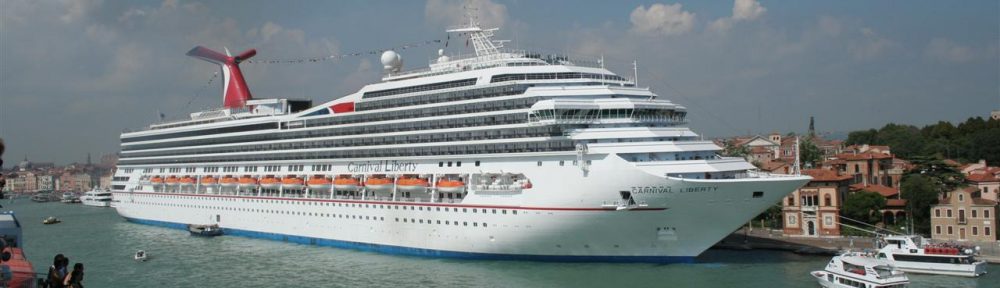
In Turkey, a world away from nearby unrest

By Tom Stieghorst
*InsightWhile in port in Kusadasi, Turkey, on a recent cruise we heard the ezan, as the Islamic call to prayer is known in that country. The sound carried to the balcony of our cruise ship from whatever mosque it had issued from.

It was a reminder that we were in a country where the predominant faith is Islam. The rest of the trip was a reminder of how different each country in the Middle East is for cruise visitors.

Although Turkey shares a common border with both Syria and Iraq, the fighting in those countries was the furthest thing from our minds while in Turkey. We toured ancient ruins, had a delicious lunch out in the countryside and haggled at the shops in Kusadasi for scarves and pants.*TomStieghorst

It wasn’t very evident we were any place where religion plays a special role in daily affairs. More women had their heads covered than was true in our stops in Greece, but many wore colorful wraps, not the dour black garb that can be seen in Afghanistan, to pick another Muslim country often in the news.

Our guide for the day pointed out that Turkey is the only country that sits both in Asia and Europe. Kusadasi is far from the Syrian border and closer to Athens than to Damascus.

It was in touring the Greek and Roman ruins in Ephesus, about 10 miles inland from Kusadasi, where I was most grateful that the Turks have order and peace in the volatile Middle East.

The well-preserved ruins include temples and churches of the Greek, Roman and Christian areas, and are part of a Unesco World Heritage site. They’re the kind of thing endangered by looting and religious intolerance sadly plaguing nearby Syria and Iraq.

For cruise passengers, it is important to make distinctions between countries in the Middle East that are open for tourism and those that are a hazard. The magnificent ancient treasury at Petra, in Jordan, can be reached through a port call at Aqaba, on the Red Sea. It is also a Unesco World Heritage site, and unaffected by the fighting elsewhere in the area.

Turkey, Jordan, the United Arab Emirates — all have lots to offer to the cruise traveler with an interest in history or foreign cultures. Travel agents and their clients should not write off going to these countries because of the unrest in nearby lands.

‘Exorcist’ temple falls into the hands of jihadists in Iraq

Editor Comment;
 I know this has Nothing to do with Cruising but I feel Very Strongly about this problem, Buildings and places of historical significant’s should not be damaged, pillaged, destroyed, or looted by any group whether the buildings, or area of special interest, does not fit into their believes or teachings. These 
 
Buildings and Statues belong not only to the country they are in, but to the people of the world, not just some mindless fanatics who know no better. We as a species learn from or mistakes and from our history and we need these buildings and statues as a reminder that we have got a past and all that has gone with it.
I hope all of you who read this feel the same as I do, and repost the article on your sites, and you never know somebody out there might just stop and think before we lose more history.

Thank you
 
Dave Jones  
The pre-Christian worship complex at Hatra in Iraq, a vast network of sun-god temples that is a UNESCO world heritage site, features in the opening sequence of the 1973 horror classic The Exorcist.
The pre-Christian worship complex at Hatra in Iraq, a vast network of sun-god temples that is a UNESCO world heritage site, features in the opening sequence of the 1973 horror classic The Exorcist.PHOTO: PHILIPPE DESMAZES/AFP/GETTY IMAGES
By Colin Freeman in Baghdad

An ancient temple that featured in the film The Exorcist has fallen into the hands of jihadists who have taken over northern Iraq.

The pre-Christian worship complex at Hatra, a vast network of sun-god temples that is a UNESCO world heritage site, features in the opening sequence of the 1973 horror classic.

It now lies in the territory claimed by the Islamic State of Iraq and al-Sham (ISIS), prompting fears that its stone statues could be destroyed as idolatrous images by the militants.

Already, Isis fighters in the city of Mosul, 110 kilometres north-west of Hatra, have demolished a statue of Othman al-Mousuli, a 19th-century Iraqi musician and composer, and a statue of Abu Tammam, an Abbasid-era Arab poet.

A councillor from the Hatra area told The Daily Telegraph that the 20-strong squad of Iraqi policemen who had guarded the temple from looters had fled after the area fell to tribal militants and Isis fighters a fortnight ago.

Locals say that since then, the area has been targeted by Iraqi warplanes that have bombed the jihadists less than a mile from the temple.

“The guards all ran and left their weapons behind when they heard that the tribes and ISIS were coming,” said Mohammed Abdallah Khozal, the councillor whose own son was killed in the fighting with the jihadists.

“Currently there is no one protecting the temple at all, and it is in control of the rebels. I am concerned about its safety, although I am also worried about government forces doing bombing.”

An oasis of pre-Christian civilisation in the middle of the desert that stretches toward Syria, Hatra’s columns and statues make it one of the most impressive of Iraq’s archaeological sites.

Dating back to about the 3rd century BC, it is dedicated mainly to the sun god Shamash, whose statues and masks adorn its limestone and gypsum walls.

William Friedkin, the director of The Exorcist, filmed the first scene in Hatra in which a priest at an archaeology dig unearths a talisman belonging to Pazuzu, an ancient Mesopotamian demon. A child bogeyman in Mesopotamian folklore, Pazuzu is said to be alerted whenever his talismans are disturbed or touched, and in The Exorcist he goes to possess a young girl.

For most of 40 years, Hatra and its Hollywood connection have been all but forgotten. Under Saddam Hussein, the site was effectively closed to outside visitors and since his fall, Iraq has been largely too dangerous for tourists.

Its potential as a tourist site was spotted in 2003 by U.S. troops from the 2-320 Field Artillery Regiment who guarded it after Saddam’s fall, when they were billeted in a disused hotel nearby.

They stumbled on its film connection by chance, when a captain serving with the regiment watched The Exorcist on his DVD player and realized that the opening sequence, showing the sun rising over the temple’s skyline, had been shot from his hotel window.

The troops then trained up local guides, hoping what they called “The Exorcist Experience” would help to attract tourists. But Iraq’s growing insurgency meant the scheme never came to fruition. Since then, the only foreign visitors to the site have been a handful of archaeologists, while some of its more valuable artefacts have been removed for safekeeping in the Mosul and Baghdad museums.

Dr Lamia Al Gailani Werr, a London-based archaeologist who works with the Iraqi national museum, said she had heard from friends that so far no harm had come to either Hatra or any of the other ancient sites around Mosul, which lies on the foundations of the ancient Assyrian city of Nineveh.

But last week, UNESCO issued an urgent warning that the sites were at risk. There are fears that they could suffer the same fate as the Buddha statues in the Afghan town of Bamyan, which were blown up by the Taliban.

Irina Bokova, the director-general of UNESCO, said: “I call on all actors to refrain from any form of destruction of cultural heritage, including religious sites. Their intentional destruction are war crimes and a blow against the Iraqi people’s identity and history.”