Cruise ship exodus from Alaska cuts very deeply

T0420HALOOSTERDAMAK_HR

Only a few months ago, most talks about Alaska cruises revolved around the record season expected this summer and some concerns about over-tourism.

Then came the coronavirus. Now, Princess Cruises and Holland America Line have cancelled most of their 2020 Alaska sailings and all land products.

Sarah Leonard, CEO of the Alaska Travel Industry Association, called the cuts “devastating, not just to the hundreds of businesses that rely on cruise passengers for their livelihoods but also to the communities that receive a large portion of their revenue from visitor taxes and fees.”

Leonard said cruise ships bring a little more than half of Alaska’s visitors and that the state’s tourism industry in total supports more than 52,000 jobs and creates more than $4.5 billion in economic activity.

According to CLIA Alaska, more than 1.4 million people on 43 ships were projected to spend $793 million this year. Juneau was projected to have 626 calls this year, more than any other municipality in Alaska, followed by Ketchikan (558) and Skagway (454).

The changes mean that Holland America will not offer an Alaska land program for the first time in 70 years.

“These are unprecedented times,” Holland America Line CEO Orlando Ashford said in a statement. “We know this decision impacts our loyal guests, travel advisor partners, staff members and local businesses who rely on summer tourism for their economies.”

Princess president Jan Swartz called the decision “extremely difficult” and lamented not being able to support the small-business partners throughout the state as it has “every summer for decades.”

“We know these decisions will have a large, adverse economic impact on the state of Alaska, which relies on tourism,” she said in a video.

Several factors played into why such a hot market became one of the first to see major cruise reductions this summer.

The biggest might be that because of the U.S. Centers for Disease Control and Prevention’s no-sail order from U.S. ports until mid-July, combined with Canada’s restrictions on cruising through June, half of the Alaska cruise season was already lost. This has an outsize impact on Holland America and Princess because so much of their business includes land and cruise combinations.

“The shortened summer season has made it simply not viable to operate our [lodges, trains and buses] throughout Alaska,” Swartz said.

Holland America also cited the “complexities of starting up hotels, rail operations and motorcoach fleets for what is at best a mid-to-late restart of travel to Alaska.”

Tom Garrett, the owner of Union Hill Travel, a Protravel independent agency in Kansas City, Mo., that specializes in Alaska travel, said that given how high the startup costs are for companies on the land side in Alaska, it would be hard to recoup costs if they lost half the season.

“The season is roughly 130 days long,” said Garrett, who is also the former director of tourism for Alaska. “They’re going to miss out on over 50% of the season already. We used to say in Alaska, our businesses didn’t begin to make money until late August.”

Adding to that is the uncertainty as to whether the national parks will be open.

“If nobody can go on a tour of Denali, and that’s one of the main reasons for Alaska and guests can postpone for a year and get a future cruise credit worth 125%, they’ll say, let’s just go next year,” Garrett said.

Both Princess and Holland America are still offering some Inside Passage cruises that are not tied to the land product.

And while the massive cuts have some advisors wondering if other lines will follow, Garrett said none are as tied to the land extensions as Princess and Holland America.

“They’re heavily invested in land assets,” he said. “A huge portion of their business revolves around those land extensions. A company like Celebrity takes advantage of those extensions but isn’t personally financially invested in them.”

In fact, he added, “it’s possible that some lines will say, ‘If Holland America and Princess don’t want to go, we’re happy to take their space.’”

Another factor some travel advisors cited was the demographic of Alaska cruisers. Eric Hrubant, president of CIRE Travel in New York, said the decision did not surprise him.

“Alaskan cruises tend to have a big baby boomer population,” he said. “People in the retired age bracket or not in perfect health probably aren’t going to want to get on a cruise this summer.”

He also said those cruises attract a lot of multigenerational families.

“Over the years, most of the people I do Alaska cruises for are affluent retirees, and we’ll do a multigen thing: grandparents, their kids and their kids’ kids,” he said.

Deborah Deming of Frosch Classic Cruise & Travel in Woodland Hills, Calif., also said her Alaska business is made up of a lot of multigen families, which means “the 60-to-80-year-old is the one paying for it,” and this year, they are unlikely to take a cruise.

One thing she is grateful for is that the cancellations happened before most clients made final payments.

“With so many things in flux, it makes sense for this to happen now before they took in more money that would then have to be refunded,” she said.
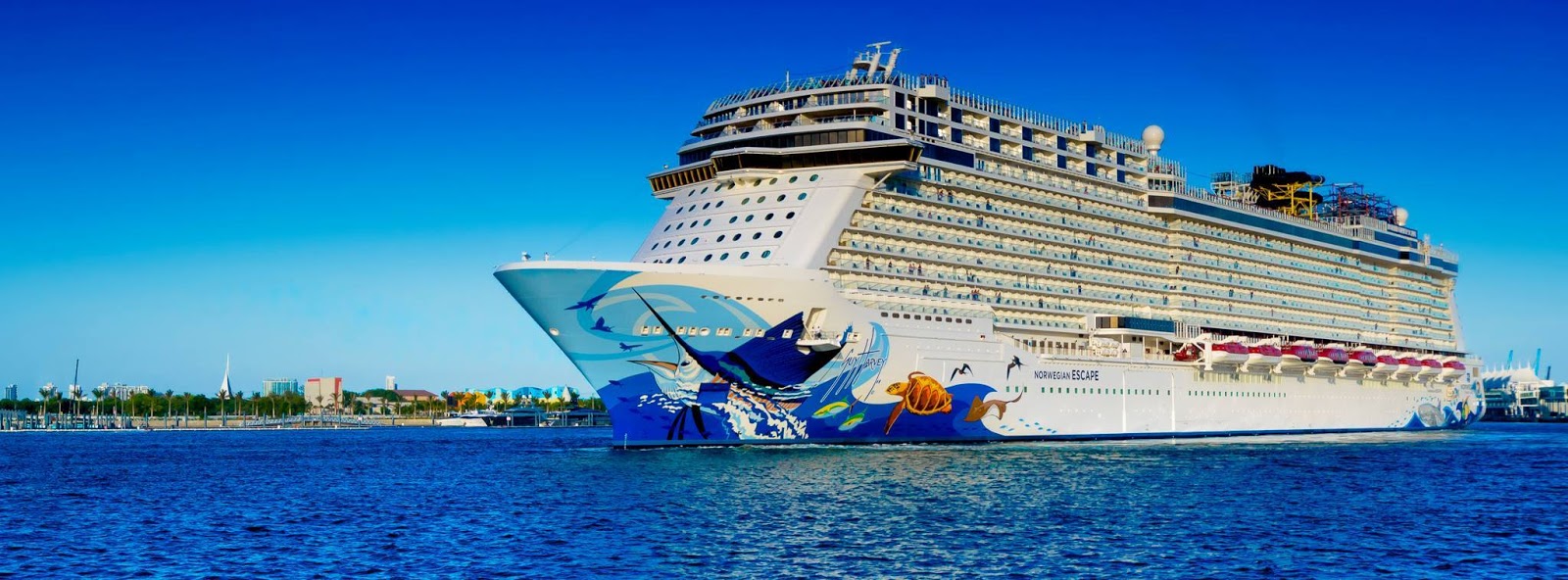
Norwegian has big plans for Juneau, But is the city ready?

With its legacy of gold mining and the majestic Mendenhall Glacier just outside of town, Juneau has long been a crown jewel among Alaska cruise itineraries. But as demand has grown, so have congestion and concerns among residents about the quality of life during the all-too-brief summer months.
Now, an effort by Norwegian Cruise Line Holdings (NCLH) to buy a key parcel of land along the downtown waterfront could bring those issues into high relief as citizens debate how much cruise tourism they want.
NCLH’s bid to buy the 2.9-acre site known as the Subport comes as the number of cruise passengers arriving in Juneau has grown from 1 million to 1.5 million in the past four years and as NCLH has embraced an ambitious plan to beef up its shore facilities throughout southeast Alaska. 
But Juneau could test Alaska’s appetite for hosting more and bigger cruise ships with each passing season.
Rorie Watt, manager of the city and borough of Juneau, said, “The growth has been climbing pretty steeply. We’re starting to see quite a bit of pushback from the community.”
Vacant since 2006, the Subport property is controlled by a state trust that provides services to Alaska’s disabled population. Juneau has been urging the trust to sell the land and had a proposal of its own for the site.
When the parcel came up for auction, NCLH was the high bidder. At $20 million, its offer was nearly double the next highest bid, from Royal Caribbean Cruises Ltd., and more than quadruple the $4.3 million tendered by the city.

Image result for juneau subport property

The sum was all the more impressive because, according to Watt, current zoning would not permit the company to build a pier at the site. 
“It is true the property is not currently zoned for a cruise ship dock, and it is true that our waterfront plan does not call for a dock in that area,” Watt said.
After the bids were opened, NCLH said in a statement that it was “thrilled to be the winning bidder,” adding, “We look forward to engaging with the city of Juneau to work together on a plan for the land that will greatly benefit both Juneau and our company.”
The company declined to comment further about its plans for the site.
The zoning of the Subport land emerged from a debate in the early 2000s among Juneau residents over cruise-related congestion that had resulted from a previous cruise line growth spurt in the 1990s, Watt said.
At that time, a consensus emerged that the Subport was not an appropriate site for a cruise pier, so the zoning was changed and a long-range waterfront land-use document was adopted to reflect that.
In addition, Watt said the city owns the tidal lands in front of the parcel, and NCLH would either have to buy those or work out a lease in order to put its ships there.
Both changes would require more than obtaining a variance from a zoning board. The decision would almost surely be made by elected officials, Watt said. 
“There would likely be a substantial amount of public process if they were to do that,” he said.
Juneau is one of several ports in Alaska where NCLH is seeking to build its own infrastructure. In Hoonah, it is partnering with the Alaska Native tribe that owns the Icy Strait Point cruise port to build a second pier for its use.
In Ketchikan, NCLH has agreed to be the first tenant at a pier being developed north of town at an abandoned paper mill. The site at Ward Cove would give it preferential berthing rights. The site was developed by the local Ward Cove Group and a tour operator, Godspeed of Fairbanks.
The $50 million pier proposal is in the permitting process, and the partners hope to have it open for the 2020 cruise season.
NCLH also joined with the Port of Seattle in 2015 to redevelop the Bell Street Terminal at Pier 66 in downtown Seattle, where its Alaska-bound ships also have secured preferential berthing rights following the $30 million upgrade.
Angie Ryan, a Travel Leaders agent in Frisco, Texas, said the investments would make NCLH cruises more attractive to clients. 
“I think that by using their own facilities and their own dock, it can keep the standard they’re trying to present across the board,” Ryan said. “Like they built their own dock in Roatan, [Honduras], and it’s a much nicer pier than the one Carnival uses,” she said. “And I think that’s a draw.”

Homeport capacity drives upgrades

NCLH isn’t the only cruise company upgrading its Alaska shore product. In 2018, Carnival Corp. spent $290 million in Skagway to acquire a scenic railway and related port facilities, and it formed a joint venture to manage the business.
Since then, the venture has added a berthing dolphin (an above-water marine structure that is not connected to the shore) at the end of the railroad dock complex. The dolphin now enables the berthing of two large ships there, according to Carnival Corp. chief communications officer Roger Frizzell.
The moves are part of a larger expansion of cruise infrastructure in Alaska, driven by increased homeport capacity.

Image result for Vancouver's Canada Place terminal

From Seattle and Vancouver, cruise lines now have the ability to launch six ships simultaneously: three from Vancouver’s Canada Place terminal, two from Pier 91 at Seattle’s Smith Cove and one from the Bell Street terminal.
“I think the way to look at southeast Alaska is that most of the cruise ship visitation is predicated on weeklong cruises that initiate out of Seattle or Vancouver,” Watt said. “And berth capacity has been added in Seattle and Vancouver, so there’s going to be capacity for six ships leaving there.”
That enhanced capacity will have a domino effect on port capacity in Alaska. With the addition of Ward Cove, Ketchikan would have berths for six ships a day, including Norwegian Cruise Line’s two 4,000-passenger ships, the Norwegian Bliss and the Norwegian Joy.
Watt said the question for Juneau, which currently has four berths, is whether it wants to keep pace.
The addition of 500,000 cruise visitors since 2015 has meant a lot of perceived change for residents, Watt said. 
“It’s a lot of economic opportunities, but it’s also that your quiet neighbourhood may be less quiet,” he said.
He added: “On Juneau’s side, I would imagine we’re going to go through a period of high-level community vision-type exercises. What kind of town do we want to be, and where are we headed, and how do we plan appropriately for that? My guess is that Norwegian has jumped into the middle of that conversation, and realistically, we’re probably not going to be moving very fast. I think it will take us a while.”

Norwegian Cruise Line Wins Key Juneau Property Bid

Norwegian Bliss

According to media reports in Alaska, Norwegian Cruise Line Holdings was the winning bidder for the “Subport” property in Juneau Alaska, located on Egan Drive on the waterfront.

Norwegian was said to be the highest bidder, offering $20 million over Royal Caribbean’s $13 million. Other bids included Godspeed Inc. at $12,8 million, Survey Point Holdings Inc. at $5.255 million and the City of Juneau at $4.25 million.

“I think it’s fair to say that that’s a fairly shocking bid,” said Juneau City Manager Rorie Watt, via KTOO Media. “I don’t know that I’ve ever seen a property sell for six times the appraised value.”

The piece of property is 2.9 acres and will allow its owner to help expand Juneau’s tourism area and take pressures off the downtown on busy cruise days.

According to KINY Radio, the property is not zoned for a cruise ship dock.

Norwegian has a 15-day window to submit a deposit and complete the purchase agreement.

Of note, Norwegian increased its Alaska capacity some 15 per cent in 2018 with the new Norwegian Bliss, while ticket pricing increased 25 per cent. This summer capacity is up again as the Joy has moved into the market and has been a strong performer.