
A week before the Costa Concordia ran aground in January 2012, a group of activists in Venice formed a committee to push back against the growing bulk of cruise ships there.
At first overshadowed by the drama of the Concordia accident, the group began to hold meetings, hang banners and organize demonstrations to call attention to its cause.
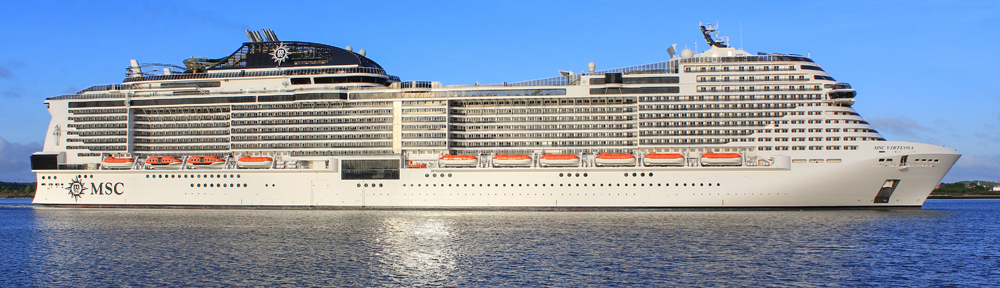
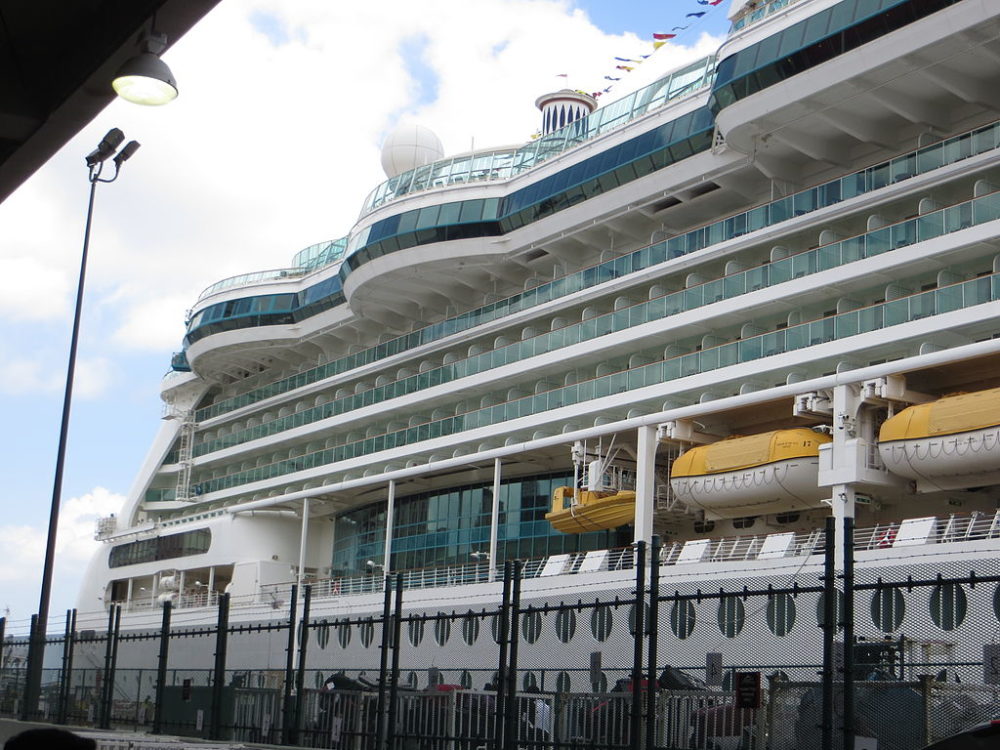
Among other things, the group objected to the disparity between the 12- to 15-story elevation of many cruise ships and the three- to five-story scale of the historical lagoon city.
Aided in no small part by the Concordia fallout, the Comitato No Grandi Navi struck paydirt in November, when Italy’s national government placed limits on larger cruise ships in Venice, starting this month.
While praising the move, committee spokesman Silvio Testa told the Corriere del Veneto newspaper that if it was a “sweetener” to get the group to relent, activists would not be satisfied as long as the big ships are still docking anywhere inside the lagoon.
“The battle certainly doesn’t stop, and continues,” Testa said.
Similar tussles are taking place in other cruise ports as the scale of cruise ships continues to grow. Particularly in dense, historical ports with varied sources of tourism, the cruise industry is taking flak from organized groups opposed to expansion.
In Key West, residents recently rejected a proposed widening of the cruise channel that would have eased access for larger ships. And in Charleston, S.C., preservationists have gone to court to block plans for a more modern downtown terminal.
The three cities have even combined forces, signing a joint resolution that outlines their objections to cruise tourism and their intent to work together on an international level.
“I’ve heard from Alaska, from Australia, from South America,” said Carrie Agnew, executive director of Charleston Communities for Cruise Control. “There are a lot of places that are suffering the same effects.”
In response, cruise officials have pointed to the economic benefits they bring to port cities. They also say that they want to work cooperatively to resolve the issues in Venice and elsewhere.
But cruise officials are also said to be looking at alternatives to these ports for growth, a historical pattern whenever cruise lines have found themselves crosswise with unhappy destinations.
The angst has emerged as more and bigger ships have floated out of Europe’s shipyards. Ports such as Venice can sometimes host a dozen cruise ships in a weekend, and places like Charleston are now homeports where they were once barely ports of call.
 In a quest for economies of scale, ships went supersize. Royal Caribbean International’s Allure of the Seas, today’s size king at 225,000 gross tons, takes up more than three times the volume of Royal’s Sovereign of the Seas, which less than 30 years ago was the world’s biggest cruise ship.
The larger ships can discharge thousands of passengers at a time, and several at once can combine to flood the sidewalks and alleys of towns with narrow street grids.
In Charleston, Agnew said the discomfort started in 2010 when Carnival Cruise Lines decided to homeport the Fantasy there.
“Charleston is a very small, very historic city,” Agnew said. “Now you have 2,000 people coming and going in a day, with all the purveyors and provisions. You have a lot of stuff happening in the heart of the historic district.”
The city’s old terminal is not well sited, forcing buses through a maze of tight turns and barriers. So Charleston’s mayor proposed a new, more spacious site in the district in a renovated warehouse.
Preservationists sued, and the project remains tied up in litigation.
Agnew said the worry is that a renovated terminal will bring more or bigger ships and further crowding, changing the charm and the “living historic city” that other tourists desire.
Agnew cites letters, such as one from a couple who frequent Charleston annually who said it took them 40 minutes longer to get to their hotel and upon arrival found their view blocked by a ship.
“There’s nothing wrong with cruise passengers, but they want to go to the Bahamas,” Agnew said. “We’re worried about losing people who do want to come to Charleston.”
That is also a theme in Key West, the quirky island that once declared itself the Conch Republic and tried to secede from the rest of the country. Long a naval base and a shrimping town, it has become dependent on tourism in recent years.
“We understand that tourism is our bread and butter,” said Jolly Benson, head of the Key West Committee for Responsible Tourism. “But we want to make sure that the tourism we do attract is repeat business.
“We have people who have been coming back every winter for 35 years,” Benson said. “And these people say, ‘You know, I don’t go downtown when there’s two ships in town.'”
Unlike Charleston, Key West is not a homeport. But it hosted about 330 ship calls this year and is a regular stop on both eastern and western Caribbean itineraries out of South Florida.
 Planners say the current 300-foot channel leading into the harbor inhibits the deployment of newer, bigger ships. Captains sometimes have to “crab” through the channel, steering at a 15-degree angle to wind and currents, a maneuver that pushes them close to the channel’s edges.
One solution is to widen part of the channel to 450 feet. A city bid to seek a U.S. Army Corps of Engineering feasibility study was opposed by 74% of Key West’s 25,000 residents when put to a referendum in October.
Quality-of-life issues and a reluctance to assume Key West’s part of the project’s bond debt were factors, Benson said, but perhaps most important were concerns about the project’s environmental impact.
The channel lies in the Florida Keys National Marine Sanctuary, home to protected species of coral and abundant sea life. The argument that silt from the project would harm the environment resonated with many who depend on fishing, diving or boating for a living, Benson said.
Environmental damage is also an issue propelling the anti-cruise forces in Venice, where the city’s 1,200-year-old foundations are slowly sinking. Activists claim that water displaced from ships traveling the Giudecca Canal past Piazza San Marco on the way to the Venezia Terminal Passeggeri accelerates the erosion of building foundations.
Air pollution, another concern frequently cited, is a problem that some industry officials have acknowledged.
And tourism itself has been cast as a kind of people pollution, as nearly 20 million visitors each year flood the city of 58,000 residents. Last year, about 1.7 million visitors arrived by ship.
The No Grandi Navi (No Big Ships) committee conducted its campaign against the cruise industry in classic European fashion. Where Key West held a referendum and Charleston went to court, No Grandi Navi held street protests, or in this case, canal protests.
Activists with bullhorns shouted insults at passing ships. They organized a small-boat blockade, and in September about 50 wetsuited protesters dove into the Giudecca Canal, bobbing around like seals and blocking the passage of a dozen cruise ships.
The tactics apparently swayed Italian officials, who on Nov. 5 issued an order that reduces the number of ships over 40,000 gross tons that can ply the Giudecca route by 20% and bans ships above 96,000 gross tons from the canal entirely by next November.
The industry publicly pledged cooperation. In a statement, CLIA Europe said it viewed the decision as a positive step by the Italian government to find a sustainable and long-term solution for the city. “This goal is shared by the cruise industry,” it said.
However, in the past, cruise lines have frequently responded to unfavorable local developments by redeploying ships. That happened in Alaska in 2006 after cruise opponents enacted a $46 head tax to slow the influx of passengers into small Alaska towns.
Cruise lines moved some ships elsewhere, citing reduced demand. In 2010, the tax was partly rolled back, laying the groundwork for a rebound.
 There are alternatives to Venice in the Adriatic, said Filippo Olivetti, managing director of the Bassani Group, which provides cruise services and shore excursions in Venice.
“We know that several cruise lines are looking to Ravenna and Trieste [in northeastern Italy] as an option to homeport,” Olivetti said, adding that Pullmantur has successfully used Ravenna in the past.
The industry’s most powerful argument against limits on bigger ships is that they contribute revenue and jobs to the local economy. Olivetti said that studies commissioned by the Cruise Venice Committee, a group that supports the industry’s growth, estimate that 2,500 jobs will be lost as a result of the new limits.
He said the ban on ships larger than 96,000 gross tons would result in a 60% decline in passengers in 2015, to about 700,000, unless they are replaced by smaller ships or an alternative is found.
“My company is going to be very affected by this tonnage limit,” Olivetti said.
In Key West, too, there have been warnings that the cruise industry could go elsewhere if they have no chance to grow. A Florida Department of Transportation (FDOT) report issued in November asserts that cruise lines now cannot count on putting modernized ships there and that if Cuba should open to cruise calls, the Florida port would lose business.
“It is not an exaggeration to say that, without capital investments, Key West’s future as a cruise port of call is seriously in question,” the report stated.
Benson said the report amounts to fear mongering, and he said that even as it is, the channel is adequate for all but a handful of ships.
The economic argument about cruise ships in Key West, as elsewhere, boils down to whether the infusion of cash and other benefits cruise passengers contribute to the local economy outweigh the costs.
Various sources cite daily spending by cruise guests of anywhere from $32 to $84, with the FDOT study citing a CLIA figure of $123.58. A $10.63-per-passenger docking fee also goes to the port and pier owners.
But 1.6 million guests who come to Key West by other means and stay overnight account for about $900 million of annual spending, according to visitors bureau estimates, compared with about $80 million for cruise guests.
Nearly 814,000 passengers arrived on some 330 ships last year. So while they account for more than a third of the visitors, they represent less than a tenth of the spending, a disparity that has the business community split over their desirability.
 Shops, bars, scooter rental outlets, trolley tours and excursions near the piers tend to support the channel widening, while lodging owners and businesses off of the main drag on Duval Street tend to be opposed.
John Dolan-Heitlinger, a business consultant and head of the Key West Seaport Alliance, a pro-cruise group, said that as a small town, Key West can ill afford to give up tax revenue the cruise ships bring in.
“Everybody in town benefits from cruise ships in one way or another,” he said. “As that income is reduced, the city either has to eliminate services or find other sources of funding, typically taxes and fees.”
Rudy Molinet, owner of Marquis Properties Realty, one of the top residential brokerages in Key West, said that when several ships are docked at once, the 10-square-block historical district is overrun.
“There are people who directly benefit, but the people who run the bed-and-breakfast inns and the restaurants are not so for it,” he said.
With so much hanging in the balance on both sides, many attempts at compromise are arising.
One solution for historical cities that still want cruise tourism growth is to move the cruise piers to another part of town. A real estate expert in Charleston has proposed an embarkation terminal at the former Navy shipyard north of the historical district.
In Venice, planners are working on a scheme to dredge an alternate channel to the Venezia Terminal Passeggeri that would let big ships avoid the Giudecca Canal. At the same time, the mayor has suggested creating a new cruise ship dock at Marghara, an industrial port on the Italian mainland.
There are no such plans yet in Key West. As the cruise industry grows, some ports might not be able to grow in parallel, observed Benson, and he’s fine with that.
“We have no problem with the cruise lines that are coming in now,” he said. “We realize we’re at a sustainable level. If we try to go much beyond that, we’re going to see a backlash in other tourism-related events. We want to make sure we keep the balance.”

 Wetravel2u's Weblog