Port Tampa Bay has resumed vessel operations and our port’s shipping channels are officially re-opened, with vessel movements restricted to daylight hours, the port announced on Saturday.
Throughout the storm, Port Tampa Bay coordinated with federal, state, and local agencies, as well as the maritime community, to respond to the impacts of Hurricane Milton.
In coordination with the Port Heavy Weather Advisory Group, and following detailed assessments of the port, waterways, and channels, the U.S. Coast Guard has reopened the port and set the port condition to normal, with a daylight hour restriction and one-way travel. Port staff fully assessed the docks, wharves, and terminals for safety.
Some of the first vessels to return will be fuel tankers, cruise ships and vessels carrying perishable cargo.
There will be changes to the following cruise schedules: Carnival Paradise, Royal Caribbean Serenade of the Seas, Royal Caribbean Grandeur of the Seas, Royal Caribbean Enchantment of the Seas and Margaritaville at Sea Islander.
Here’s a scenario for you… a cruise ship is sinking at sea and hundreds, if not thousands of people are in need of immediate rescue. Due to conditions, lifeboats are inoperable or infeasible. What’s the best option for rescue? That’s a question the Department of Homeland Security needs your help figuring out.
In collaboration with the U.S. Coast Guard, the Department of Homeland Security Science and Technology Directorate has released the “Mass Rescue Operations Lifesaving Device Broad Agency Announcement” solicitation seeking the public’s help in coming up with innovative technology to respond to mass-casualty events at sea.
The solicitation asks innovators, industry, academia, and laboratories to submit solutions for a large capacity-floating device to keep survivors out of the water during mass rescue operations.
The U.S. Coast Guard Research and Development Center (RDC) will provide technical support to DHS S&T throughout the effort to help with the development of the device.
“We’re looking forward to working with the public to help develop their innovative ideas into a practical and useable design,” said RDC Commanding Officer, Capt. Dan Keane. “If successful, the mass life-saving device will give first responders additional capability and capacity to respond quickly to a mass rescue situation.”
Specifically, the solicitation seeks an effective solution for providing short-term lifesaving and rescue assistance in disasters that render existing systems, such as onboard lifeboats, inoperable or infeasible. The Coast Guard wants to develop a non-standard, one-time use, large capacity, an ultra-lightweight floating device that will be deployed from air or vessel during a mass rescue operation to mitigate the loss of life.
For example, if a large ferryboat or cruise ship is unexpectedly stranded or sinking, the ship’s staff may not be able to deploy the lifeboats. Coast Guard aircraft or vessels could respond and deploy mass rescue devices at the scene to better maintain passengers until all can be rescued.
“The purpose of a large-capacity floating device is to solely keep survivors out of the water during a mass rescue operation,” said S&T Program Manager Angela Blair. “The commercial marketplace already has large, flotation devices, but these are too heavy to be deployed from a U.S. Coast Guard helicopter or easily lifted over a vessel’s bulwark for deployment.”
White papers are due by 2 p.m. EDT on August 5, 2021.
“The Coast Guard is excited to work with industry to develop this cutting edge, mission-critical, lifesaving capability,” said Tom Gorgol of the Coast Guard office of search and rescue.
For more information, visit the mass rescue solicitation on SAM.gov.
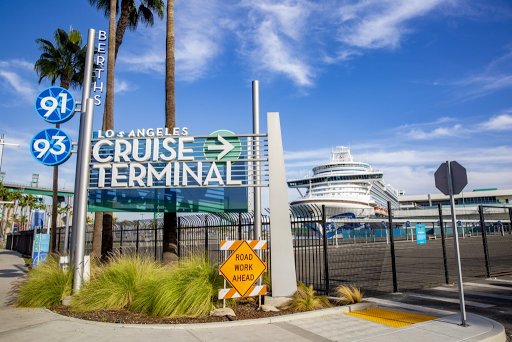
The Port of Los Angeles is expecting cruise ships but without passengers, in the coming weeks, according to a port press release.
The visits for fuel, supplies, and services are part of the cruise lines’ operations to reestablish the ships in U.S. waters as a prerequisite to meet federal regulations in order to resume cruising in the future.
The port said it continues to closely monitor the situation and is working with the Centers for Disease Control and Prevention (CDC), U.S. Coast Guard (USCG), U.S. Customs and Border Protection (CBP), California Department of Public Health, Los Angeles County Department of Public Health and other emergency and public health agencies.
Princess Cruises, Holland America, and Norwegian Cruise Line cruise ships are scheduled to send ships arriving in Los Angeles this week and through the new year, periodically docking at the Los Angeles Cruise Terminal for fuel, food, supplies, and/or services. No vessels will be carrying passengers.
The Port of Los Angeles is expecting more than two dozen cruise ship calls through early February.
In addition to increased precautions to minimize community spread of and exposure to COVID-19, cruise ship safety implementations while at berth include Passenger Ship Safety Certificate (PSSC) training and Marine Evacuation System (MES) replacement.


 Wetravel2u's Weblog