AIDAnova Keel Laid

Image result for aidanova cruise ship
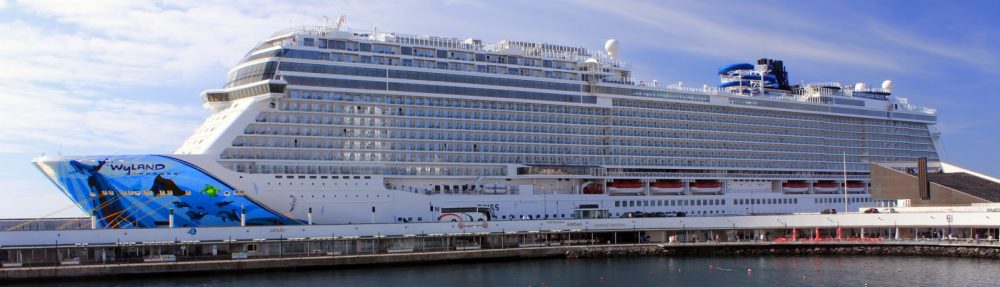
AIDANova has had her Keel Laid at Meyer Werft Germany.

Carnival Corporation marked the official start of construction for a total of seven cruise ships that will be fully powered by liquefied natural gas (LNG) with today’s keel laying of the AIDAnova at Meyer Werft in Germany.

The ship will be delivered to AIDA in late 2018.

n the presence of AIDA President Felix Eichhorn, Bernard Meyer, CEO of Meyer Werft, and Tim Meyer, CEO of Meyer Werft, two trainees named Louisa Tröbner (AIDA Cruises) and Martin de Boer (Meyer Werft) placed the traditional lucky coin under the first of a total of 90 blocks.

AIDA President Felix Eichhorn said: “One of the main tasks AIDA Cruises sets itself is to make cruises sustainable. With AIDAnova and its sister ship, we are sticking to this course with our pioneering work. Thanks to our trailblazing green cruising design, the use of only LNG in the cruise industry will become a reality in 2018.”

Keel Laying

“We thank Carnival Corporation and AIDA Cruises very much for their trust and their pioneering decision to implement LNG technology on board. The corresponding infrastructure is now being developed at numerous ports. Carnival has made a decision benefiting the environment that is highly important for the cruise industry,” added Bernard Meyer, CEO of Meyer Werft.

Arnold Donald, president and CEO of Carnival Corporation, together with Bernard Meyer, CEO Meyer Werft, Michael Thamm, CEO Costa Group and Carnival Asia, David Dingle, Chairman Carnival UK (P&O Cruises UK), Neil Palomba, President of Costa Cruises, and Felix Eichhorn, President of AIDA Cruises, – gave the official “full steam ahead” signal, ringing in a new era of the commercial use of low-emission LNG in cruise travel. The seven LNG ships for cruise brands Carnival Cruise Lines, Costa Cruises, Carnival UK, and AIDA Cruises will be built by Meyer Werft in Papenburg (Germany) and Turku (Finland) and commissioned between 2018 and 2022.

In AIDAnova’s launch season, the ship will offer trips around the Canary islands.

starting in December 2018. Its twin ship with over 180,000 GT and 2,600 staterooms is set to be commissioned in the spring of 2021. Using LNG prevents almost completely

Carnival Releases 2016 Sustainability Report

Image result for carnival cruise sustainability report

Sustainability Report

Carnival Corporation has released its 2016 sustainability report as part of the launch of its new dedicated sustainability website.

The report and complementary site detail the company’s sustainability efforts and the progress made in 2016 toward its 2020 sustainability performance goals. The report was prepared in accordance with the Global Reporting Initiative (GRI) G4 “core” level, and a full copy can be downloaded from Carnival Corporation’s new site, according to a prepared statement.

“We take our commitment to sustainability and the environment very seriously and take proactive measures to ensure that sustainability is ingrained in the core of our business practices,” said Bill Burke, chief maritime officer for Carnival Corporation, whose industry-leading cruise lines sail to more than 760 ports around the world. “Our top priority is to consistently exceed our guests’ expectations for a great cruise vacation – and that includes providing an exceptionally safe, comfortable and enjoyable environment for our guests and crew members, while at the same time maintaining our deep commitment to protecting the oceans, seas and destinations we visit.”

Added Burke: “We have a great team of employees, most of whom work and live at sea, and we all understand a healthy environment is not just an operating necessity, but it is also the right thing to do. We want our guests to be confident that when they book a cruise vacation with one of our brands, they are doing so with a responsible global corporate citizen.”

Among the highlights, according to Carnival:

Being ahead of schedule in achieving a nearly 25 percent reduction in CO2e (equivalent carbon dioxide) relative to the 2005 baseline.

Pioneering the use of LNG (liquefied natural gas), the world’s cleanest burning fossil fuel, and introducing the first cruise ship ever fueled with LNG from trucks while in port.

Continuing to make progress in installing Exhaust Gas Cleaning Systems, which significantly improve air emissions by reducing sulfur compounds and particulate matter from engine exhaust – by the end of 2016, 59 percent of the fleet was equipped with the systems (and a larger percentage is equipped with the systems as of today).

40 percent of the fleet was equipped with cold ironing capabilities by the end of 2016, which allows ships to use an alternative power source while in port.

Expanding its partnership with Wärtsilä to include a long-term diesel engine maintenance agreement with an energy-efficiency component.

Continuing installation of Exhaust Gas Cleaning Systems (EGCS), which significantly reduce sulfur compounds and particulate matter from ship engine exhaust.

Making a significant commitment to its employees in terms of high-quality training by establishing the new Arison Maritime Center, home of the Center for Simulator Maritime Training Academy, also known as the CSMART Academy.

Opening the second of three planned state-of-the-art Fleet Operations Centers (FOC) in Seattle with the most advanced ship-to-shore communications technologies available to assist captains, chief engineers and deck and engineering officers with digital support, control and planning of all nautical and technical operations.


Will Carnival Meet 2020 Sustainability Goals?

Will Carnival Meet 2020 Sustainability Goals?

Carnival Corporation released its 2015 sustainability report Thursday, revealing the progress it made over the course of last year as it works toward reaching its 10 sustainability performance goals for the end of the decade.

Highlights from the report include a reduction in the company’s carbon intensity rate by 2.8 percent.

What’s more, Carnival equipped more than 40 percent of its fleet with exhaust gas cleaning technology designed to reduce the sulfur compounds and particulate matter that comes from engine exhaust.

Carnival also improved its carbon footprint by ordering the world’s first cruise ships powered by liquefied natural gas (LNG) and the first powered by an LNG hybrid barge.

Finally, the corporation is on pace to meet the 10 percentage point increase in fleet-wide capacity of advanced wastewater purification systems.

Carnival, which added a 10th brand in Fathom last year, also finalized agreements for 15 new ships for delivery by 2020, four of which are next-generation ships that will utilize cleaner fuels.

“We know it is increasingly important to have sustainable and transparent operations, so we work hard every day to run our company in a sustainable way, and to share those practices broadly, so that our guests can feel confident that they are making a responsible decision when they book a vacation with us,” said Carnival’s chief maritime officer Bill Burke in a statement accompanying Thursday’s announcement.

Check out the infographic below for a more complete update on where Carnival stands in its journey to reaching its 2020 sustainability goals.

Infographic courtesy of Carnival Corporation.