Carnival announces the first ship based on US west coast in 20 years

Image result for carnival panorama ship

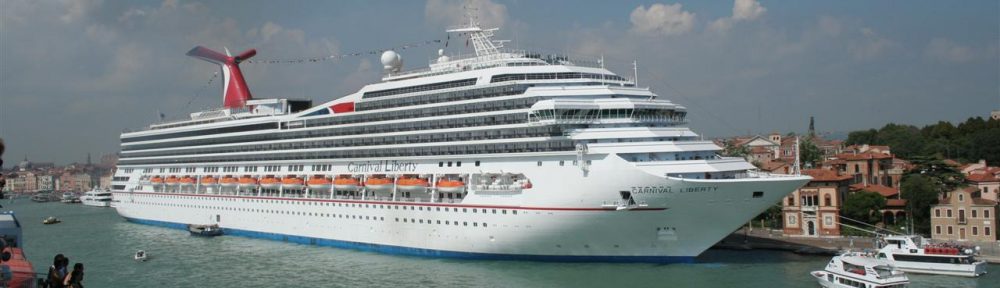
Carnival Cruise Line is to deploy a new ship on the US west coast for the first time in 20 years.

Carnival Panorama will be based in Long Beach, California, from December 2019.

The 3,960-passenger Carnival Panorama, the third Vista-class ship in the fleet, will run seven-day Mexican Riviera itineraries with bookings due to open next month.

New features unique to the new ship will be announced in the near future, according to the cruise line.

The planned deployment followed the company revamping its 146,000-square-foot Long Beach Cruise Terminal and plans for a multi-million dollar port development in Ensenada, Mexico with shops, restaurants and attractions.

The renovation of the terminal at Long Beach more than doubles the size while enhancing the overall passenger experience and operational flow.

It also includes the expansion of portside shore power to enable larger ships to plug into the local electric grid, reducing exhaust emissions while docked.

Carnival Cruise Line president Christine Duffy said: “This is a momentous occasion for both Carnival and the City of Long Beach – not only are we celebrating the grand re-opening of this magnificent cruise terminal, but also demonstrating our commitment to the west coast with the deployment of the spectacular new Carnival Panorama in 2019 and the announcement of an exciting new port development project in Ensenada.

“The west coast is an important market with vast growth potential and these initiatives further demonstrate the confidence in our future success in Long Beach.

“We are very much looking forward to having Carnival Panorama homeported here beginning next year.”

Mexico: Acapulco: Calls and Homeporting

The Norwegian Sun calls in Acapulco
Norwegian Sun in Acapulco.

Thirty calls are scheduled for the 2017-2018 season for Acapulco. That is a slight dip from last year because Holland America cancelled eight calls when Carnival Corporation did not conduct its destination site inspection, despite being invited by the port, explained Alex Casarrubias, port director. “We are confident that once Carnival, as well as Royal Caribbean, visit our destination, their ships will return,” he said.

“Our top client is Norwegian Cruise Line Holdings with Norwegian, Oceana and Regent,” Casarrubias continued. “Last year we also added the Magellan and Astor of Cruise & Maritime Voyages.

“The Magellan will homeport in Acapulco for three months, starting in February 2019.”

Acapulco was also a homeport in 2010 and 2011 and has since accommodated a number of turnarounds. This season, 90 percent of its traffic is transit calls and 10 percent turnarounds, but those percentages will change next season.

Recent turnarounds for Phoenix Reisen’s Albatros and Artania meant that passengers flew directly to Acapulco from England and Germany.

Casarrubias pointed out that nonstop airlift from Los Angeles started in December and that nonstop flights from Montreal and Toronto are starting in January.

Meanwhile, the Acapulco Cruise Committee’s priority continues to be to showcase Acapulco as a safe destination with top-notch infrastructure and services, he said. “We are in constant communication with the cruise lines and our main priority right now is to get Carnival to do its site inspection so they can confidently resume their cruise operation in our port.”

Passengers will find a “renewed” Acapulco. Grupo Autofin’s $1 billion master plan includes renovations of the Pierre Mundo Imperial and Princess Mundo Imperial resorts, as well as a number of new developments – hotels, shops, restaurants, spas, an eco-amusement park, a tennis stadium, a medical center and more, slated to be completed between now and 2022.

This year will also see the inauguration of a new terminal at the airport.

The most obvious attraction is Acapulco’s stunning landscape, according to Casarrubias, with its lush green mountains and sandy white beaches, in addition to its well-developed tourism infrastructure.

Puerto Vallarta’s Changing the Cruise-port Game

Cruise ship docked in Puerto Vallarta
PHOTO: Cruise ship docked in Puerto Vallarta. (photo via Flickr/Brian Holsclaw)

Puerto Vallarta has long been known as the smiling face of Mexico’s friendly coast.

Nonetheless, increased tourism demand and destination competition have prompted this bastion of traditional, authentic Mexico to undergo a critical upgrade and modernization.

In 2015, the Mexican government announced an audacious three-part plan for Puerto Vallarta: A complete rebuild of the cruise terminal, increasing parking there by 400 spaces and adding a notable attraction—since announced as the largest aquarium in Latin America.

“When the President [Enrique Pena Nieto] was in campaign, he came to Puerto Vallarta and promised to develop the port in order to be more competitive in the world,” said Carlos Gerard, the port director, local tour operator, former Puerto Vallarta Minister of Tourism and owner of the construction company now completing the first two projects.

While the footprint and ship-service mechanics of the three-berth port will not expand, the passenger space is modernizing substantially.

What’s New

Puerto Magico (or “Magic Port”) is the new 15,500 square meter terminal that will be designed like an airport terminal, look like a traditional Mexican hacienda and include numerous public spaces and shops, making it both an authentic welcome point for arrivals and a commercial destination throughout the city.

A study and bidding began in 2013, with construction starting February 2016 and a scheduled completion for August, 2018 on a price tag around $19 million US.

“Puerto Vallarta is in the state of Jalisco, the birthplace of tequila, mariachi and charrereia,” said Gerard, “so we need to make that part of the identity of the port itself. We don’t want to make just another cruise terminal. We want an experience so that when anyone visits the port—whether by cruise ship, car or airplane—they will feel like they’re in a real, authentic hacienda.

“The cruise lines have told us that many of the cruise ports in Mexico look all the same, so we have to make that different from the older ports. Mazatlan has its own look, so they have to show it. Cabo San Lucas is desert, so they have to show it. We will be the first to make things different and very authentic and original.

“It will be very light Mexican architecture, with arches and the green roof, as well as open spaces and vegetation.”

Puerto Vallarta Hacienda Cruise Terminal
PHOTO: Puerto Vallarta Hacienda Cruise Terminal

The two-level parking garage replaces an open-air lot and will be approximately 9,500 square meters at a cost of nearly $6.4 million US. The first level will include bus and public transportation facilities, both to be completed with the terminal phase.

Meanwhile, the aquarium will be 8,500 square meters and is currently undergoing internal operations development. Its completion date is open-ended and estimated at easily costing more than $8 million US.

Visitors to the aquarium will enter through the parking complex and then walk past the terminal’s shops and public seating areas—the actual arrival and departure areas will be closed to the public and contain typical security.

Puerto Vallarta entryway
PHOTO: Puerto Vallarta cruiseport entryway.

“We will have 300 different species and some 15,000 different animals from all over the world, including Mexico, the Gulf, the Pacific and the Caribbean,” said Julio Nasta Icaza, Director of Blau Life and the overseer of the current aquarium project. (Blau Life also operate Mexico City’s famous Acuario Ibursa aquarium and a coral farm there that helps repopulate coral in their own exhibits as well as the sea.)

“We will have some 59 different exhibits, and there is a lot of work going on behind the scenes with animal husbandry, fish farms and training before we can open, even as construction is yet to begin. We have state-of-the-art equipment and will touch all the senses and be highly themed.

“We have agreements with turtle conservation groups and support their efforts. When you have a crab crawl on your arm or touch a starfish in one of our educational exhibits, it brings the sea to life and helps people want to save it.”

Meeting Multiple Needs

While the number of cruise ships being built continues to rise, it is not meeting the increased demand from passengers. What’s more, the competition is fiercer than ever among destinations.

2008 was the high point for Puerto Vallarta, with about 290 ships making a call. That number plummeted to 81 arrivals in 2013 due to the recession and other factors, but has since risen to 108 during 2014, 130 in 2015 and 145 in 2017.

Gerard estimated 10-15% annual growth in cruise ship arrivals following the completion of this project.

Still, there is much work to be done, even as Puerto Vallarta maintains its reputation as one of Mexico’s safest cities and neighboring Riviera Nayarit continues to draw international interest.

“There are actually more ports being developed and re-developed right now than cruise ships being built,” said Gerard. “We are making the port more competitive and attractive for the cruise lines, passengers and crew. This will create 400 different new jobs just at the cruise terminal. Once all the construction is finished, it will be over a thousand.”

Puerto Vallarta Parking and entrance
PHOTO: Puerto Vallarta Parking and entrance.

That said, the project was never going to get off the ground at the scale Puerto Vallarta tourism officials wanted unless they began thinking bigger.

“2017 will see approximately 145 cruise ships in Puerto Vallarta, but you’re only talking about 100 days out of 365 that see cruise ship visitors,” said Gerard. “That’s not going to be worth it to investors and developers, so we needed to open it to the public itself so it is attractive.”

Thus was born the idea for making the cruise terminal a multi-use site that caters to tourists and locals alike as a commercial and cultural hub within the city.

“We annually have 4.2 million visitors to Puerto Vallarta who fly in or drive. 50% are Mexican, while almost the other 50% are Americans and Canadians. We have 22,000 hotel rooms in Puerto Vallarta and another 12,000 in Riviera Nayarit.”

Gerard estimated 2.9 million visitors will check out the new cruise terminal and its attractions during its first year based on conservative projections. This includes around 400,000 cruise passengers and 120,000 crew, plus another 600,000 land- and air-based visitors simply using the terminal as the jumping off point for their harbor and water-based tours.

“We also expect about ten percent of the 4.2 million visitors to visit here for commercial reasons,” noted Gerard. “We have 320,000 people living in Puerto Vallarta—including about 45,000 American and Canadian expats partial- or full-time—plus another 120,000 in the surrounding area. We are expecting the average of those folks to visit us once during the year. That is extremely conservative.

“The crew also are buyers and have needs, similar to the passengers. Tourists will spend around $98 US apiece here, which is second-place in Mexico. Crew members will spend $65 US on average.

“We are the No. 2 destination in Mexico for gastronomy and No. 1 in tourist preference. We also need for Mazatlan and Cabo to do something similar. The most popular route from San Diego or Los Angeles is the 7-day cruise that comes through our three cities.”

Notables

—Forty percent of cruise ship passengers take a water or land excursion of about 4.5 hours during their 12-hour stay in Puerto Vallarta, and these will all originate from the terminal after the revamp. (The rest get off the ship and visit the downtown for shopping and exploring along the seaside Malecon and Zona Romantica.)

—Shuttles and small trains will link Berths 2 & 3 (which are across the waterway) on multi-ship arrival days with the cruise terminal and Berth 1 (used for primary arrivals).

—Carnival Cruise Line arrives weekly to Puerto Vallarta year-round. Princess, Norwegian, Holland and Royal Caribbean are also frequent customers, in that order.

—The port will oversee all the cruise ship maintenance and re-provisioning services, as well as all shop dues and transportation services through this new centralized hub.

—Cruise ship sizes continue to expand, but Puerto Vallarta’s berths remain the same for now. Thus, expanding the mechanical and service infrastructure to meet the coming megaships is not part of this project but is next on the horizon.