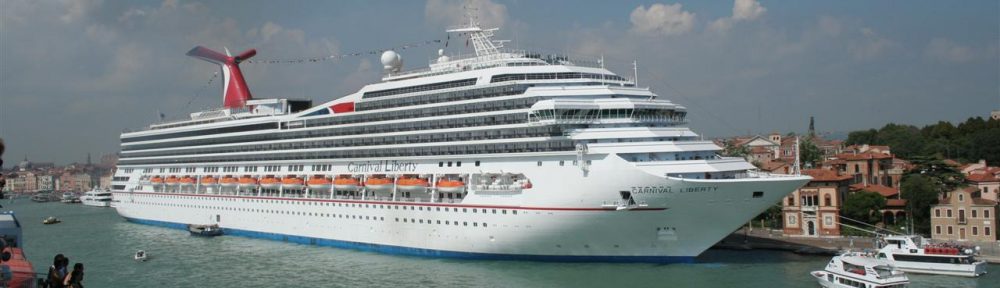
Florida Cruise Ports Smash Passenger Records as Industry Makes Comeback

PortMiami and Port Everglades have reported record-breaking passenger numbers for fiscal year 2024 as cruisers returned to the high seas en masse following the pandemic.

PortMiami, the nation’s busiest cruise port and often called the “Cruise Capital of the World,” has set a new record with an astounding 8.2 million cruise passengers in fiscal year 2024, marking a 12.79% increase from the previous year’s record.

Meanwhile, Port Everglades in Broward County has also surpassed its previous records, welcoming 4,010,919 cruise passengers in the same fiscal year. This represents a remarkable 39% growth in passenger numbers and a 23% increase in cruise ship calls compared to the previous year, demonstrating the port’s rapid recovery and expansion. Of note, Port Everglades achieved passenger records with just 648 calls, highlighting the growing size of cruise ships.

Both ports’ fiscal years run from October 1 through September 30.

“Cruising is in high demand, and our cruise line partners are poised for greater gains with new itineraries and a variety of sailing dates,” said Joseph Morris, CEO and Port Director of Port Everglades.

Both ports are looking ahead to even more growth. PortMiami is preparing to welcome several new cruise ships in the upcoming 2024-2025 season, including vessels from Explora Journeys, Virgin Voyages, MSC Cruises, Norwegian Cruise Line, and Oceania. The port is also expanding its infrastructure, with MSC Cruises’ new Cruise Terminal AA set to become the world’s largest cruise terminal.

Meanwhile, Port Everglades expects the new record to be short-lived, with a whopping 4.4 passengers expected across its terminals in FY2025.

PortMiami also launched its shore power project in June, allowing cruise ships to plug into landside electrical power while docked, reducing emissions and noise. This initiative, a collaboration between the port and major cruise lines, positions PortMiami as the first major cruise port on the U.S. eastern seaboard to offer shore power capability at five cruise berths.

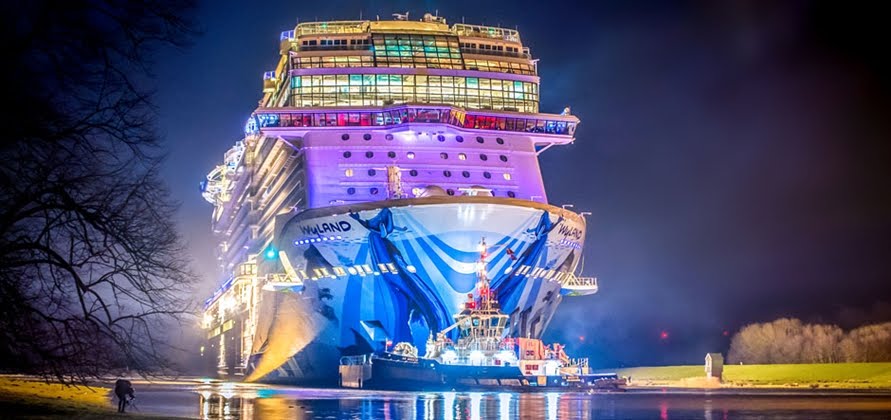
Norwegian Plans Phased Return to Service

Norwegian Dawn
Norwegian Dawn

“I will do everything humanly possible to be able to look my own family in the eyes and say they will be safe on our cruise ships,” said Frank Del Rio, chairman and CEO of Norwegian Cruise Line Holdings (NCLH), on the company’s first-quarter earnings call.

Del Rio said NCLH is working with experts to develop health protocols that will be robust to gain CDC approval and generate confidence among the public. The same process must be replicated around the world.

When the no-sail order is lifted by the CDC, Del Rio said he expects that the company’s brands will return to service in a phased order of roughly five vessels a month, assuming ports are open and they can sail their designated itineraries.

Norwegian Bliss

With 28 vessels, it will take roughly six months to bring the whole fleet back into service. It is also unknown at this point whether they will be allowed to sail at 100 per cent capacity.

Consumer demand is still there, according to Del Rio, despite all the negative press. He noted that bookings are still coming in, despite the suspension of marketing activities, and expects that cash coming in will overtake the net cash outflow (refunds) in the next 60 days.

“There is pent up demand; people want to cruise again,” he added, noting that world cruise segments for the Regent and Oceania brands were sold out, with customers flying to embarkation points in Japan and Dubai.

However, with a booking curve from six to eight months out, it will take time before the pipeline is full or nearly full, he said.

Mark Kempa, CFO and executive vice president, commented that he sees 2021 as a transition year and that NCLH may be able to rebuild in earnest in 2022, bringing the company back on the track it was prior to COVID-19.

Newbuild deliveries may be delayed 12 to 18 months, added Del Rio.

Under stress, NCL Holdings hit a liquidity grand slam

T1112DELRIO1_JB_HR
Arnie Weissmann (left) and Frank Del Rio at Travel Weekly’s CruiseWorld in 2018. Photo Credit: Jamie Biesiada

In the first of two parts of a wide-ranging interview with Travel Weekly editor in chief Arnie Weissmann, Norwegian Cruise Line Holdings CEO Frank Del Rio gave the back story on closing a $2.4 billion round in tough times. Part 2: Del Rio on relaunching and the importance of travel advisors in cruising’s recovery. 

On March 13, Norwegian Cruise Line Holdings CEO Frank Del Rio learned that to stem the spread of Covid-19 on cruise ships, the Centers for Disease Control and Prevention (CDC) had issued a no-sail order, effectively halting cruising out of U.S. ports.

No cruising, no revenue. No revenue, no assurance of the liquidity needed to survive for an unknowable amount of time. “I knew our world was going to change,” Del Rio told Travel Weekly in an interview on Thursday.

Del Rio sees the journey from potential ruin to bountiful liquidity as a testimony to the resiliency of cruising and NCLH’s unique position in the cruising ecosystem.

On Wednesday, Del Rio finished what would be considered a remarkable round of funding even during the best of times. His underwriter, Goldman Sachs, told him it was the first simultaneous “quad” it had seen: releasing a private placement memorandum and at the same time announcing three different kinds of public capital. And, as icing on the cake of the $2.23 billion initially announced, an oversubscription in each tranche triggered what Wall Street calls a “greenshoe” event, allowing additional shares to be sold, bringing the total above $2.4 billion.

Wall Street heavyweights get green light to start their own stock ...

What should have been an unqualified grand slam was temporarily dampened when some investors and media noticed two sentences in a 59-page public filing on Tuesday which seemed to disclose “substantial doubt” about the company’s ability to continue “as a going concern,” and another warning that, should investment not be forthcoming, “it may be necessary for us to reorganize our company in its entirety, including through bankruptcy proceedings.”

The language, Del Rio said, was a “mandatory, technical accounting reporting requirement that our auditor, Price Waterhouse, was required to issue in conjunction with the offering memorandum.” Though the details the following day about the success of the offering would render the point moot, NCL stock dropped 22% the day before the full scope of the investments were announced.

The $2.4 billion, combined with $1.1 billion in cash the company already had, “probably gives us the biggest liquidity cushion — the longest runway — of any company in the cruise space,” Del Rio said. “I challenge you to find another company in any industry that can say that they can withstand a 100% cessation of operations with zero revenue for more than 18 months.”

When this is all over, Del Rio asserts, “Norwegian will be one of the survivors, one of the success stories. This was truly a team effort. Yesterday I addressed them all, and it was a very emotional moment because what was being saved was a great institution. We invented the cruise industry more than 50 years ago and I would be damned if, under my watch, that was going to change.”