
But now, cruise lines are launching a new set of islands or upgrading old ones, adding luxury amenities and enhancements large and small, all meant to turbocharge the guest experience.
These 2.0 versions of private islands have better bars, acres of lounge chairs, more shade, improved landscaping and easier accessibility. Many have features such as ziplines, spas and deluxe beach pavilions. Even an entertainment amphitheater is in the works at MSC Cruises’ project.
“They’re definitely trying to make it more of an upscale experience,” said Roger Blum, principal at Cruise & Port Advisors, a Miami consulting firm.
For cruise lines, private islands have become another front in the competitive battle that already includes ship design and construction, advertising and marketing strategies, field sales forces and travel agent relations.
All hope that cruise passengers will want to spend time on their islands, enjoying the white sands, leafy pathways, swimming pools, bars and recreation gear. None can afford to be left behind.

MSC’s Ocean Cay
One of the most ambitious projects underway is the Ocean Cay MSC Marine Reserve, a 95-acre outcrop about 65 miles east of Miami, near the Bahamian island of Bimini. The property had previously been used to mine sand and has very little in the way of natural vegetation or tourism infrastructure.
MSC has budgeted $200 million to transform the island into an attraction that its ships can use day and night.
“Our aim is to turn an industrial wasteland into a thriving environment for man and nature alike, bringing the island and its surrounding waters back to their original state,” MSC executive chairman Pierfrancesco Vago said in a January ceremony to mark the start of construction.
Until recently, MSC lacked the deployment in the Caribbean to justify the expense of a private island. But with the arrival of the MSC Seaside in November, the cruise line will have two big new ships sailing from Miami, plus two ships serving European winter fly-cruise passengers from Havana.
Together, the ships could send nearly 700,000 passengers a year to the island. Ocean Cay MSC Marine Reserve is scheduled to open in November 2018.

Carnival’s private Bahamian beach
Also putting together an outpost for its flotilla sailing in the Caribbean and the Bahamas is Carnival Cruise Line, which is the largest operator without a dedicated private island in the Bahamas.
In May, Carnival signed a long-awaited agreement to build a 226-acre private beach attraction on the eastern part of Grand Bahama Island. The northerly location is convenient to Carnival ships up and down the East Coast, cruising from cities such as Baltimore; Norfolk, Va.; Charleston, S.C.; Jacksonville, Fla.; and even New York.
Carnival’s year-round deployment in the Caribbean and Bahamas means it can justify the investment, estimated by the Nassau Tribune at $100 million.
At a signing ceremony, Carnival Corp. CEO Arnold Donald said Carnival had been working for the better part of 15 years to establish a “new and authentic” Bahamian port experience.
“I am very pleased that this port is now on track to become a reality,” he said.
The as-yet-unnamed Carnival port will rank as “the largest purpose-built cruise facility ever constructed in the Bahamas,” Donald said. It is eventually expected to host up to 1 million passengers a year.

Bigger ships, bigger private islands
One reason that private beach attractions are getting bigger is that the ships going to them are getting bigger.
When Eastern Steamship Lines opened a private Bahamian island on Little Stirrup Cay in 1983, it was sailing the 962-passenger Emerald Seas there on three- and four-night cruises.
Today the successor to Eastern, Royal Caribbean International, has three ships that carry 5,400 passengers each at double occupancy. To accommodate them, Royal is upgrading the island, now called CocoCay.
The first step is to add a permanent pier, so guests don’t have to take tenders from the ship to get ashore. When Disney Cruise Line opened its Castaway Cay island in 1998 with its own pier, it became the new standard for passenger convenience, as guests could easily come and go from the ship during a daylong stay.
“The installation of the fixed pier will allow for the additional safety of the cruise passengers and employees on the cay where they will be able to have direct access to the Island instead of tendering boats,” Bahamas prime minister Perry Christie said in announcing the $40 million project.
On Grand Bahama, Carnival’s plan includes a pier that can dock two 3,000-passenger ships at once. MSC is also planning to dredge a channel and build a pier for its large ships, making them easier to offload.

At CocoCay, after building the pier, a second phase of Royal’s improvements will include a new craft marketplace, a shore excursion building, a bike and equipment rentals structure and a transportation center. Plans also call for a building for suite guests, a new active aquatic zone, additional food and beverage venues and more infrastructure and landscaping, Christie said.
A third phase is expected to add a ropes course, zipline, water park, lagoon cabanas and pools, Christie said. The $150 million project is targeted for completion by 2019, with the dock opening timed to the debut of the Symphony of the Seas next spring.
In making its improvements, Royal is keeping up with rival Norwegian Cruise Line, which opened a new island port of call in Belize with many similar features in 2016 and is in the process of upgrading its resort at Great Stirrup Cay, just a stone’s throw from the smaller CocoCay.

Norwegian re-engineers its island
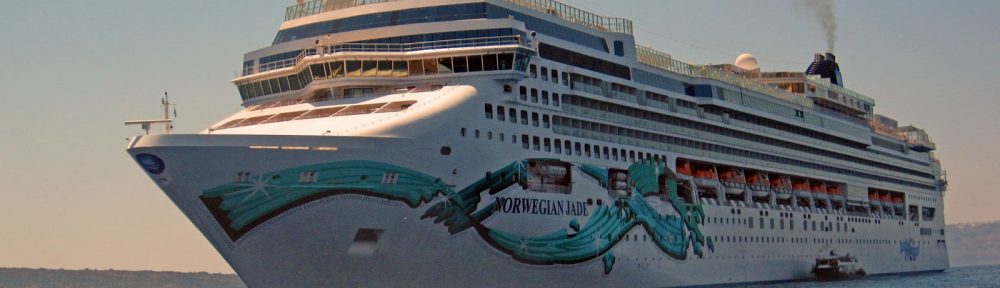
By most accounts, Great Stirrup Cay was the cruise industry’s original private island, purchased by Norwegian in 1977. Guests go ashore in 300-person tenders with ramps that drop from the bow.
Norwegian has made improvements over the years but nothing as dramatic as those it made in 2016-17.
The line has learned from 40 years of operations what works and what doesn’t. On a recent visit, Carlos J. Gonzalez, director of out-island projects at Norwegian, explained some of the new enhancements.
For one thing, Norwegian has re-engineered the beach, which drew complaints that it was too rocky. It built a jetty to block sand from eroding and found a sand mine on the island so it doesn’t have to rely on dredged sand full of shell bits.
Norwegian has installed more irrigation to keep vegetation green and growing. It has focused on four or five trees that thrive in the Bahamas to introduce more of a canopy on the 72-acre property.
“One of the things we’re trying to do is have a lot more shade,” Gonzalez said. “So we’re buying trees that are much more mature and things that will cast a lot more shade.”

There’s also more pavement in place, making it easier to move between the shops, bars, recreation centers and cabanas.
Seating areas at the bars have been upgraded, and table servers will be available for some ships. There’s more live music planned at the bars, some of which will have added table umbrellas.
“So we’re trying to create these spaces where people can come and hang out,” Gonzalez said. “What’s happening now is they’ll come, eat and then run back to the beach, and you don’t get that experience where maybe you’d meet a new friend or something.”
When it comes to service, Norwegian has learned that speed counts. At the bars, machines have been added to make frozen and mixed drinks, cutting wait times in half.
The same goes for food. At the main restaurant, two small bars were demolished and rebuilt as larger outbuildings connected with pathways, to ease congestion. The grill has been streamlined from four lines to two.
“The food is fresher, turns over faster,” Gonzalez said.

Nearby covered seating areas have also been decked, so that people aren’t eating in the sand. That has the side benefit of making the area easier to clean. More landscaping suppresses windblown sand and dust.
“We wanted to make it seem like you’re not just having a picnic on the beach,” Gonzalez said. “You’re on vacation. You’re in a wonderful place.”
Another small improvement: Norwegian is now making ice on site, which means better quality.
“These aren’t terribly exciting things for the guest,” said Gonzalez, “but they’re things that make the guest experience much better, so the quality of the food, the freshness is much better.”
On a bigger scale, Norwegian has built an infirmary with eight patient rooms, so that multiple cases of sunburn, sprained ankles, heat exhaustion or insect bites can be treated. More serious injuries don’t necessarily have to be sent back to the ship or evacuated by helicopter to Nassau anymore.
Thirty custom-made underwater sculptures have been added to the snorkel garden. There are more and bigger bathrooms, including two family ones that are ADA-compliant.
Norwegian has rebuilt the private cabanas, making them larger with better amenities, such as refrigerators, and with more vista-like views of the beach. They have ramps to improve accessibility.

After Hurricane Matthew raked Great Stirrup Cay in September 2016, Norwegian did a redesign to reduce erosion through a combination of more concrete foundations and more local plantings.
The really fancy side of Great Stirrup Cay is still under construction. It will initially include 16 air-conditioned, oceanfront cabanas for use by guests of the Haven, Norwegian’s secluded onboard luxury enclave. The cabanas will have locking doors, restrooms, covered patios and, in some, even bedrooms.
Adjacent will be a new five-bay spa, also air-conditioned, with a nice lobby, a deck and its own private beach.
“It brings exclusivity and just a higher level of service, and of course luxury,” Gonzalez said.
On its island, MSC plans something similar for its exclusive Yacht Club guests.

Evolution of islands parallels ships
Blum, of Cruise & Port Advisors, recalls visiting Great Stirrup Cay in 1977 on a preinaugural voyage of the 756-passenger Sunward II, operated by Norwegian Caribbean Line, as it was then known.
“The original concept was pretty cool,” he recalled. “Pull up to the beach and have this beach barbecue, and you were the only people there. That concept is still really cool, but it’s not quite as intimate with thousands of people as it was on a 500- [to] 600-passenger ship.”
Blum said the evolution of private islands has mirrored the evolution in cruise ships, which are almost nothing like the 1977 versions. “They’re still ships, but the amenities and expectations have totally changed.”
There are several reasons why cruise lines continue to increase their level of investment in private destination development.
One is that it gives them greater control over the entire experience. They can design the docks, the shopping and the excursion staging to what is ideal for cruise lines, or even to their specific brand and ships.

Another reason, Blum said, is that lines have greater say over who comes and goes. As a recent flare-up of concern over passenger harassment at the port of Falmouth in Jamaica shows, there are different levels of control, depending on whether a private port is connected to the mainland, or completely isolated, as at Great Stirrup Cay.
There are also financial reasons. At private islands, any ancillary spending the passengers might do on food and beverage, excursions, shopping or equipment rental flows to the cruise line rather than the destination.
However, Blum said the profit motive tends to be overstated. “On the one hand, yes, they’re controlling the revenue flows, but they’re paying a lot of expenses. It’s not cheap to run a private island. That’s not to say that at the end of the day it’s not a profit center. But I think the real advantage to the cruise lines is driving demand for the cruise.”
Passenger demand for private islands is strong. Blum said the cruise lines freely admit that their custom-built destinations are consistently the best-rated ports of call on their Bahamas/Caribbean itineraries. They’re able to tailor the experience to what guests say they desire, he said.
“It’s a really fun, cool experience on these islands,” Blum said. “The waters are great. It’s really a great day. If you’re sitting at home visualizing what a Caribbean-Bahamian beach should look like, these islands are beautiful places.”


 Wetravel2u's Weblog