
MSC Group’s cruise division has announced that it had become the first major global cruise company to join the Green Marine Europe Label.
According to a press release, Green Marine Europe Label is a voluntary environmental certification program for the maritime industry that was launched in 2020 to “create a mechanism to support shipowners in demonstrating their environmental performance on a European scale.” It follows the success of Green Marine’s North American environmental certification program, MSC said.
MSC Group said that it has pledged to achieve net-zero emissions by 2050 and its two brands, MSC Cruises and Explora Journeys, are “committed to measuring their environmental performance annually.”
The cruise brands are using the Green Marine Europe Label’s program guidelines to track progress across eight key performance indicators: aquatic invasive species, pollutant air emissions – sulfur oxides and particulate matter -, pollutant air emissions – nitrogen oxides -, greenhouse gas emissions, oily discharge, waste management, underwater noise and responsible ship recycling.

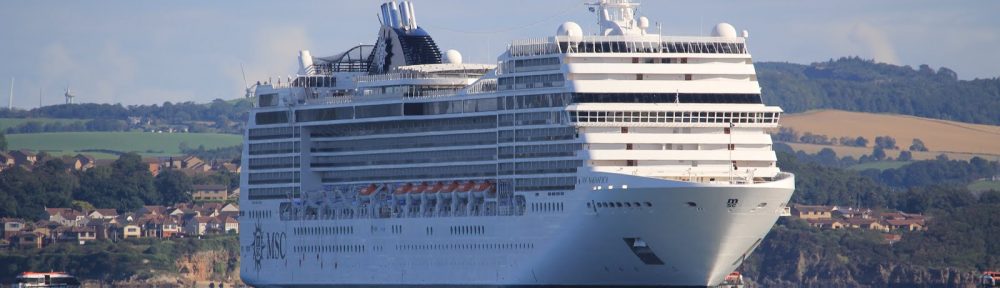
MSC Grandiosa class photo credit Spacejunkie2
The two brands have committed to submit their annual environmental performance results to an external accredited verification party and publish them.
“Even while we tackled the many challenges of the past two years, we never lost sight of our responsibilities in the long term. In line with our commitment to sustainability and our pledge to reach net-zero emissions by 2050, the Green Marine Europe Label will help us demonstrate our progress and share this with our guests, the communities that we serve and all other stakeholders. All of this, while we continue our work on several projects studying the development of green fuels and technology solutions and we look forward to bringing them to life soonest,” Executive Chairman of the Cruise Division of MSC Group, Pierfrancesco Vago, said.
‘’Certification to the Green Marine Europe Label across our entire fleet will further demonstrate our commitment to environmental sustainability as it also reflects our desire to continually improve our performance in that space,” MSC Cruise Management’s Vice President Environmental Operations and Compliance Minas Myrtidis added.
According to the press release, the Green Marine Europe Label is the result of a partnership of the North American environmental certification program Green Marine, which has been operational for 10 years, and the Surfrider Foundation, a leading NGO in the ocean and maritime protection in the European Union.
The partnership was established in 2019, and the program was launched in the spring of 2020.
MSC said that in recent years it has made considerable advances across all areas of its cruise operations thanks to the deployment of some art environmental technologies, fuels and solutions. These include advanced emissions control systems, ballast water treatment systems and advanced wastewater treatment systems.
The first two vessels of Explora Journeys, which are currently under construction, will feature these and other environmental solutions.
 Wetravel2u's Weblog