Royal Caribbean Group appoints a chief medical officer

Royal Caribbean Group Names First Global Health Officer, Will Be ...

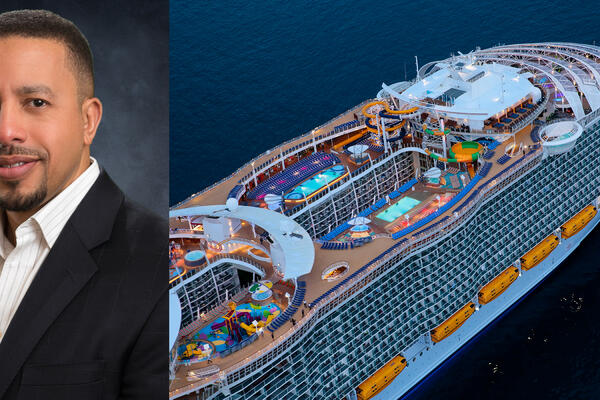
Royal Caribbean Group has named Dr Calvin Johnson as its global head of public health and chief medical officer.

In the newly-created role, he will lead the cruise giant’s global health and wellness policy across its brands Royal Caribbean International, Celebrity Cruises, Azamara and Silversea.

Johnson will manage the group’s public health and clinical practice, and determine its strategic plans and operations of its global healthcare organisation as well as collaborate with the Healthy Sail Panel which also involves representatives of Norwegian Cruise Line Holdings.

Richard Fain, chairman and chief executive of Royal Caribbean Group, said: “Calvin’s extensive experience in public health and clinical care will help us raise the bar on protecting the health of our guests, crew and the communities we serve.”

Dr Johnson was most recently principal at Altre Strategic Solutions Group and has previously served as chief medical officer for of correctional health care provider Corizon Health and for Temple University Health System.

He was also secretary of health for the Commonwealth of Pennsylvania from 2003-2008 and was medical director for the New York City Department of Health from 1998-1999.

Johnson has previously led response efforts during active infectious disease outbreaks and was responsible for ensuring all aspects of patient care while overseeing a clinical operation with 1,300 caregivers and more than 300,000 individuals.

He said: “Royal Caribbean Group is committed to going beyond requirements. I am excited to join the industry leader, who is clearly establishing the way forward in managing public health initiatives and protecting health and safety.

Johnson added: “The Healthy Sail Panel is doing critical work to help us develop enhanced standards, and achieve readiness for the return to service, and I am looking forward to being involved in that work.”

Royal Caribbean Group senior vice president for safety, security, environment, medical and public health, Jennifer Love, added: “Calvin will add critical expertise in our mission to elevate the quality of care. His appointment is a testament to our commitment to transforming healthcare for those we serve.”

Royal Caribbean to Debut New Safety Drill Concept


Independence of the Seas in Southampton photo by Dave Jones

Royal Caribbean Group is replacing the safety drill with Muster 2.0, an entirely new approach to delivering safety information to guests, the company announced.

The new program reimagines a process originally designed for large groups of people into a faster, more personal approach that encourages higher levels of safety.

With Muster 2.0, the key elements of the safety drill – including reviewing what to expect and where to go in case of an emergency, and instructions on how to properly use a life jacket – will be accessible to guests on an individual basis instead of a group approach that has been followed historically.

eMuster will be used to help provide the information to guests via their mobile devices and interactive stateroom TVs.

Travellers will be able to review the information at their own time prior to setting sail, eliminating the need for the traditional large group assemblies, the company said.

The new approach also enables everyone on board to maintain better spacing as guests move about the ship, and it allows guests to enjoy more of their vacation with no interruption.

After reviewing safety information individually, guests will complete the drill by visiting their assigned assembly station, where a crew member will verify that all steps have been completed and answer questions. Each of the steps will need to be completed prior to the ship’s departure, as required by international maritime law.

“The health and safety of our guests and crew are our number one priority, and the development of this new muster process is an elegant solution to an outdated, unpopular process,” said Richard Fain, chairman and CEO, Royal Caribbean Group. “The fact that this will also save guests time and allow the ship to operate without pause means that we can increase health, safety and guest satisfaction simultaneously.”

“Muster 2.0 represents a natural extension of our mission to improve our guests’ vacation experiences by removing points of friction,” said Jay Schneider, Royal Caribbean Group’s senior vice president of digital. “In this instance, what’s most convenient for our guests is also the safest option in light of needing to reimagine social spaces in the wake of COVID-19.”

This marks the first dramatic change to the safety drill process in a decade since Royal Caribbean’s Oasis of the Seas moved the life jackets from guest staterooms to the muster stations, which improved the evacuation process and has been widely followed throughout the industry.

More than a year in the making, Muster 2.0 is also an initiative that will be part of the comprehensive set of protocols and procedures Royal Caribbean Group is developing along with the Healthy Sail Panel that was recently assembled in collaboration with Norwegian Cruise Line Holdings.

“This new process represents the kind of innovation that the Healthy Sail Panel is focusing on as part of its mission to enhance the health and safety of cruising,” said former Utah Gov. Mike Leavitt, co-chair of the Healthy Sail Panel. “It shows that we can accomplish a lot if we try to think outside the box on safety.”

“I’d like to extend my congratulations to Royal Caribbean Group on this innovative milestone. It’s exactly what our industry needs during these unprecedented times and we appreciate the generous offer to participate in this innovation,” said Frank Del Rio, President and CEO, Norwegian Cruise Line Holdings Ltd. “In this industry, we all work cooperatively to enhance health and safety, and this is an example of that.”

CLIA anticipates talks with CDC on return to the sea


MSC Magnifica at anchor in Queensferry Edinburgh

Days after the Centers for Disease Control and Prevention (CDC) extended the No Sail Order for cruise ships from U.S. ports through September, CLIA expressed confidence that it was close to starting a meaningful dialogue with the agency about resuming sailings.

CLIA global chair Adam Goldstein said that so far, its engagement with the CDC has focused mostly on the health and repatriation of crew members who were still aboard ships in U.S. waters.

The CDC had not thus far engaged meaningfully with CLIA and the industry about resuming service, Goldstein said, but he was encouraged that would begin, citing commentary in the No Sail Order extension that indicated “a willingness for information exchange and development of approaches beyond what we had seen from them before.”

CLIA was also encouraged that its voluntary suspension through Sept. 15 closely aligned with the CDC’s No Sail Order extension to Sept. 30.

“The fact that we’re beginning to converge makes us more optimistic that the kind of engagement we’re looking for with the CDC as our regulator will begin in the near future and will allow their experts, our experts, our operations personnel, our leaders and their leaders to have the kind of dialogue that will result in the safe and successful resumption of service,” Goldstein said.

clia_logo_secondary_horizontal_cruisingblue – CLIA Asia

According to CLIA, being involved in such high-level talks with regulators in Europe has helped enable the resumption of limited cruise operations in Germany and Norway.

“The EU has engaged with us fairly intensively through multiple rounds of discussion to work toward an EU guidance permitting national regulators to adopt appropriate regulations, which, in combination with our protocols, we believe is what put Germany and Norway in a condition to restart under the limited conditions,” Goldstein said.

CLIA believes more European countries in the near term may also begin limited cruise operations.

“This is a reflection of one of the expectations we’ve had for a couple months now — that cruising would restart in kind of a sequential manner,” Goldstein said.

CLIA’s primary focus is still on its members’ primary source market, North America, and most popular destinations: the Caribbean, Alaska, Bermuda and Mexico. Goldstein said that CLIA and the Florida-Caribbean Cruise Association are in dialogue with destinations around North America “to work toward alignment” on how they can confidently open up to cruise ship visits.

Outbreak of Lung Injury Associated with the Use of E-Cigarette, or ...

“In order for the North American cruise market to regenerate, two things need to be true: The cruise industry needs approval from the CDC to resume operations in and out of the U.S., and the ports of call need to accept the ships,” Goldstein said. “This critical work will take time, but it is in everyone’s interest to come to a mutually agreeable approach.”

In what seemed to be a response to the CDC’s citing a lack of consensus among cruise lines and the need for additional industry-led efforts regarding safely resuming passenger operations, Goldstein said that over the next weeks and months, CLIA expects to emerge with one or more policies that members will eventually sign onto in response to the pandemic.

“Our goal remains to emerge with a unified approach policy-wise across the associations that all member lines will sign up for,” he said. “I can’t tell you when that will occur or the steps that will get us there.”