Royal Caribbean CEO Fain: Cruising Has Restarted

The CEO of Royal Caribbean Group, Richard Fain, has highlighted the changing times since the CDC’s conditional sail order in October and hopes for a more topical approach to the resumption of cruising.

“The CDC issued the conditional sale order last October in an effort to provide a path for cruising to reopen in the United States … When the conditional sale order was written, there were no vaccines. The disease was on an upward trajectory and heading towards a terrible peak. Testing was less available and more costly, and therapeutics were limited. In general, the situation looked very bleak back then,” Fain said in a video post on social media.

“Last October, preparing for resumption service based on extensive protocols made good sense. But today, a vaccine approach makes much more sense than this old protocol-based approach. The vaccines are bringing down the incidence of COVID-19 in society; the testing enables us to catch cases early. And the preparation we’re doing allows us to handle individual cases safely and simply,’ he added.

Click on the above image to hear the Interview.

Fain said that he expects that the CDC will take these changes into consideration.

“We look forward to a constructive dialogue with health officials in the United States and elsewhere, for the path forward under these new circumstances,” he said.

According to Fain, 100,000 cruisers have sailed aboard Royal Caribbean Group’s ships since the pandemic started, with 10 having tested positive for the coronavirus.

“And all of them have been handled smoothly and without undue disruption of other guests’ cruises. And without undue burden on the communities and the governments involved,’ he said. “Our experience with these 100,000 guests is a very powerful proof of concept. In essence, we’ve just had 100,000 test cruisers and demonstrated that the process works.”

The cruise industry overall has carried more than 350,000 passengers since the pandemic with “minimal disruption,” he added.

“This is precisely what we thought would be the case. And now it is the most powerful and reliable evidence in multiple real-world settings,” he said. “No longer are we talking about when will cruising restart cruising has already restarted.”

Fain also said that Royal Caribbean’s post-pandemic cruises have received higher ratings from guests than pre-pandemic.

Fain also stated that the coronavirus vaccines are a “gamechanger,” but he can’t say yet if all Royal Caribbean sailings will require them from guests.

“We have announced three cruises that will require inoculations for all adults, and there are likely to be more. But each circumstance is different. And I would note that the cruises we are currently operating are operating without requiring vaccines,” he said.

Fain finally called on people not to become complacent, as letting “our guard down” and stopping to take simple precautions would cause another spike.

“I, therefore, encourage all of you to get your vaccine, follow the CDC advice, and we can be sailing in time to meet President Biden’s goal of reopening society in time for the Fourth of July,” he concluded

Technology Meets Cruise Trends

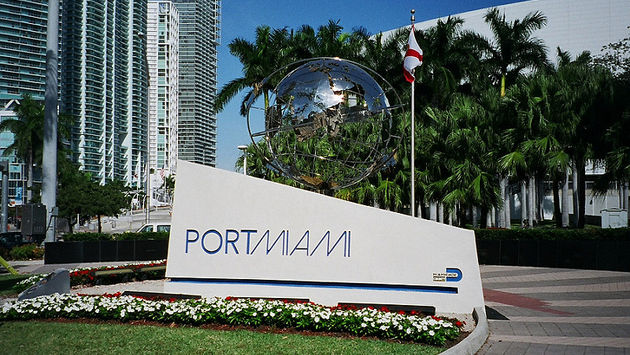
Port of Miami entrancePHOTO: Port of Miami entrance. (photo via Flickr/Phillip Pessar)Cruise travel is so hot right now.

In order to determine just how hot, advertising platform Sojern partnered with Google to ascertain the outlook.

The three biggest takeaways from the report pertain to mobile planning, influence and alternative forms of travel. First, there has been an uptick in mobile cruise searches during 2017—33 percent to be exact, accounting for 29 percent of such overall searches. Second, pricing (89 percent) and entertainment (47 percent) are among the factors that influence potential cruisers.

Third, those searching for other vacations may still opt for a cruise in time.

Additionally, the report cross-referenced Google’s treasure trove of search and survey data with Sojern’s own intent information from traveler profiles and purchase signals.

As much as mobile and online are important these days, offline booking is still viable. Of past cruisers, 41 percent still made their reservations either by utilizing a travel agent or calling the cruise line directly. However, trends are certainly shifting more digital, so online travel agencies are crucial. After all, 69 percent of cruisers desire to book their next trip online.

Going digital is an influence in itself. The video specifically is cited as an important tool in capturing travelers’ attention, (which is one of the very reasons I produce my own Popular Cruising YouTube channel).

As far as marketing is concerned, there is a multitude of paths a buyer may take before booking.

One of the most common, with a 37 percent share, remains a simple cruise search followed by the reservation. However, there are also bookings that follow one or more searches for other travel forms and agencies either before or after a cruise inquiry.

In other words, agents, as well as cruise lines, should have a strong online presence, especially via social media.

As one might expect, searches for key air destinations also correspond to cruise searches. In the top ten are Miami, Fort Lauderdale, Orlando, Los Angeles, Boston, Cancun, Vancouver, San Juan, Honolulu, and Tampa.

Given most of these are also cruise hubs, it makes perfect sense that a search for something land-based might transfer over to something cruise based.

The report points out that, despite the wonderful all-inclusive value proposition of cruises, it is not always what leads people first to a cruise. Rather, it’s more often about a destination or experience.

Once another gets them interested, however, the value is a great way to win them over.

It’s worth noting a majority of cruise searches still occur on desktop platforms and almost all bookings are made on the desktop over mobile. During a week, most searches happen on Mondays and Tuesdays, with three-quarters via desktop. However, by the weekend, mobile searches account for one-third of the traffic.

Meanwhile, only 9 to 11 percent of reservations are actually made over mobile versus the remainder via desktop. There definitely seems to be potential to convert more mobile searches to bookings accordingly. Perhaps apps need to mature in this area to ensure better consumer confidence.

Ultimately, there remain plenty of ways in which a traveler can research and purchase a cruise vacation. Both cruise lines and travel agents need to simply be aware of the prime marketing positions and avenues to occupy.
Royal Caribbean to use Snapchat for underwater tour

Specially designed scuba mask to stream three underwater adventure tours.

Royal Caribbean International will use a specially designed scuba mask to stream three underwater adventure tours to followers on the social media platform Snapchat.

The Royal Caribbean Snapchat channel will be devoted to the tours from June 21 through June 25.

The tours use Snapchat Spectacles in tandem with a custom-designed underwater mask Royal Caribbean is calling the “SeaSeeker.” It allows the wearer to “snap” while underwater.

“The SeaSeeker will enable all adventure-seekers to get a front-row seat to the thrilling adventures found underwater in a way that has never been possible before,” said Jim Berra, Royal Caribbean’s chief marketing officer.

The underwater adventures will be seen through the eyes of three well-known divers. In Cozumel, Mexico marine wildlife photographer and conservationist Roberto Ochoa will give viewers a rare glimpse into the annual migration of whale sharks.

Marine biologist Gabriela Nava will then take viewers to see a coral reef restoration project where she and her team have been working to restore the local reefs.

In Belize, fans can follow along as free diver Ashleigh Baird visits the Great Blue Hole, an underwater sinkhole that is believed to be the largest of its kind.

Fans can hashtag #SeekDeeper while following @RoyalCaribbean on Snapchat.