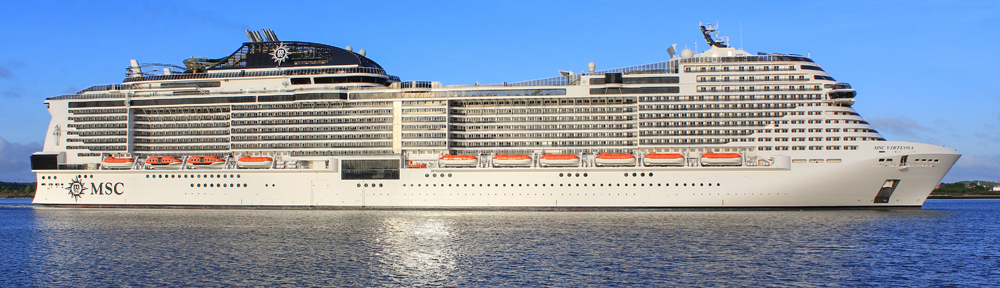

Port of Charleston.
Despite having operated for centuries, the Port of Charleston got into the “cruise game” only a decade ago. Since then, it created an effective and efficient area for cruise calls and built a good working relationship with Carnival Cruise Line.
“We currently have homeports for Carnival Cruise Line. We’re very happy with them. We feel as if they’re very happy with us, we hope to continue that relationship,” Jerry R. Matthews, Director, Breakbulk & Roro & Cruise Operations at South Carolina Ports Authority, told Cruise Industry News. “We work well with all the lines, but for right now (they) have been here for the past six years, I believe… We’d like to have a nice, long-term, five to 20-year contract.”
Plans for the Future
As well as doing everything it can to resume operations in 2021, the port is also preparing to build a proper cruising facility in the next three to five years.
“I think we have a really solid potential to offer more sailings, more short distance sailings to these destinations for the lines. Moving forward, hopefully, again, with building a new facility, being able to hand properly maybe a slightly larger vessel… I think that’s probably the place where we can zone in more, just trying to take advantage of the great location and great weather where we are,” Matthews said.
Another thing the Port of Charleston is looking into improving is security systems at the port – such as facial recognition.
“Things like that that might be [done] with the help of CBP,” he said.
Matthews said that the port’s team has already worked hard to make the site a safe environment once cruise sailings resume and passengers come through. This includes things like more frequent disinfection and cleaning.
“We went through and identified social distancing identifications, markers, signs, stickers, postings, all that we could – we’ve opened more things to have outside as we can. We added more hand sanitizing stations. We have plenty of masks, gloves on hand,” Matthews said adding that part of the process was sitting down with all the employees and vendors to explain the new procedures.
The Port of Charleston also communicated with cruise lines to get a good understanding of their work calendar.
“We got with the cruise lines, and we asked them, ‘what are your plans internally on the vessel to make sure when passengers are embarking or debarking, we have enough space between them, are there any changes we should make?’,” Matthews explained.
“We spent a lot of time making sure that from the time they arrive at the terminal to the time they get on the vessel, it is as safe and productive as it can be for the passenger,” he added.
‘One Family’
Matthews said that he hopes that the entire industry recovers soon after the “unfortunately long pause.”
“We’re kind of like a family: we want everyone to take it back, to go on, and wish nothing but the best for everybody. There’s no competition or competitiveness there – if one of us succeeds, all of us succeed,” he said. “I’m sure there’ll be a lot of starting very slow to make sure all the safety protocols and safety measures are in place to protect everyone, to be as safe as we can. But hopefully, we’ll find a way to rebound back slowly but surely, and get back to normal within a year or two.”
 The South Carolina Supreme Court on Wednesday dismissed a lawsuit alleging that Carnival Cruise Lines’ operations in Charleston violated the city’s nuisance ordinances.
 Wetravel2u's Weblog