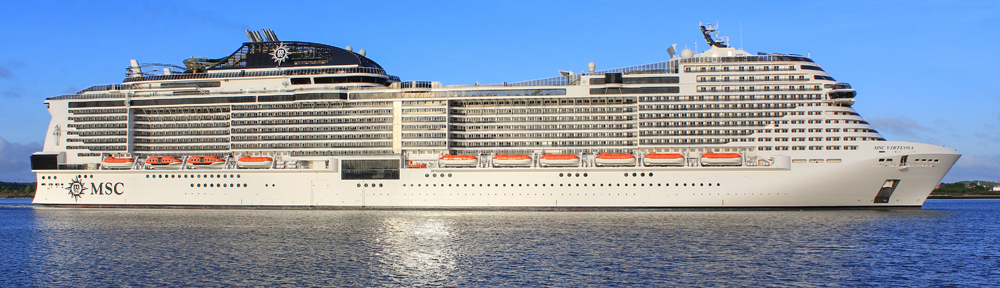
CIN data shows that more than 200 ships will sail in the region, with capacity up over 10 percent on a year-over-year basis.
Larger brands, including Royal Caribbean, Carnival, MSC and Norwegian, will account for 75 percent of the capacity in the Caribbean this year.
Pushing up the numbers are large new ships, which are set to enter service for some of these brands over the course of 2026.
Norwegian will add a new ship to its Caribbean lineup in the second quarter, with the debut of the new Norwegian Luna.
Currently under construction in Italy, the 3,571-passenger vessel is set to offer weeklong cruises departing from PortMiami.
In November, Royal Caribbean is also introducing the next largest ship in the world, the Legend of the Seas.
As the third vessel in the company’s Icon-class series, the 5,610-guest ship will offer a seasonal deployment out of Fort Lauderdale.
The Caribbean is also welcoming new ships from a series of upscale and niche brands, such as Explora Journeys.
After an inaugural season in Northern Europe, the 922-guest ship will spend the 2026-27 season offering a series of cruises between San Juan and Miami.
Other luxury ships arriving in the region this year include the Seven Seas Prestige, the Four Seasons I, and Orient Express’ Corinthian.
2026 will also mark the first full year of service for megaships that entered service in 2025.
The lineup includes MSC’s World America, which debuted last April, Norwegian’s Aqua, which also debuted in April, and Royal Caribbean’s Star, which entered service in August.
After kicking off its maiden season in November 2025, the Disney Destiny will also offer its first year-round schedule in Port Everglades
Carnival Extends Zero Proof Package to All 2026 Sailings
Carnival Cruise Line is extending its Cheers! Zero Proof package to all sailings set to depart in 2026, according to Brand Ambassador John Heald.
In a social media update, he said that the option is now available for booking online via the company’s website and app.
“We did open the Cheers! Zero Proof program for 2026,” Heald said, noting that the package is a “fabulous” option for guests.
“It is worth every penny. For a seven-day cruise, it costs, with gratuities and everything included, just over $200,” he added.
Heald explained that the package includes unlimited milkshakes, sodas and non-alcoholic beverages, such as non-alcoholic beers and spirits, frozen virgin cocktails and special coffee drinks.
“From the hundreds of comments I received overnight, I can say that a lot of guests are going to take immediate advantage of that,” he added.
“I don’t drink, so I can understand why it is so popular,” he continued, noting that Cheers! Zero Proof offers non-drinking guests an opportunity to have a package similar to Carnival’s traditional Cheers! and enjoy a wide array of non-alcoholic beverages.
Heald also noted that while the package is available for cruises sailing from Australia, it does not include special coffees for sailings in the region.
While passengers can take advantage of an unlimited number of beverages per cruise, drinks must be ordered with a ten-minute interval.
“This is one of the ways that we control the program; it’s the fair way for us to control it,” Heald explained.
Port of Tokyo: Japan’s Leading Turnaround Port, Welcoming Cruise Ships at Two Terminals
Located in Japan’s capital, the Port of Tokyo is now poised to make a significant leap forward as a cruise ship hub. In 2025, Harumi Cruise Terminal opened at the Port of Tokyo, commencing the acceptance of cruise ships alongside Tokyo International Cruise Terminal. The Port of Tokyo serves as a marine gateway not only for sightseeing in Tokyo but also for tours around Japan. It is frequently used as a turnaround port. Both terminals offer excellent access from the international airports (Haneda and Narita), making the port ideal for “Fly & Cruise” packages.
Tokyo International Cruise Terminal
Tokyo International Cruise Terminal opened in 2020. It can accommodate the world’s largest class of ultra-large cruise ships. The number of port calls exceeded 70 in 2025, and the volume has been steadily increasing since its opening. There are also plans for Disney Cruise Line ships to launch cruises starting from and ending in Tokyo in fiscal year 2028.
Harumi Cruise Terminal had been closed for construction since 2022, but with renewed facilities, it resumed accepting passenger ships in June 2025. Developed to meet the increasing demand for cruise ship calls to the Port of Tokyo, it accommodates small and medium-sized ships capable of navigating under the Rainbow Bridge, which spans Tokyo Bay. It offers good access to central Tokyo, taking approximately 20–25 minutes by car to get to locations such as Tokyo Station.
Both terminals provide convenient access to popular tourist spots for domestic and international visitors, such as Ginza, Asakusa, Akihabara, and Shibuya. Tokyo is overflowing with both new and old charms. Traditional cultural experiences coexist with the latest sightseeing spots in Tokyo, a city that continues to evolve constantly. Its appeal lies in the fact that there are new discoveries to be made every time you visit.
Tokyo International Cruise Terminal
To enhance the presence of the Tokyo Waterfront City (Odaiba, Aomi, and Ariake areas) and create further vibrancy, development is underway for a new landmark fountain in Odaiba Marine Park, “ODAIBA Fountain (tentative name),” scheduled for completion in March 2026, as a community-wide initiative. The performance, combining a 150-meter-high fountain with a 250-meter-wide fountain, will be one of the largest of its kind in the world. Visitors can expect to enjoy a magnificent waterfront show featuring music and illumination, with a motif based on the Somei-Yoshino (cherry blossom), the official flower of Tokyo.
Located approximately 10 minutes by car from Harumi Cruise Terminal, this is a gourmet and shopping area. Department stores and luxury brand shops line the main street, offering a great shopping experience. The backstreets also feature long-established famous stores and popular restaurants. Continually evolving, Ginza is a district that generates new energy while retaining the charm of the “good old days.”
The area on the opposite shore from Harumi. Toyosu Market, relocated from Tsukiji Market, is one of the world’s largest wholesale markets for seafood and produce. It is famous as a place to enjoy sushi and fresh seafood, and offers extensive observation tours within the market. The Toyosu area also features large commercial facilities where visitors can enjoy shopping.
The Tsukiji Outer Market is a popular area for international tourists as well. Fresh sushi breakfasts and lunches are recommended at the surrounding eateries. Hundreds of shops selling a variety of goods, including seafood, cooking utensils, and tableware, line the streets, making it a fun place for shopping.