Carnival Corporation to Begin Cruises in Phases

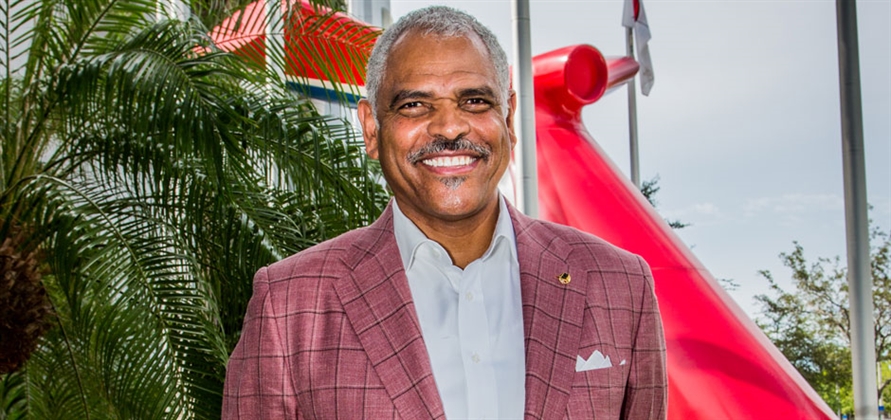
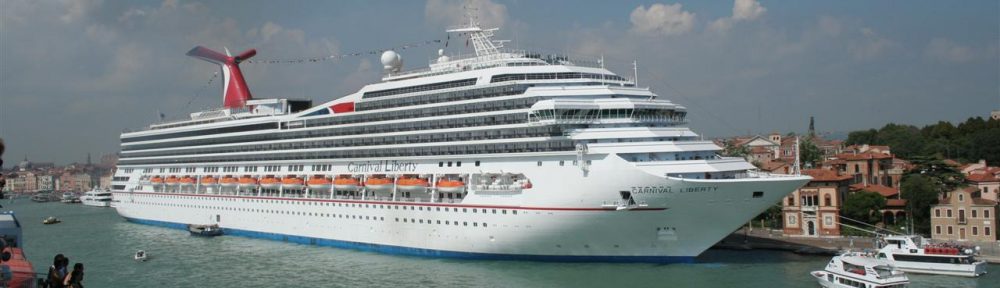
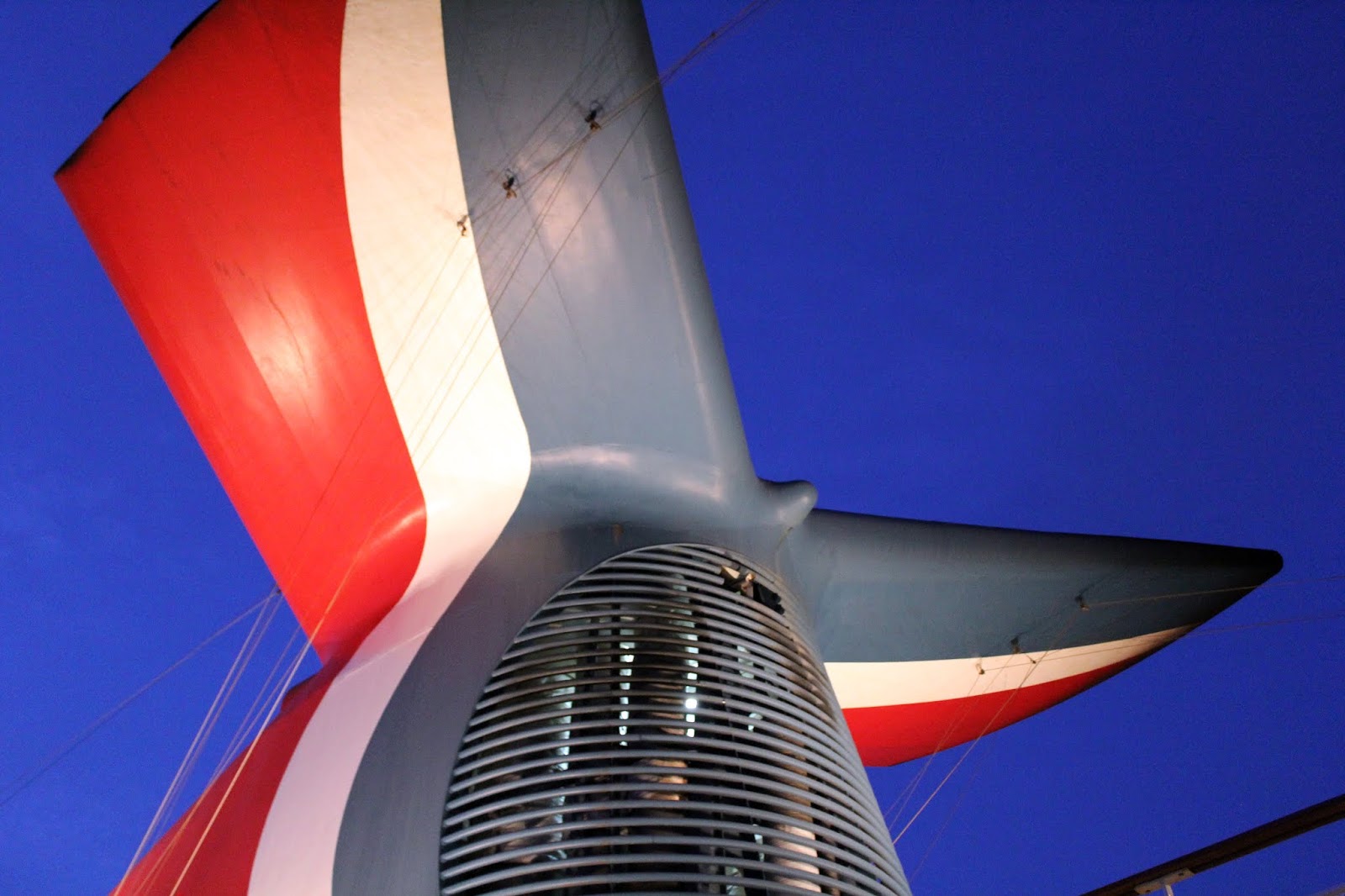
Carnival Cruise iconic Funnel.

Carnival Corp said on Friday it was planning to resume operations in a phased manner and would operate with a smaller fleet on its return, months after suspending trips due to the COVID-19 pandemic.

The company’s shares, that have lost more than two-thirds of their value this year, rose as much as 11% to $16.12 in morning trading.

The world’s largest cruise operator said it has reduced capital expenditures by more than $5 billion over the next 18 months and raised a couple more billions to navigate through the virus outbreak.

The cruise business has been one of the worst-hit after several ships, including some owned by Carnival’s Princess Cruises, became coronavirus hotspots.

To survive through the pandemic, cruise operators have raised billions through various means, even pledging ships and private islands.

Carnival alone, raised over $10 billion through a series of financing transactions since voyages were paused, enough to withstand another full year in a zero-revenue scenario, Chief Executive Officer Arnold Donald said on a conference call.

As it restarts voyages, the company expects future capacity to be moderated, while some ships could be removed and new deliveries would be delayed, Carnival added.

“We are also reorganizing the company to emerge stronger, leaner and more efficient,” Donald said.

“Even when we return to full-scale operations, we don’t expect to return to the same staffing requirements as we are addressing our work streams to work in a more efficient manner.”

The 13 ships expected to leave the fleet represent a nearly 9% reduction in current capacity, and the company expects only five of the nine ships originally scheduled for delivery to be delivered.

On Thursday, Carnival said it would resume voyages run by its German cruise line AIDA next month. (Reporting by Nivedita Balu in Bengaluru; Editing by Anil D’Silva and Shounak Dasgupta)

(c) Copyright Thomson Reuters 2020.

Carnival Corp. CEO: Demand should be ‘more than adequate’ at the restart

Carnival Corp. CEO Arnold Donald at a Cruise3Sixty event in 2018.

Carnival Corp. expects demand to be “more than adequate to fill ships in a staggered restart,” said CEO Arnold Donald during a business update call with analysts.

Donald said he was not concerned about achieving this without substantial bookings from the new-to-cruise market, because two-thirds of its global guests, 8 million each year, are repeat cruisers. He said Carnival Corp. has an active database of nearly 40 million past guests, and the average frequency of cruisers to repeat is every two to three years.

“Clearly cruise will not come back all at once,” Donald said. “We intend to resume with a small percentage of the fleet, which inherently makes us less reliant on new-to-cruise in the early days.”

As opposed to other down cycles, the limited capacity will help achieve stronger pricing when cruising initially resumes.

“Historically we had only two levers to pull in a down cycle: occupancy and rate,” Donald said. “In this environment, we’ll have a third: capacity.”

Donald said Carnival is very encouraged by the booking patterns it is seeing. He said that this week, when it announced that Aida Cruises would resume service in Germany in August, it had over 1,000 bookings in one day, “taking up a significant portion of the first sailings and on a very short notice period.”
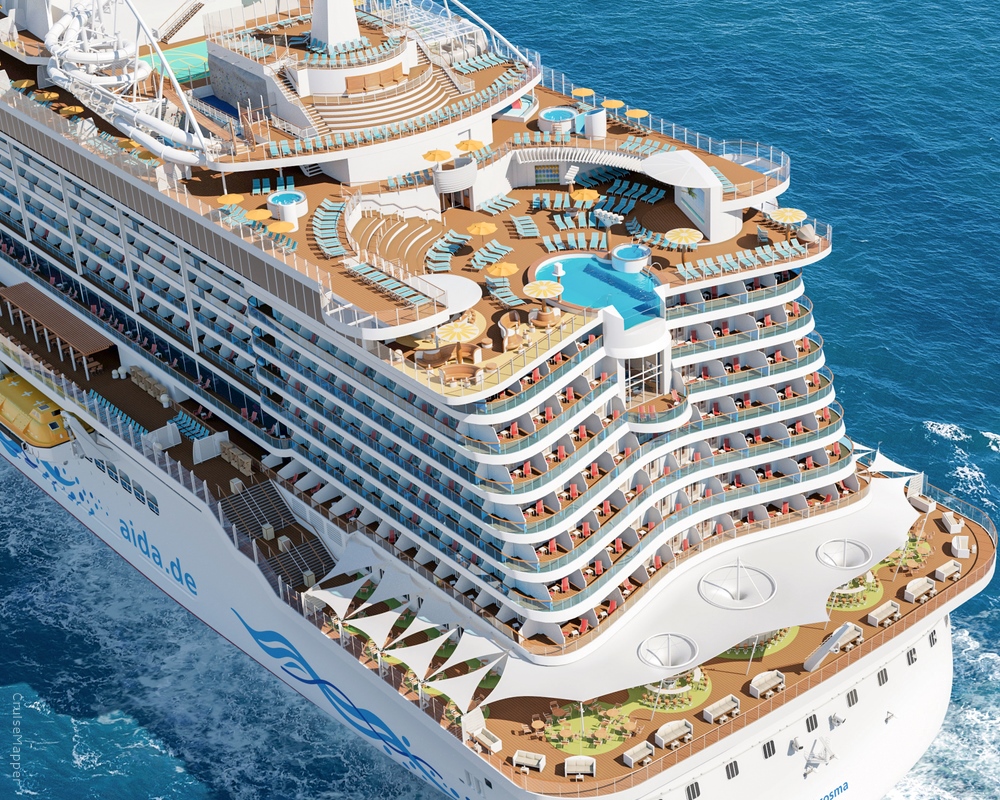
AIDA Cruises - Ships and Itineraries 2020, 2021, 2022 | CruiseMapper

He said forward bookings include not only a number of future cruise credits (FCCs) but “substantial new bookings and even new-to-cruise bookings, which given the current state of the environment in the world is really a good testament to how strong a vacation experience and value cruising really is.”

When asked if brands that were more badly tarnished by the media attention on cruise ship outbreaks in the early days of the pandemic, such as Princess, were being disproportionately affected in terms of consumers’ preference, Donald said the line is “trending with all the other brands in the industry.”

In fact, he said that none of the brands in the industry had reached what he called “the trough” of 2012 or 2013 when a number of negative, high-profile incidents. such as the engine room fire on the Carnival Triumph and the sinking of the Costa Concordia, rocked the cruise industry and Carnival Corp. specifically.

“None of the brands in the industry, ours or others, have gone to the low levels that we experienced at that time,” he said. “The trough in this period has been higher than the trough in that period.

“So there is a lot of pent-up demand, a lot of latent demand,” he continued. “That doesn’t mean we don’t have work to do once we start cruising with much larger volumes of capacity to attract new to cruise. Of course, we will have work to do, but right now the brands are strong, the bookings are encouraging, and with the staggered start we’re going to have in the resumption of cruising, there should be plenty of pent-up, latent demand with previous cruisegoers to fill the ships.”

Donald also said that having national brands in its portfolio is “clearly an asset” in this situation because as nations reintroduce social gathering and cruising, they are “most likely initially to restrict reactivation to their own residents exclusively.”
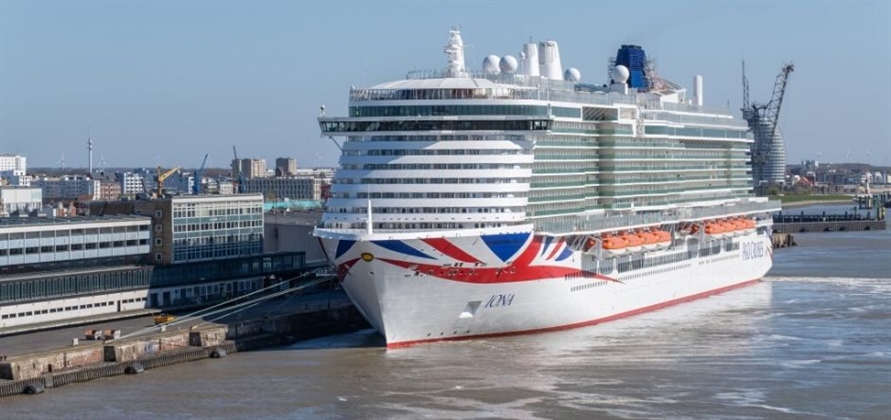
P&O Cruises' Iona arrives in Rotterdam
P&O Iona waiting for delivery.

Carnival’s German brand sources 95% from Germany; P&O UK is 98% British-sourced; Costa Europe is 80% continental Europe-sourced; P&O Australia is more than 99% sourced from Australia and New Zealand, and Carnival Cruise Line is 92% U.S.-sourced, Donald said.

“We are very well positioned,” Donald said. “Additionally, the fact that these brands are characterized by ready access, with the drive-to market and prevalence of shorter duration cruises, strengthens the possibility for success in today’s environment.”

Donald said that in general, longer cruises such as world cruises are not booking as well as shorter ones, which he said makes sense given the uncertainty of whether ports are open or closed in different regions.

For the second quarter, which ended May 31, Carnival reported a loss of $2.4 billion on revenue of $740 million,  compared with $451 million in net income on $4.8 billion in revenue during the same period in 2019.
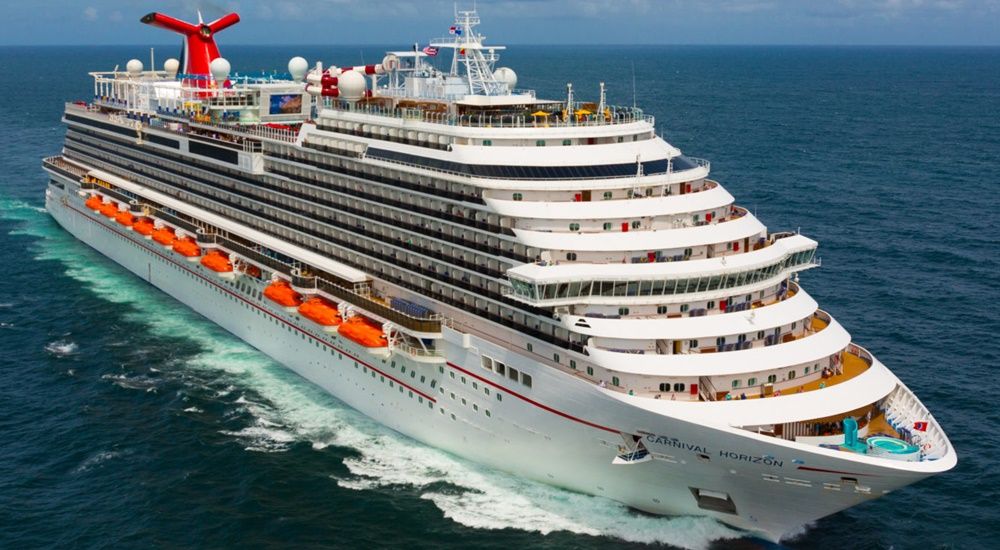
Carnival Panorama wins the “Best New Cruise Ship of 2019” Award ...

2021 bookings  

As of June 21, Carnival reported that approximately half of the guests on cancelled cruises requested cash refunds. The company also said that despite substantially reduced marketing and selling spend, it continues to see new 2021 bookings.

During the first three weeks in June, almost 60% of 2021 bookings were new bookings, Carnival said, with the remaining booking volumes from guests applying FCCs to specific future cruises.

Advanced 2021 bookings are currently within historical ranges at prices that are down in the low- to the mid-single-digits range, which included the negative yield impact of FCCs and onboard credits applied.

Carnival said the majority of its customer deposits of $2.6 billion are in FCCs, and $121 million in third-quarter sailings and $353 million in fourth-quarter sailings.
August cruise resumption played down by Carnival Corporation chief

How Carnival Corporation is bringing people together

Hopes of an August 1 restart of Carnival Cruise Line sailings have been played down by the boss of the company’s parent company.

Carnival Corporation president and chief executive Arnold Donald described the fallout from Covid-19 as “devastating”.

Ships would only sail when “it will be no greater risk, or even lower risk, than other forms of social gathering”.

Carnival Cruise Line announced a month ago plans to resume services from three US ports from the beginning of August at a time when other operations were being cancelled.

But Donald told The Telegraph that the August 1 date should not be taken as concrete as the situation is “constantly evolving and changing”.

He said: “Those we didn’t cancel [was] in hope that we would be able to cruise at that time and the ships would be positioned properly to honour the cruise, so on and so forth.

“We’re not trying to predict when we’ll open up but we’re hopeful that we’ll be able to. But it’s obviously dependent on what’s in the best interest of public health, not about the cruise but about broad social gathering… if people are in restaurants, hotels, airport terminals and subway stations, if a social gathering is happening, then it’s a condition for the cruise.

“But if we’re still in a state of highly constrained social gathering then it’s not the right situation. So we’ll see where society is at that point.

“We’re aware that people are anxious to get their economies going again, people are definitely anxious to cruise.

“We continue to get bookings and so on. So we’re anxious to go, too. But we only want to do it when the time is right so I think that there is a broader societal metric that we have to look at – we can’t just look wholly at cruise.”

His comments follow UK brand P&O Cruises further cancelling sailings until mid-October.

Donald added: “Our highest responsibility and our top priorities are, and they remain, compliance, environmental protection and the health and safety and wellbeing of our guests, our crew and the people and the places we go,” he said.

“So I want people to know that we will do everything to make certain that they are not taking a far greater risk by being on a cruise than other forms of social gathering – we don’t want that, we’re not going to let that happen. It will be no greater risk or even lower risk than other forms of social gathering.”

Looking forward, he said: “I don’t think there will be any issue filling the ships initially because the reality is that there’s not going to be that many ships and that many itineraries, [and] there will be plenty of people wanting to cruise.

“Over time, we’re going to eventually need to get back to where we were which was attracting people who haven’t cruised before.

“That job has been made, short-term, more difficult because people who haven’t cruised are hearing lots of stories and read stuff in the news, and now in their mind, they have another reason not to cruise.

“We’re going to have to, over time, chip away at whatever myth they happen to hold about a cruise, and help them see that that’s not the case.”