August cruise resumption played down by Carnival Corporation chief

How Carnival Corporation is bringing people together

Hopes of an August 1 restart of Carnival Cruise Line sailings have been played down by the boss of the company’s parent company.

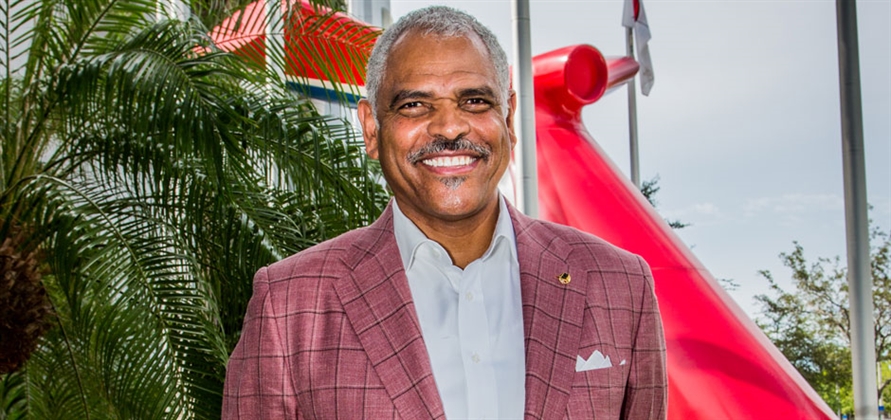
Carnival Corporation president and chief executive Arnold Donald described the fallout from Covid-19 as “devastating”.

Ships would only sail when “it will be no greater risk, or even lower risk, than other forms of social gathering”.

Carnival Cruise Line announced a month ago plans to resume services from three US ports from the beginning of August at a time when other operations were being cancelled.

But Donald told The Telegraph that the August 1 date should not be taken as concrete as the situation is “constantly evolving and changing”.

He said: “Those we didn’t cancel [was] in hope that we would be able to cruise at that time and the ships would be positioned properly to honour the cruise, so on and so forth.

“We’re not trying to predict when we’ll open up but we’re hopeful that we’ll be able to. But it’s obviously dependent on what’s in the best interest of public health, not about the cruise but about broad social gathering… if people are in restaurants, hotels, airport terminals and subway stations, if a social gathering is happening, then it’s a condition for the cruise.

“But if we’re still in a state of highly constrained social gathering then it’s not the right situation. So we’ll see where society is at that point.

“We’re aware that people are anxious to get their economies going again, people are definitely anxious to cruise.

“We continue to get bookings and so on. So we’re anxious to go, too. But we only want to do it when the time is right so I think that there is a broader societal metric that we have to look at – we can’t just look wholly at cruise.”

His comments follow UK brand P&O Cruises further cancelling sailings until mid-October.

Donald added: “Our highest responsibility and our top priorities are, and they remain, compliance, environmental protection and the health and safety and wellbeing of our guests, our crew and the people and the places we go,” he said.

“So I want people to know that we will do everything to make certain that they are not taking a far greater risk by being on a cruise than other forms of social gathering – we don’t want that, we’re not going to let that happen. It will be no greater risk or even lower risk than other forms of social gathering.”

Looking forward, he said: “I don’t think there will be any issue filling the ships initially because the reality is that there’s not going to be that many ships and that many itineraries, [and] there will be plenty of people wanting to cruise.

“Over time, we’re going to eventually need to get back to where we were which was attracting people who haven’t cruised before.

“That job has been made, short-term, more difficult because people who haven’t cruised are hearing lots of stories and read stuff in the news, and now in their mind, they have another reason not to cruise.

“We’re going to have to, over time, chip away at whatever myth they happen to hold about a cruise, and help them see that that’s not the case.”

A crucial part of the cruise restart: Lines and ports must agree on health protocols

Carnival Cruise Line ships in Cozumel, Mexico. As it works towards a restart, the cruise industry must work with port authorities and governments to agree on health protocols.

As cruising looks to resume operations after the coronavirus-induced industry halt, it faces challenges unique to an industry in which the majority of its ships touch multiple nations on each itinerary.

CLIA global chair Adam Goldstein said in a conversation with Travel Weekly editors that the association is aware that it will be paramount for travel advisors to have clarity about when cruising can resume and what protocols will accompany that resumption.

Among the challenges the cruise industry faces is that each country will have its own set of rules and regulations to comply with. But Goldstein said this is not new for cruising, and he said CLIA is supporting its member cruise lines to put together protocols that should “meet the test of any international national health authority.”

“There’s never been a perfect harmony across the 1,000 destinations that cruise ships visit, and somehow we managed to work out a fairly seamless vacation environment,” Goldstein said. “This presents new challenges across every dimension. And while our aspiration is for the most harmonized global approach possible, it’s a complex world. Regions are quite different from one another. It’s possible we won’t end up with a perfectly harmonized Covid-19 world to deal with. But I don’t think there’s anybody more experienced, clever or determined to succeed in a global environment than the cruise industry, and that’s been well demonstrated over a half-century.”

CLIA CEO Kelly Craighead said that regulatory agencies worldwide have approached the cruise industry in different ways.

“Some of the challenges in the U.S. are different from the challenges we’re having [elsewhere],” she said. “In Europe in particular, the industry is welcome to participate in dialogue about thoughtful resumption protocols. In the U.S., with the CDC, we’re having some challenges with having that kind of engagement and dialogue with them.”

Craighead added that in Europe, “there is an interest from governments to reopen tourism, and cruising is considered an important part of that.”

Given those complexities, Goldstein said it is premature to say where CLIA members might first relaunch.

“We can’t comment for the authorities,” he said. “They’re dealing with a billion different things. Travel and tourism is one piece, and cruise is a very small piece of that piece.”

He also said that it is likely there will be the sequencing of cruise resumption in different regions.

“I just can’t say which will go first, second, third,” he said. “We also expect [cruises may be shorter] toward the beginning, they could go to fewer ports at the beginning. It will take time, and there will be an evolution back towards what we were doing pre-pause.”

Above all, right now, Goldstein said it is important for the industry to be ready to engage with governments around the world at any time.

“What concerns us is: would we miss opportunities to engage at the time when governments are prepared to engage with us?” he said. “So the message to the member lines is, ‘let’s be as ready as we can be as an association.’ It’s an everyday challenge we work through.”

Frank Del Rio on travel advisors: ‘I know what they’re going through’

Frank Del Rio at CruiseWorld in 2016.
Frank Del Rio at CruiseWorld in 2016. Photo Credit: Ed McDonald Photography

In the second of two parts of a wide-ranging interview with Travel Weekly editor in chief Arnie Weissmann, Norwegian Cruise Line Holdings CEO Frank Del Rio talked about relaunching operations and the importance of travel advisors in the cruise industry’s recovery. Part 1: Del Rio on closing a $2.4 billion round in tough times.

Remarking that the Covid-19 crisis has put travel advisors under “tremendous stress,” Norwegian Cruise Line Holdings CEO Frank Del Rio said he speaks with at least two or three agents every day.

“We believe in a strong agency distribution system,” Del Rio said. “Before the pandemic, our company had the highest yield in the industry, which meant that travel agents were earning the most by selling our three brands [Norwegian Cruise Line, Oceania Cruises and Regent Seven Seas Cruises].

“I know what they’re going through, and we’ve got to be able to do the things we need to do to make sure they survive. The cruise industry without travel agents would be like pancakes without maple syrup. It just doesn’t work.

“Yesterday, I got an email from a travel agent who I’m very close to, and she says, ‘Frank, I’ve got dozens of people who want to book — when are you going to reopen?’

“So, I picked up the phone and I called Jan [Fishbein, of Cruzunlimited]. Jan is in her early 80s. She has been a travel agent for the last 30 years. I know Jan well because she was the first travel agent to make a booking in 2003 when we opened Oceania.

Best Cruise Ships & Luxury Experiences | Oceania Cruises
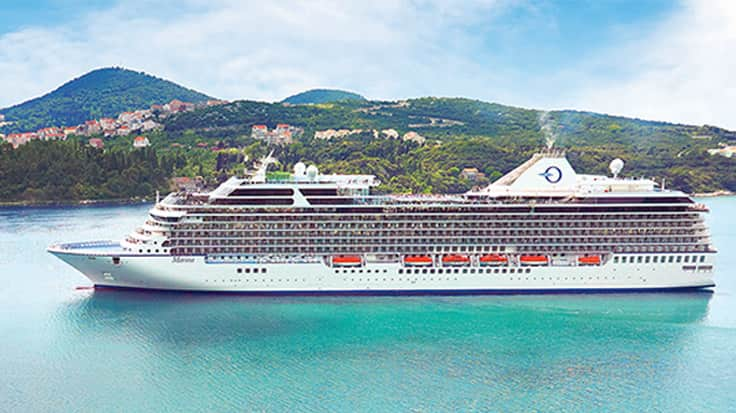
Oceana cruise ship Marina.

“I called her and the first question I asked was, ‘Jan, how old are these customers that you claim to want to cruise?’ She said, ‘Frank, they’re my normal customers, they’re senior citizens, they’re in their 70s.’ I go, ‘Really, Jan? And they want to cruise?’ ‘Yeah. Why not?’

“I said, ‘Where do they want to cruise?’ ‘Well, they want to cruise in August and September; some want to go in the Caribbean, some want to go to Alaska, there’s a few that want to go through the Panama Canal.’

“She’s pushing me — ‘When are you going to open? When are you going to open?’ — and I say, ‘Jan, I’m working on it! I’m working on it! It’s not just up to me.’

“But it gave me such encouragement. When you combine those types of conversations with the numbers that we’re seeing, if that doesn’t give you a reason to have hope and be encouraged, I don’t know what does.”

The numbers that Del Rio is seeing that give him encouragement go backwards and forward in time, and reflect, he believes, strong pent-up demand.

“2021 bookings are only slightly behind where 2020 bookings were a year ago,” he said. “Prior to coronavirus, 2020 was going to be, by far, the best year ever. And now, with travel agents not working at full strength, with our sales and marketing teams shut down, with the terrible news cycle that we’ve gone through, we can still say that we’re only slightly behind, and at modest reduction — mid-single digits — in price. This is a testimony to the resiliency of the customer and the efforts of the travel agents to preserve those customers.”

Carnival Breeze | Deck Plans, Activities & Sailings | Carnival ...
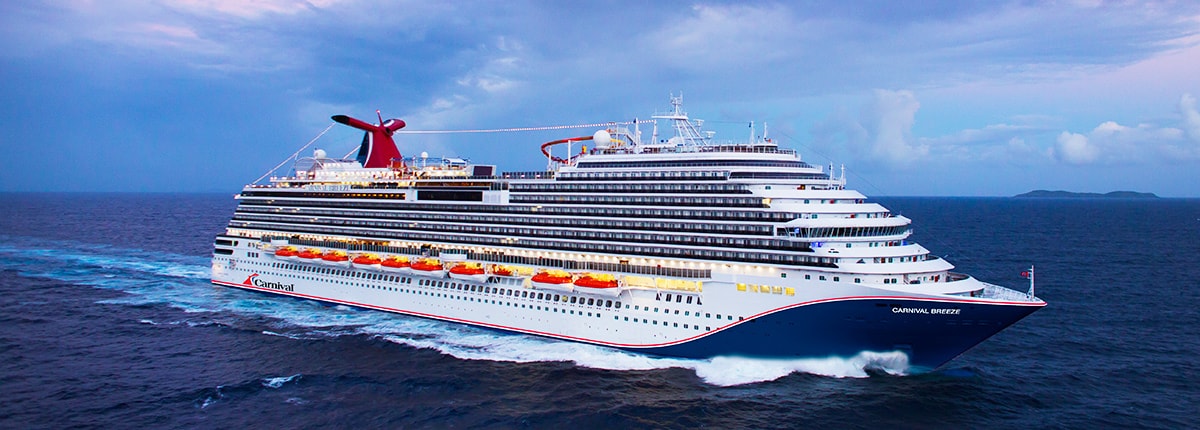
Carnival Breez

And when Del Rio’s longtime travel agent friend Jan Fishbein gets her wish and sailing resumes, Del Rio also plans a gradual resumption, but with a different approach from that of Carnival Corp., which has announced an Aug. 1 relaunch for Carnival Cruise Line.

“We’re not looking at it like that at all,” Del Rio said. “We’re looking at a gradual start; we’re not certain when that date is, because everything depends on the [Centers for Disease Control and Prevention] lifting the no-sail order. Whenever we do start, we’ll begin with a handful of ships across the three brands. So, let’s say in month one, we open up with five ships; it could be three Norwegian, one Oceania and one Regent. I don’t understand the concept of how one brand could be completely open and multiple brands can be completely closed. That’s mind-boggling to me. We will start across all three brands, and whenever month two is, we’ll bring alongside another four, five, six ships. We think it will take roughly six months from whenever we start until when all 28 ships across the three brands are back in full service.”

Del Rio said he was unconcerned that some ports might not be welcoming visitors when sailing resumes. “We visit over 500 ports around the world. And cruise lines put forth their itineraries more than two years in advance. Today, we’re selling itineraries through the fall of 2022, and we don’t know at this point which ports are going to be open, which ports are going to be closed. I’m not going to prejudge changing itineraries. We’ll have to play it by ear; it may be that when we open a certain itinerary, a port or two on that itinerary may not be operational and we’ll have to make changes. We’ll go to another port in the neighbourhood. We have flexibility because, especially in Europe, it’s condensed geography. There’s always an alternative port to go to nearby. The good news is we’re flexible, we’re nimble, and ships have propellers and rudders. We can move them around as necessary.”