Royal Caribbean and the Chinese Imperial Palace Museum (the Palace Museum) held a joint press conference today at a signing ceremony for a Memorandum of Understanding (MOU) agreement in the Forbidden City’s Jianfu Palace.
As part of the agreement, experts from different research fields selected by the Palace Museum will be invited to give lectures of Chinese history and culture to guests on Ovation of the Seas.
The Palace Museum also will provide professional consultation of the ship’s interior décor and art program. In addition, signature pieces from the collections of the Imperial Palace Museum will be on display to promote the traditional culture and arts of China. Paintings and art pieces created by artists from the Palace Museum will be available for guests to purchase at auctions held onboard.
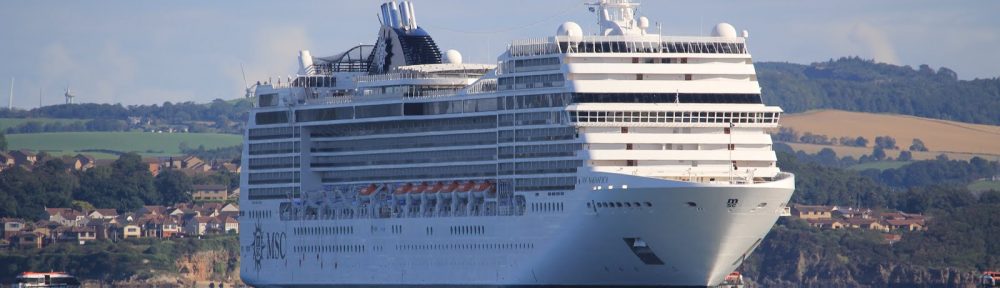
Ovation of the Seas, Royal Caribbean’s newest ship that debuts in April, will be the first to homeport in China immediately after its delivery and will begin service from Tianjin beginning June 2016.
The signing ceremony officially launches the “2016 – Let’s Ovation” campaign in China and marks the countdown to Ovation of the Seas’ maiden voyage in China.
“We are proud of the extensive collection of art and relics that represent the imperial treasures of the Ming and Qing Dynasties and it is our goal at The Palace Museum to showcase the traditional Chinese culture to people all over the world,” said Shan Jixian, Director of the Imperial Palace Museum. “This partnership with Royal Caribbean International and our programs on Ovation of the Seas will help to further these objectives. We are excited to promote the rich heritage of the Forbidden City and China to the guests of the world’s largest global cruise line and we hope to continue to expand on these efforts.”
Dr. Zinan Liu, President of North APAC and China, Royal Caribbean International said: “Cruising is becoming increasingly popular with Chinese travelers and Royal Caribbean’s award-winning and state-of-the-art ships with features found only on Royal Caribbean are very appealing to those consumers looking for a high quality vacation experience. Quantum of the Seas has been very well received by our Chinese guests and we are excited to now bring Ovation of the Seas to Tianjin. Sailing two of the world’s newest and most technologically advanced ships in China demonstrate our leadership and commitment to the market and this partnership with the Palace Museum showcasing China’s rich heritage will bring yet another unique element to our vacation offering.”
Ovation of the Seas will be officially launched in April 2016, when she departs Southampton for Tianjin, China on a 53-day Global Odyssey. She will begin her first homeport sailing season in China from Tianjin in June 2016. Ovation of the Seas, together with Quantum of the Seas, Mariner of the Seas, Voyager of the Seas and Legend of the Seas, will make up the largest fleet of any cruise line sailing in China.
Princess Cruises’ new ship Majestic Princess is to make its debut in Europe before being deployed to its year-round base in China.
The 3,560-passenger vessel enters service in April 2017 with a short maiden season of five to 28-day Mediterranean cruises from Barcelona, Athens and Rome before moving to China in July.
Sister ships Royal Princess and Regal Princess will be among a further six ships to be based in Europe in 2017.
Royal Princess will run new 11-day Grand Mediterranean and 10-day Western Mediterranean itineraries which can be combined into a 21-day sailing. Seven, 14, 21 and 28-day sailings throughout the Mediterranean will also be available.
Regal Princess, launched last year, returns to northern Europe for cruises to Scandinavia and Russia including an overnight stay in St Petersburg.
The 3,080-passenger Crown Princess will be based in Southampton from April to September to run seven and 14-night cruises to the Mediterranean and Scandinavia.
The 3,140-passenger Caribbean Princess will operate the line’s largest British Isles season with 12 departures from Southampton including a new late evening stay in Belfast and overnights in Dublin on selected cruises.
Smaller Pacific Princess, carrying 680 passengers, will sail from Dover from June to September on northern Europe itineraries.
Both Crown Princess and Pacific Princess will offer North Cape voyages to the Arctic Circle during the peak midnight sun period around the summer solstice.
The 2017 sailings, covering 153 departures to 119 destinations across 27 countries, are open for booking on December 3 from 4pm.
Princess Cruises’ president, Jan Swartz, said: “Our 2017 Europe season is sure to inspire our guests with our newest and largest ships in the Mediterranean and northern Europe.
“We’re especially excited to debut Majestic Princess in the Mediterranean before she officially sails to Asia for her maiden China cruise season.”
A jam-packed scene at Versailles. Photo Credit: pryzmat/Shutterstock.com
This past Christmas, Disneyland and Walt Disney World’s Magic Kingdom temporarily reached maximum capacity and were forced to close their gates and turn away guests until the crowds thinned. And while these highly popular theme parks both routinely rank among the 20 most visited sites in the world, they are hardly the only destinations grappling with the challenge of how to balance a surging global traveling population with the finite capacity that tourist hot spots can sustain.
The 10 most visited tourist attractions in the world
10. Forbidden City, Beijing
Annual Visitors: 15.3 M
9. Disneyland Park, Anaheim
Annual Visitors: 16 M
8. Walt Disney World’s Magic Kingdom, Orlando
Annual Visitors: 17.5 M
7. Faneuil Hall Marketplace, Boston
Annual Visitors: 18 M
6. Grand Central Terminal, New York
Annual Visitors: 21.6 M
5. Niagara Falls
Annual Visitors: 22.5 M
4. Union Station, Washington
Annual Visitors: 32.9 M
3. Central Park, New York
Annual Visitors: 37.5 M
2. Times Square, New York
Annual Visitors: 39.2 M
1. Las Vegas Strip
Annual Visitors: 39.7 M
This list is an excerpt of international home exchange club Love Home Swap’s 50 Most Visited Tourist Attractions in the World. Data was gathered from multiple sources. Attractions that don’t sell tickets provided estimates. Attractions that could not distinguish between tourists and general visitors were not included.
In 2014, the number of international tourists reached 1.14 billion, 51 million more than in 2013, according to the World Tourism Organization, making it the fifth consecutive year of above-average growth in global tourism since the 2009 economic crisis. At the same time, the majority of the sites all those travelers are visiting aren’t getting any bigger.
“Overcrowding is becoming a major issue at many global touristic destinations,” said Randy Durband, president of the Global Sustainable Tourism Council. “All tourism destinations need meaningful destination-management plans and management structures that ensure sustainability in a very broad sense, and that includes [addressing the issue of] overcrowding.”
Within private enterprises, such as Disney parks or museums, officials in charge of those institutions can work to implement crowd control measures however they deem fit, but when the problem spills out into public spaces, such as in the entire city of Venice or New York’s Times Square, it’s a bit less apparent whose problem crowding is.
“There’s really nobody who has any authority or jurisdiction to manage this,” Durband said.
Indeed, when the problem is not confined to a single institution, crowd management is often tackled by a patchwork of solutions and strategies.
“Who pays for it? If you’re at Disney, Disney is going to pay for it,” said Harold Goodwin, professor of Responsible Tourism Management at Leeds Metropolitan University and director of the International Centre for Responsible Tourism.
However, when it comes to London, where Goodwin lives, crowding has become a burden on the city and its residents.
“There are parts of London which I would now regard, as a Londoner, as a no-go area because there are too many tourists,” he said.
Increasingly, the inevitable logjam of travelers during peak travel periods is creating myriad logistical and security problems for the companies, cities and institutions that manage these tourist draws. At best, travelers are often forced to visit places like Istanbul’s Grand Bazaar and New York’s Time Square crammed among hoards of selfie stick-toting tourists, or to wait in hours-long lines to get into places like the Eiffel Tower in Paris or Beijing’s Forbidden City. At worst, they can’t get in at all. The Palace of Versailles now has a “crowded days” calendar on its website asking visitors to simply stay away during those times.
“If you can, avoid the days of high attendance,” the website advises. This includes the majority of June, July and August, the high-season months for travel to Europe. But if and when institutions have to actually turn away visitors, or if visitors can’t get through the crowds to see what they came to see, that would appear to defeat the whole purpose of travel. That is, in fact, the moment at which the travel industry’s success becomes its own downfall.
“Limiting the number of visitors must be seen as a means of last resort,” Durband said. “So much can be done long before that step is even considered.”
The Grand Bazaar in Istanbul consistently ranks among the most-visited sights in the world. Love Home Swap named it the 11th Most Visited Tourist Attraction in the World. Photo Credit: Michelle Baran
He said that tourism institutions need to explore methods to disperse visitors over various times in the day, seasons of the year and areas within or near the destination, which can alleviate many of the biggest problems with overcrowding. Transportation control issues often hold the key to better regulating visitor flow, Durband said, including policies and practices related to parking, the use of shuttle buses, regulating cruise ship access and requiring visitors to use a public transit system. But anyone who has been physically squeezed while trying to visit a popular museum or a jam-packed event might consider these strategies a case of doing too little too late.
“There is no one-way solution on the crowding of tourist destinations, as the issues and the resolutions are often site specific,” the World Travel & Tourism Council (WTTC) wrote in an email statement in response to questions about the issue of crowd control in tourism destinations.
“With more and more people traveling, it is important that travel and tourism grows sustainably,” the WTTC wrote. “Nearly 2 billion people are expected to travel internationally by 2030, with significantly more people traveling domestically. Tourism boards, governments and the private sector should work closely together in order to protect and preserve cultural heritage and traditions while accommodating this growing number of visitors at their destinations.”
Sample solutions
Companies like Disney, institutions like the Louvre or destination marketing organizations (DMOs) that promote popular cities and countries live with the crowding dilemma day in and day out, and many of them have been quietly ramping up their efforts to address the issue in recent years. They are often working behind the scenes to implement a variety of tactics to improve flow, to disperse visitation over a greater area if possible and to spread attendance more evenly over the course of the year.
According to Atout France, France’s tourism development agency, Sacre Coeur in Paris welcomes some 10.5 million visitors annually.Photo Credit: Michelle Baran
Walt Disney World’s Magic Kingdom, for example, has been able to accommodate a few thousand more guests per day during some peak travel periods due to its recently implemented MyMagic+ program. MagicBand radio-frequency identification bracelets enable guests to reserve time slots on attractions, vastly improving park visitation efficiency, according to Disney executives.
Walt Disney Parks and Resorts last month polled guests for their opinion on a potential three-tiered pricing strategy that theme park insiders said could be another step toward alleviating crowding. Disney asked survey participants about a system in which tickets would be sold at three pricing levels, with the highest priced tickets valid any day of the year, the middle-tier tickets valid on most days save for peak and holiday weeks, and the lowest priced tickets valid on off-peak weekdays.
“There’s the possibility that such as system could reduce overcrowding on the busiest days in the parks, as higher prices, theoretically, would reduce the demand for those days,” Robert Niles, editor of ThemeParkInsider.com, wrote on his site. “The downside is that the demand would shift to less popular days, increasing the crowd sizes on days that now enjoy lighter crowds.”
NYC & Company, the tourism marketing arm for New York City, home to several of the world’s most-visited tourist attractions, including Times Square, Central Park and Grand Central Terminal, continues to push toward its target of welcoming 67 million visitors by 2021. But it is also looking for ways to get those travelers to sprawl out across the entire city, not just congregate in tourism choke points.
“NYC & Company has a five-borough promotional strategy, and our goal is to spread visitors out across the entire city,” said Chris Heywood, the DMO’s senior vice president for global communications. “This strategy has been in place for several years. For two and a half years, we have put a stronger focus on neighborhood travel.”
The campaign, initially called Neighborhood X Neighborhood, was rebranded earlier this year as NYCGO Insider Guides. Recent neighborhood spotlights have included the Flatiron District and Coney Island, with NYC & Company providing itineraries and insider tips via documentary-style short films about these lesser-known areas of the city. Next, it plans to promote Governors Island, St. George on Staten Island and Jackson Heights in Queens.
“We also have marketing strategies in place to shift demand to slower periods like January and February,” Heywood said. “We run programs like Restaurant Week and Broadway Week during those times, for instance.”
The trend of DMOs promoting off-season travel and off-beat locales has been gaining momentum in recent years.
Robin Johnson, head of overseas operations for VisitBritain, said, “A big part of our work going forward will be to address the issue of regional dispersal. Only recently, we set a number of targets to counter London-only travel.”
Throngs of tourists crowd the entry to Buckingham Palace in London to get a glimpse of the changing of the guards ceremony. Photo Credit: Michelle Baran
In an attempt to address crowding head-on, the Louvre in Paris in the fall released details of an ambitious Pyramid Project, a $59 million initiative scheduled to be completed by 2017 that is intended to improve traffic flow, reduce noise and better accommodate the mounting number of guests who pass through the I.M. Pei-designed crystal pyramid that serves as the Louvre’s reception area.
“At the time of their inauguration in 1989, the museum’s reception areas were designed to receive 3 to 5 million visitors,” said Jean-Luc Martinez, the Louvre’s president and director. “Twenty years on, annual museum attendance has reached 9.5 million visitors.”
Martinez said that the new project would double the entry points to the pyramid, which should help alleviate the frustrations and challenges of crowding significantly. The museum is attempting to reduce noise pollution through the installation of sound-absorbing partitions and a sheltered ticket office and to offer visitors better access to information through improved signage.
An age-old problem
The crowding problem is as antiquated as some of the ancient treasures tourists are trampling all over one another to see.
The Grand Palace in the Thai capital of Bangkok is said to welcome some 8 million travelers each year. Photo Credit: Michelle Baran
Tom Jenkins, president of the European Tour Operators Association, said, “This is a very old subject. It’s been going on forever. Famously, Rome had a major problem with visitor overcrowding in [the year] 1300 when there were too many Jubilee pilgrims. People have been complaining about the crowds at European tourists sites for over 100 years.”
Jenkins predicts that the crowding issue will ultimately sort itself out.
“This is a problem of success and has a pattern of being self-regulating,” he said. “When people see it’s too crowded, they have a tendency to stay away. … It’s not news that popular places are very crowded.”
Jenkins represents a segment of the marketplace that in some ways stands to gain from the crowding. Tour operators often benefit from their ability to get groups past the lines and into popular sites after hours.
Likewise, Trafalgar President Paul Wiseman said, “We overcome the crowding with our VIP entrance program,” which gets guests past the lines and straight into popular attractions. “That part actually is a huge selling point for us on the guided side.”
Wiseman said the crowding of popular destinations during the busy summer months is also beginning to have another effect: increasing bookings in the off-peak travel season. The autumn, winter and spring programs are now upwards of 15% of Trafalgar’s business, said Wiseman, who added that the shoulder or off-peak seasons offer three essential selling points: “Beat the crowds, beat the heat, the prices are lower.”
Companies like Trafalgar are also seeing more demand for off-the-beaten-path destinations. And while that’s as much about repeat travelers searching for new experiences as it is about crowding, a byproduct of extreme crowds in popular destinations is that they can make lesser-known attractions suddenly seem more appealing to the crowd-averse traveler.
A crowd touring the grounds of Beijing’s Forbidden City. Visitors are often forced to wait in hours-long lines to gain access to the attraction, which was named the 10th Most Visited Tourist Attraction in the World by Love Home Swap, a home exchange club that offers 70,000-plus properties in 160 countries.
“There are lots of very cool, very appealing destinations that are being developed,” Durband said of up-and-coming destinations that see overflow elsewhere as an opportunity to attract more travelers. “There are places getting ready for more mainstream travel.”
Still, the fact remains that many travelers, especially first-time globe trotters of which a whole new crop is emerging from developing source markets such as China, will want to visit trendy locales during the summer, when the weather is likely to be best and, consequently, when the crowds are biggest.
“First-time travelers, they still want to see the icons,” Wiseman said. “It can be Rome in the middle of summer, 100 degrees on the busiest day of the year, and they want to see the Colosseum.”
That means that the crowding issue is going to continue to challenge the travel industry well into the foreseeable future. According to one industry veteran, it is in fact the single biggest challenge.
“We used to say in the land-tour business that the cruise business was our competition,” Arthur Tauck Jr., chairman of Tauck, said recently. But today, he said, “the competition of the entire travel industry is crowds. The world is becoming jammed.”


 A jam-packed scene at Versailles. Photo Credit: pryzmat/Shutterstock.com


 Wetravel2u's Weblog